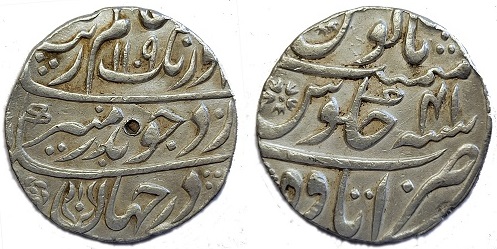
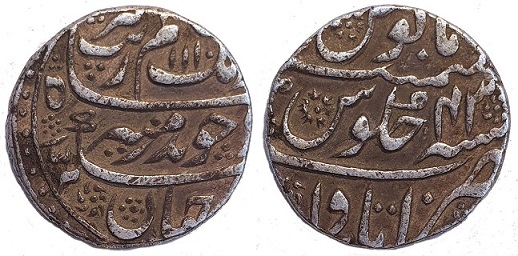
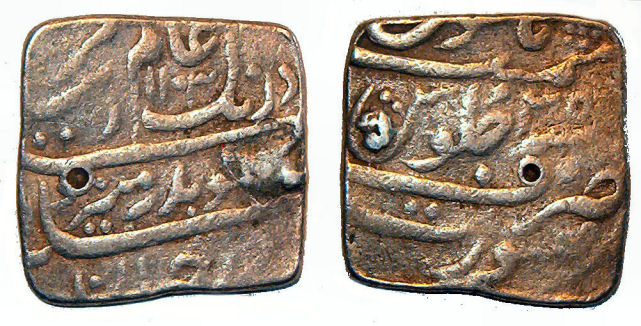
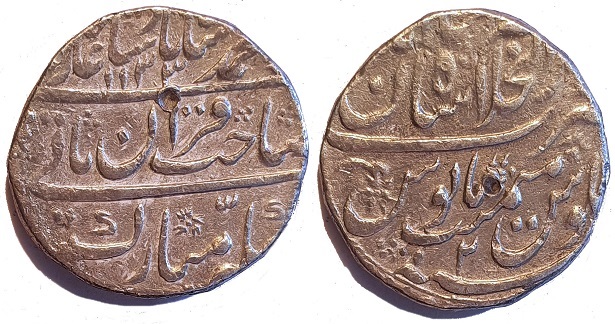
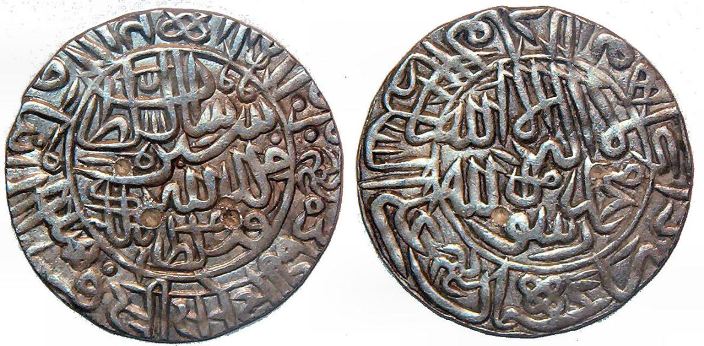
Rupees from India and surrounding area

Jump to Congress of princes Other silver coins Pre Mughal India Indian copper coins Other Indian Coins British India Collection Mughal mints Mughal Rupee collection Other crowns Czechoslavakia / Czech Republic Collection Twenty Pounds Collection Fifty Pence.html Collection Egypt Collection Medieval Europe Collection

These are some of the Rupees (and similiar denominations) I have in my collection. Mostly from India or the surrounding area.

William IIII
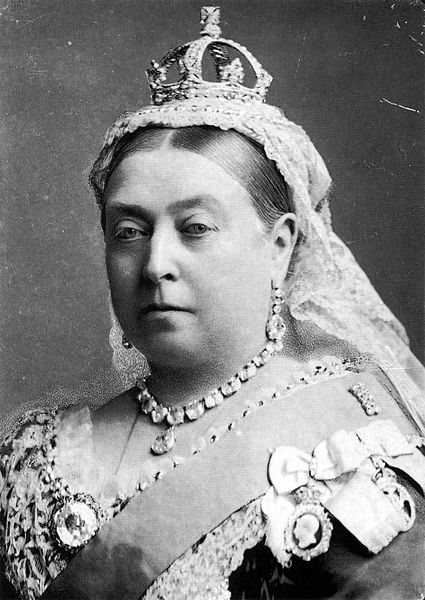
Victoria
Edward VII
George V
George VI
EIC Bengal
EIC Madras
EIC Bombay
French India
Portugese India
IPS Alwar
IPS Bikaner
IPS Assam
IPS Awadh (Oudh)
IPS Bangash
IPS Baroda
IPS Bharatpur
IPS Bhopal
IPS Broach
IPS Bundi
IPS Chhatarur
IPS Orchha
IPS Gwalior
IPS Hyderabad
IPS Indore
IPS Jaisalmer
IPS Kotah
IPS Jaipur
IPS Jhalawar
IPS Jodhpur Feudatory, Kuchaman
IPS Kashmir
IPS Kishangarh
IPS Mysore
IPS Mewar, feudatory State
IPS Narwar
IPS Partabgarh
IPS Rohilkhand
IPS Tonk
Maratha Confederation
Sikh Empire - Jagadhari
Sikh Empire
Sur Empire

Nepal
Afghanistan
Kutch
Mughal - Jalal al-din Muhammad Akbar - Ahmedabad
Mughal - Jalal al-din Muhammad Akbar - Lahore
Mughal - Prince Selim
Mughal - Jahangir
Mughal - Shah Jahan
Mughal - Aurangzeb
Mughal - Shah Bahadur
Mughal - Farrukhsiyar
Mughal - Muhammad Shah
Mughal - Alamgir II
Mughal - Shah Alam II


British India


Here is the updated code for the final set of Victoria Empress Rupees (1892, 1893, 1900, and 1901), following the consistent 3-column format. HTML
Details Ruler Image
East India Company
Calcutta mint

1835 1 Rupee

Obverse: WILLIAM IIII, KING (Bust right)
Reverse: Value in English and Urdu within wreath

Numista 15709
Zeno #189690
William IV 1835 Rupee
East India Company
Bombay mint (27 berries)

1840 Rupee

Obverse: Bust of Victoria facing left; VICTORIA QUEEN, Continuous legend
Reverse: Value within wreath in English and Urdu; EAST INDIA COMPANY ONE RUPEE

Numista 9718
Zeno #125195
Queen Victoria 1840 Rupee
Queen of India
Bombay mint

1862 Rupee

Obverse: Bust of Victoria facing left; VICTORIA QUEEN
Reverse: Value within wreath in English and Urdu; ONE RUPEE / INDIA

Numista 3345
Zeno #3345
Queen Victoria
Queen of India
Bombay mint

1862 (1864) 2 dots below date, Rupee

Obverse: Bust of Victoria facing left; VICTORIA QUEEN
Reverse: Value within wreath in English and Urdu; ONE RUPEE / INDIA

Numista 3345
Zeno #318992
Queen Victoria
Queen of India
Bombay mint

1862 (1865) 3 dots below date, Rupee

Obverse: Bust of Victoria facing left; VICTORIA QUEEN
Reverse: Value within wreath in English and Urdu; ONE RUPEE / INDIA

Numista 3345
Zeno #155724
Queen Victoria
Queen of India
Bombay mint

1862 (1866) 4 dots below date, Rupee

Obverse: Bust of Victoria facing left; VICTORIA QUEEN
Reverse: Value within wreath in English and Urdu; ONE RUPEE / INDIA

Numista 3345
Zeno #246694
Queen Victoria
Queen of India
Bombay mint

1862 (1866) 5 dots below date, Rupee

Obverse: Bust of Victoria facing left; VICTORIA QUEEN
Reverse: Value within wreath in English and Urdu; ONE RUPEE / INDIA

Numista 3345
Queen Victoria
Queen of India
Bombay mint

1862 (1866) 6 dots below date, Rupee

Obverse: Bust of Victoria facing left; VICTORIA QUEEN
Reverse: Value within wreath in English and Urdu; ONE RUPEE / INDIA

Numista 3345
Zeno #246771
Queen Victoria
Queen of India
Bombay mint

1862 (1869) 7 dots below date, Rupee

Obverse: Bust of Victoria facing left; VICTORIA QUEEN
Reverse: Value within wreath in English and Urdu; ONE RUPEE / INDIA

Numista 3345
Zeno #246877
Queen Victoria
Queen of India
Bombay mint

1862 (1872) 10 dots below date, Rupee

Obverse: Bust of Victoria facing left; VICTORIA QUEEN
Reverse: Value within wreath in English and Urdu; ONE RUPEE / INDIA

Numista 3345
Zeno #246839
Queen Victoria
Queen of India
Bombay mint

1877 Rupee

Obverse: Bust of Victoria facing left; VICTORIA QUEEN
Reverse: Value within wreath in English and Urdu; ONE RUPEE / INDIA

Numista 3719
Zeno #130270
Queen Victoria
Queen of India
Bombay mint

1876 Rupee

Obverse: Bust of Victoria facing left; VICTORIA QUEEN
Reverse: Value within wreath in English and Urdu; ONE RUPEE / INDIA

Numista 3719
Zeno #318996
Queen Victoria
Empress of India
Bombay mint

1877 Rupee

Obverse: Bust of Victoria facing left; VICTORIA EMPRESS
Reverse: Value within wreath in English and Urdu; ONE RUPEE / INDIA

Numista 3719
Zeno #130270
Queen Victoria
Empress of India
Bombay mint

1879 Rupee

Obverse: Bust of Victoria facing left; VICTORIA EMPRESS
Reverse: Value within wreath in English and Urdu; ONE RUPEE / INDIA

Numista 3719
Zeno #249723
Queen Victoria
Empress of India
Bombay mint

1880 Rupee

Obverse: Bust of Victoria facing left; VICTORIA EMPRESS
Reverse: Value within wreath in English and Urdu; ONE RUPEE / INDIA

Numista 3719
Zeno #246740
Queen Victoria
Empress of India
Bombay mint

1884 Rupee

Obverse: Bust of Victoria facing left; VICTORIA EMPRESS
Reverse: Value within wreath in English and Urdu; ONE RUPEE / INDIA

Numista 3719
Zeno #246741
Queen Victoria
Empress of India
Calcutta mint

1885 Rupee

Obverse: Bust of Victoria facing left; VICTORIA EMPRESS
Reverse: Value within wreath in English and Urdu; ONE RUPEE / INDIA

Numista 3719
Zeno #318993
Queen Victoria
Empress of India
Bombay mint

1887 Rupee

Obverse: Bust of Victoria facing left; VICTORIA EMPRESS
Reverse: Value within wreath in English and Urdu; ONE RUPEE / INDIA

Numista 3719
Zeno #114374
Queen Victoria
Empress of India
Bombay mint

1888 Rupee

Obverse: Bust of Victoria facing left; VICTORIA EMPRESS
Reverse: Value within wreath in English and Urdu; ONE RUPEE / INDIA

Numista 3719
Zeno #249724
Queen Victoria
Empress of India
Bombay mint

1889 Rupee

Obverse: Bust of Victoria facing left; VICTORIA EMPRESS
Reverse: Value within wreath in English and Urdu; ONE RUPEE / INDIA

Numista 3719
Zeno #233484
Queen Victoria
Empress of India
Bombay mint

1890 Rupee

Obverse: Bust of Victoria facing left; VICTORIA EMPRESS
Reverse: Value within wreath in English and Urdu; ONE RUPEE / INDIA

Numista 3719
Zeno #191165
Queen Victoria
Empress of India
Bombay mint

1891 Rupee

Obverse: Bust of Victoria facing left; VICTORIA EMPRESS
Reverse: Value within wreath in English and Urdu; ONE RUPEE / INDIA

Numista 3719
Zeno #137469
Queen Victoria
Empress of India
Bombay mint

1892 Rupee

Obverse: Bust of Victoria facing left; VICTORIA EMPRESS
Reverse: Value within wreath in English and Urdu; ONE RUPEE / INDIA

Numista 3719
Zeno #69676
Queen Victoria
Empress of India
Calcutta mint

1893 Rupee

Obverse: Bust of Victoria facing left; VICTORIA EMPRESS
Reverse: Value within wreath in English and Urdu; ONE RUPEE / INDIA

Numista 3719
Zeno #318994
Queen Victoria
Empress of India
Calcutta mint

1900 Rupee

Obverse: Bust of Victoria facing left; VICTORIA EMPRESS
Reverse: Value within wreath in English and Urdu; ONE RUPEE / INDIA

Numista 3719
Zeno #246687
Queen Victoria
Empress of India
Bombay mint

1901 Rupee

Obverse: Bust of Victoria facing left; VICTORIA EMPRESS
Reverse: Value within wreath in English and Urdu; ONE RUPEE / INDIA

Numista 3719
Zeno #190341
Queen Victoria
Emperor of India
Calcutta mint

1903 Rupee

Obverse: Bust of King Edward VII facing right. Divided legend, within a raised, toothed border; EDWARD VII KING & EMPEROR
Reverse: Value in English and Urdu; Spray of lotus flowers on each side and a crown above; ONE RUPEE / INDIA

Numista 3722
Zeno #154834
Edward VII 1903 Rupee
Emperor of India
Calcutta mint

1904 Rupee

Obverse: Bust of King Edward VII facing right. Divided legend, within a raised, toothed border; EDWARD VII KING & EMPEROR
Reverse: Value in English and Urdu; Spray of lotus flowers on each side and a crown above; ONE RUPEE / INDIA

Numista 3722
Zeno #130862
Edward VII
Emperor of India
Calcutta mint

1905 Rupee

Obverse: Bust of King Edward VII facing right. Divided legend, within a raised, toothed border; EDWARD VII KING & EMPEROR
Reverse: Value in English and Urdu; Spray of lotus flowers on each side and a crown above; ONE RUPEE / INDIA

Numista 3722
Zeno #192014
Edward VII
Emperor of India
Calcutta mint

1906 Rupee

Obverse: Bust of King Edward VII facing right. Divided legend, within a raised, toothed border; EDWARD VII KING & EMPEROR
Reverse: Value in English and Urdu; Spray of lotus flowers on each side and a crown above; ONE RUPEE / INDIA

Numista 3722
Zeno #130861
Edward VII
Emperor of India
Calcutta mint

1907 Rupee

Obverse: Bust of King Edward VII facing right. Divided legend, within a raised, toothed border; EDWARD VII KING & EMPEROR
Reverse: Value in English and Urdu; Spray of lotus flowers on each side and a crown above; ONE RUPEE / INDIA

Numista 3722
Zeno #190347
Edward VII
Emperor of India
Bombay mint

1907 Rupee

Obverse: Bust of King Edward VII facing right. Divided legend, within a raised, toothed border; EDWARD VII KING & EMPEROR
Reverse: Value in English and Urdu; Spray of lotus flowers on each side and a crown above; ONE RUPEE / INDIA

Numista 3722
Zeno #329279
Edward VII
Emperor of India
Calcutta mint

1908 Rupee

Obverse: Bust of King Edward VII facing right. Divided legend, within a raised, toothed border; EDWARD VII KING & EMPEROR
Reverse: Value in English and Urdu; Spray of lotus flowers on each side and a crown above; ONE RUPEE / INDIA

Numista 3722
Zeno #156766
Edward VII
Emperor of India
Calcutta mint

1909 Rupee

Obverse: Bust of King Edward VII facing right. Divided legend, within a raised, toothed border; EDWARD VII KING & EMPEROR
Reverse: Value in English and Urdu; Spray of lotus flowers on each side and a crown above; ONE RUPEE / INDIA

Numista 3722
Zeno #154835
Edward VII
Emperor of India
Calcutta mint

1910 Rupee

Obverse: Bust of King Edward VII facing right. Divided legend, within a raised, toothed border; EDWARD VII KING & EMPEROR
Reverse: Value in English and Urdu; Spray of lotus flowers on each side and a crown above; ONE RUPEE / INDIA

Numista 3722
Zeno #154836
Edward VII
Emperor of India
Bombay mint

1911 Rupee

Obverse: Crowned bust of George V facing left; GEORGE V KING EMPEROR
Reverse: Within circle, date divides legend in English & Urdu. Outside circle, wreath made of roses, thistle, shamrock leaves and lotus flowers; ONE RUPEE INDIA

Numista 20948
Zeno #193476
George V 1911 Rupee
Emperor of India
Calcutta mint

1911 Rupee

Obverse: Crowned bust of George V facing left; GEORGE V KING EMPEROR
Reverse: Within circle, date divides legend in English & Urdu. Outside circle, wreath made of roses, thistle, shamrock leaves and lotus flowers; ONE RUPEE INDIA

Zeno
George V
Emperor of India
Calcutta mint

1912 Rupee

Obverse: Crowned bust of George V facing left; GEORGE V KING EMPEROR
Reverse: Within circle, date divides legend in English & Urdu; ONE RUPEE INDIA

Numista 4851
Zeno #190342
George V
Emperor of India
Bombay mint

1912 Rupee

Obverse: Crowned bust of George V facing left; GEORGE V KING EMPEROR
Reverse: Within circle, date divides legend in English & Urdu; ONE RUPEE INDIA

Numista 4851
Zeno #335656
George V
Emperor of India
Calcutta mint

1913 Rupee

Obverse: Crowned bust of George V facing left; GEORGE V KING EMPEROR
Reverse: Within circle, date divides legend in English & Urdu; ONE RUPEE INDIA

Numista 4851
Zeno #192112
George V
Emperor of India
Bombay mint

1913 Rupee

Obverse: Crowned bust of George V facing left; GEORGE V KING EMPEROR
Reverse: Within circle, date divides legend in English & Urdu; ONE RUPEE INDIA

Numista 4851
Zeno #192112
George V
Emperor of India
Calcutta mint

1914 Rupee

Obverse: Crowned bust of George V facing left; GEORGE V KING EMPEROR
Reverse: Within circle, date divides legend in English & Urdu; ONE RUPEE INDIA

Zeno #
George V
Emperor of India
Bombay mint

1914 Rupee

Obverse: Crowned bust of George V facing left; GEORGE V KING EMPEROR
Reverse: Within circle, date divides legend in English & Urdu; ONE RUPEE INDIA

Numista 4851
Zeno #194706
George V
Emperor of India
Bombay mint

1916 Rupee

Obverse: Crowned bust of George V facing left; GEORGE V KING EMPEROR
Reverse: Within circle, date divides legend in English & Urdu; ONE RUPEE INDIA

Numista 4851
Zeno #331974
George V
Emperor of India
Calcutta mint

1916 Rupee

Obverse: Crowned bust of George V facing left; GEORGE V KING EMPEROR
Reverse: Within circle, date divides legend in English & Urdu; ONE RUPEE INDIA

Numista 4851
Zeno #191682
George V
Emperor of India
Bombay mint

1917 Rupee

Obverse: Crowned bust of George V facing left; GEORGE V KING EMPEROR
Reverse: Within circle, date divides legend in English & Urdu; ONE RUPEE INDIA

Numista 4851
Zeno #193477
George V
Emperor of India
Calcutta mint

1917 Rupee

Obverse: Crowned bust of George V facing left; GEORGE V KING EMPEROR
Reverse: Within circle, date divides legend in English & Urdu; ONE RUPEE INDIA

Numista 4851
Zeno #243115
George V
Emperor of India
Calcutta mint

1918 Rupee

Obverse: Crowned bust of George V facing left; GEORGE V KING EMPEROR
Reverse: Within circle, date divides legend in English & Urdu; ONE RUPEE INDIA

Zeno
George V
Emperor of India
Bombay mint

1918 Rupee

Obverse: Crowned bust of George V facing left; GEORGE V KING EMPEROR
Reverse: Within circle, date divides legend in English & Urdu; ONE RUPEE INDIA

Numista 4851
Zeno #190304
George V
Emperor of India
Calcutta mint

1919 Rupee

Obverse: Crowned bust of George V facing left; GEORGE V KING EMPEROR
Reverse: Within circle, date divides legend in English & Urdu; Outside circle, wreath made of roses, thistle, shamrock leaves and lotus flowers; ONE RUPEE INDIA

Numista 4851
Zeno #154841
George V
Emperor of India
Bombay mint

1919 Rupee

Obverse: Crowned bust of George V facing left; GEORGE V KING EMPEROR
Reverse: Within circle, date divides legend in English & Urdu; Outside circle, wreath made of roses, thistle, shamrock leaves and lotus flowers; ONE RUPEE INDIA

Numista 4851
Zeno #154841
George V
Emperor of India
Calcutta mint

1920 Rupee

Obverse: Crowned bust of George V facing left; GEORGE V KING EMPEROR
Reverse: Within circle, date divides legend in English & Urdu; Outside circle, wreath made of roses, thistle, shamrock leaves and lotus flowers; ONE RUPEE INDIA

Numista 4851
Zeno #193478
George V
Emperor of India
Bombay mint

1922 Rupee

Obverse: Crowned bust of George V facing left; GEORGE V KING EMPEROR
Reverse: Within circle, date divides legend in English & Urdu; Outside circle, wreath made of roses, thistle, shamrock leaves and lotus flowers; ONE RUPEE INDIA

Numista 4851
Zeno #233489
George V
Emperor of India
Bombay mint

1940 Rupee

Obverse: Bust of George VI facing left. Small rim decoration; GEORGE VI KING EMPEROR
Reverse: Within circle, date divides legend in English & Urdu; Outside circle, wreath made of roses, thistle, shamrock leaves and lotus flowers; ONE RUPEE INDIA

KM556
George VI
Emperor of India
Bombay mint

1941 Rupee

Obverse: Bust of George VI facing left. Small rim decoration; GEORGE VI KING EMPEROR
Reverse: Within circle, date divides legend in English & Urdu; Outside circle, wreath made of roses, thistle, shamrock leaves and lotus flowers; ONE RUPEE INDIA

Numista 20327
Zeno #156767
George VI
Emperor of India
Bombay mint

1942 Rupee

Obverse: Bust of George VI facing left. Small rim decoration; GEORGE VI KING EMPEROR
Reverse: Within circle, date divides legend in English & Urdu; Outside circle, wreath made of roses, thistle, shamrock leaves and lotus flowers; ONE RUPEE INDIA

KM556
George VI
Emperor of India
Bombay mint

1943 Rupee

Obverse: Bust of George VI facing left. Small rim decoration; GEORGE VI KING EMPEROR
Reverse: Within circle, date divides legend in English & Urdu; Outside circle, wreath made of roses, thistle, shamrock leaves and lotus flowers; ONE RUPEE INDIA

KM556
George VI
Emperor of India
Bombay mint

1944 Rupee

Obverse: Bust of George VI facing left. Small rim decoration; GEORGE VI KING EMPEROR
Reverse: Within circle, date divides legend in English & Urdu; Outside circle, wreath made of roses, thistle, shamrock leaves and lotus flowers; ONE RUPEE INDIA

Numista 20327
Zeno #156768
George VI
Emperor of India
Lahore mint

1944 Rupee

Obverse: Bust of George VI facing left. Small rim decoration; GEORGE VI KING EMPEROR
Reverse: Within circle, date divides legend in English & Urdu; Outside circle, wreath made of roses, thistle, shamrock leaves and lotus flowers; ONE RUPEE INDIA

KM556
George VI
Emperor of India
Bombay mint

1945 Rupee

Obverse: Bust of George VI facing left. Small rim decoration; GEORGE VI KING EMPEROR
Reverse: Within circle, date divides legend in English & Urdu; Outside circle, wreath made of roses, thistle, shamrock leaves and lotus flowers; ONE RUPEE INDIA

KM556
George VI
Emperor of India
Lahore mint

1945 Rupee

Obverse: Bust of George VI facing left. Small rim decoration; GEORGE VI KING EMPEROR
Reverse: Within circle, date divides legend in English & Urdu; Outside circle, wreath made of roses, thistle, shamrock leaves and lotus flowers; ONE RUPEE INDIA

Numista 20327
Zeno #192013
George VI


Bengal Presidency


Details Ruler Image
East India Company (i.n.o. Shah Alam II)
Muhammadabad Banaras mint

1840 AD (AH1225) Ry.31 Rupee

Obverse: Legend in Persian; Struck this coin in the Seven Climes, the shadow of the Divine favour, The defender of the faith Muhammad Shah Alam Badshah
Reverse: Legend in Persian; Struck at Muhammadabad Banaras in the 17/31 year of his reign of tranquil prosperity

Numista 62272
Zeno #80871
No photo available
East India Company (i.n.o. Shah Alam II)
Muhammadabad Banaras mint

1841 AD (AH1225) Ry.32 Rupee

Obverse: Legend in Persian; Struck this coin in the Seven Climes, the shadow of the Divine favour, The defender of the faith Muhammad Shah Alam Badshah
Reverse: Legend in Persian; Struck at Muhammadabad Banaras in the 17/32 year of his reign of tranquil prosperity

Numista 62272
Zeno #137476
No photo available
East India Company (i.n.o. Shah Alam II)
Muhammadabad Banaras mint

1856/57 AD (AH1220) Ry.48 Rupee

Obverse: Legend in Persian; Struck this coin in the Seven Climes, the shadow of the Divine favour, The defender of the faith Muhammad Shah Alam Badshah
Reverse: Legend in Persian; Struck at Muhammadabad Banaras in the 17/48 year of his reign of tranquil prosperity

Numista 62272
Zeno #80872
No photo available
East India Company (i.n.o. Shah Alam II)
Muhammadabad Banaras mint

1857/58 AD (AH1225) Ry.49 Rupee

Obverse: Legend in Persian; Struck this coin in the Seven Climes, the shadow of the Divine favour, The defender of the faith Muhammad Shah Alam Badshah
Reverse: Legend in Persian; Struck at Muhammadabad Banaras in the 17/49 year of his reign of tranquil prosperity

Numista 62272
Zeno #127202
No photo available
East India Company (i.n.o. Shah Alam II)
Muhammadabad Banaras mint

1857/58 AD (AH1225) Ry.49 Rupee

Obverse: Legend in Persian; Struck this coin in the Seven Climes, the shadow of the Divine favour, The defender of the faith Muhammad Shah Alam Badshah
Reverse: Legend in Persian; Struck at Muhammadabad Banaras in the 17/49 year of his reign of tranquil prosperity

Numista 62272
Zeno #247034
No photo available
East India Company (i.n.o. Shah Alam II)
Muhammadabad Banaras mint

1857/58 AD (AH1224) Ry.49 Rupee

Obverse: Legend in Persian; Struck this coin in the Seven Climes, the shadow of the Divine favour, The defender of the faith Muhammad Shah Alam Badshah
Reverse: Legend in Persian; Struck at Muhammadabad Banaras in the 17/49 year of his reign of tranquil prosperity

Numista 62272
Zeno #163238
No photo available
East India Company (i.n.o. Shah Alam II)
Muhammadabad Banaras mint

1857/58 AD (AH1222) Ry.49 Rupee

Obverse: Legend in Persian; Struck this coin in the Seven Climes, the shadow of the Divine favour, The defender of the faith Muhammad Shah Alam Badshah
Reverse: Legend in Persian; Struck at Muhammadabad Banaras in the 17/49 year of his reign of tranquil prosperity

Numista 62272
Zeno #247035
No photo available
East India Company (i.n.o. Shah Alam II)
Farrukhabad mint

ND (1806-1819) Frozen Ry 45 Rupee

Obverse: Persian legend; Defender of the religion of Muhammad, Shah Alam Emperor
Reverse: Persian legend; Struck at Farrukhabad in the 45th year of his prosperous reign

Numista 51553
Zeno #247039
No photo available
East India Company (i.n.o. Shah Alam II)
Murshidabad (Calcutta) mint

AH 1203, Ry 19 Rupee (struck 1832-35)

Obverse: Legend in Persian; Defender of the religion of Muhammad, Shah Alam Emperor Shadow of the divine favour
Reverse: Legend in Persian; Struck at Murshidabad in the 19th year of his prosperous reign

Numista 56720
Zeno #365190
No photo available
East India Company (i.n.o. Shah Alam II)
Murshidabad (Calcutta) mint

AH 1215, Ry 46 Rupee (struck 1832-35)

Obverse: Legend in Persian; Defender of the religion of Muhammad, Shah Alam Emperor Shadow of the divine favour
Reverse: Legend in Persian; Struck at Murshidabad in the 19th year of his prosperous reign

Numista 335106
Zeno #-
No photo available
East India Company (i.n.o. Shah Alam II)
Murshidabad (Calcutta) mint

ND (1793-1818) Rupee

Obverse: Legend in Persian; Defender of the religion of Muhammad, Shah Alam Emperor Shadow of the divine favour
Reverse: Legend in Persian; Struck at Murshidabad in the 19th year of his prosperous reign

Numista 335106
Zeno #-
No photo available
East India Company (i.n.o. Shah Alam II)
Murshidabad (Calcutta) mint

ND (1819-1829) Rupee

Obverse: Legend in Persian; Defender of the religion of Muhammad, Shah Alam Emperor Shadow of the divine favour
Reverse: Legend in Persian; Struck at Murshidabad in the 19th year of his prosperous reign; privy mark A / S

Numista 69683
Zeno #-
No photo available
East India Company (i.n.o. Shah Alam II)
Bareli Qitah mint

AH 1218 Ry. 37 Rupee

Obverse: Persian legend; Defender of the religion of Muhammad, Shah Alam Emperor
Reverse: Persian legend; Struck at Bareli Qitah in the 37th year of his prosperous reign

Numista 79299
Zeno #136844

Note: Weight varies: 10.70-11.60g. The letter 'Wa' on EIC issues is reputedly the initial of Henry Wellesley, the settlement officer for Bareli.
No photo available


Bengal Presidency - Ceded Provinces - Farrukhabad


Details Ruler Image
East India Company (i.n.o. Shah Alam II)
Ahmadnagar-Farrukhabad mint

AH 1220 Ry.39 (1806) Rupee

Obverse: Persian legend in the name of Shah Alam II; AH Date
Reverse: Persian legend; Regnal year and Mint name

Numista 64684
Zeno #244701

In 1802 (AH1217) this area transferred to the British East India Company. From 1806 (AH1221) the BEIC Farrukhabad rupee was struck there.
Imdat Husain Khan
East India Company (i.n.o. Shah Alam II)
Ahmadnagar-Farrukhabad mint

AH (12)15 Ry.39 (1800/1801 AD) Rupee

Obverse: Persian legend in the name of Shah Alam II; AH Date
Reverse: Persian legend; Regnal year and Mint name

Numista 64684
Zeno #137383
Imdat Husain Khan


Bombay Presidency


That’s a great idea. I’ll start adding "Curiosities" or "Context" notes to each block to highlight why these specific coins are unique, such as the "Ankush" (elephant goad) marks or the political reasons behind the "frozen" dates. Here is the updated code for the Bombay Presidency Ahmedabad series, formatted with these extra insights. HTML Here is the updated code for the final Ahmedabad and early Bombay hammered issues. I have added historical context notes to each block to highlight the fascinating transition of power and the specific "Ankush" mint marks used during this era. HTML
Details Ruler Image
East India Company (i.n.o. Shah Alam II)
Bagalkot mint

1819 Rupee

Obverse: Legend in Urdu; Sikka Aziz Uddin/Shah Alam Badshah Ghazi / 1819
Reverse: Legend in Urdu; Sanah 1189/ Jalus Maimanat Manus/ Zarb Bagadkut

Numista 70690
Zeno #188445

Note: These were struck in the Southern Maratha Country. The use of "Shahajahanabad" (Delhi) in the mint name was purely prestige-based, as the coin was actually struck in Bagalkot.
No photo available
East India Company (i.n.o. Shah Alam II)
Surat mint

Ry. 46 Rupee

Obverse: Legend in Persian; Sikka Mubarak Badshah ghazi Shah Alam
Reverse: Persian legend; Zarb Surat sanat 46

Numista 79825
Zeno #64455

Note: The "frozen" Regnal Year 46 was used for decades. Merchants trusted this specific design so much that the EIC was afraid to change it, fearing the coins would be devalued in the markets.
No photo available
East India Company
Bombay mint

1825 (Ry. 46) Rupee

Obverse: Persian legend; Zarb Surat sanat 46
Reverse: Persian legend; Sikka Mubarak Badshah ghazi Shah Alam

Numista 58220
Zeno #233488

Note: This is a "Surat type" coin actually struck at the new Bombay mint. You can tell by the much neater, perfectly round "milled" edge compared to the "dump" style local strikes.
No photo available
East India Company (Bombay Presidency)
Ahmedabad mint

AH 1234 Rupee

Obverse: Persian legend in the name of Akbar Shah II
Reverse: Persian legend; Mint name and Regnal Year

Numista 30692
Zeno #300069

Note: Look for the "Ankush" (elephant goad) symbol on the reverse. This was originally a Maratha mint mark which the British continued to use to ensure the local population accepted the currency.
No photo available
East India Company (i.n.o. Akbar Shah II)
Ahmedabad mint

AH 1241 Ry. 21 Rupee

Obverse: Persian legend; Sikka Mubarak Badshah Ghazi Akbar Shah
Reverse: Persian legend; Zarb Ahmedabad Sanah Julus

Numista 30692
Zeno #320107

Note: Unlike the Bengal Presidency which favored Shah Alam II, the Bombay Presidency issues in Ahmedabad frequently used the name of Akbar Shah II during this transitional period.
No photo available
East India Company (Bombay Presidency)
Ahmedabad mint

AH 1243 Ry. 23 Rupee

Obverse: Persian legend; Sikka Mubarak Badshah Ghazi Akbar Shah
Reverse: Persian legend; Struck at Ahmedabad in the 23rd year of his tranquil prosperous reign

Numista 30692
Zeno #329221

Historical Note: By AH 1243, the British had full administrative control, yet they continued the Mughal style to prevent local economic disruption. Note the continued use of the "Ankush" symbol.
No photo available
East India Company (i.n.o. Akbar Shah II)
Ahmedabad mint

AH 1244 (Ry. 24) Rupee

Obverse: Persian legend; Sikka Mubarak Badshah Ghazi Akbar Shah
Reverse: Persian legend; Zarb Ahmedabad Sanah Julus Maimanat Manus

Numista 30692
Zeno #301614

Technical Note: These "dumpy" rupees often have large portions of the legend off-flan, as the dies were significantly larger than the silver planchets used.
No photo available
East India Company (i.n.o. Akbar Shah II)
Ahmedabad mint

AH 1248 (Ry. 28) Rupee

Obverse: Persian legend; Sikka Mubarak Badshah Ghazi Akbar Shah
Reverse: Persian legend; Zarb Ahmedabad Sanah Julus Maimanat Manus

Numista 30692
Zeno #320108

Context: This is one of the final Ahmedabad issues before the mint was closed and production was centralized to the major Presidency mints.
No photo available
East India Company (i.n.o. Akbar Shah II)
Ahmedabad mint

AH 1249 Rupee

Obverse: Persian legend; Sikka Mubarak Badshah Ghazi Akbar Shah
Reverse: Persian legend; Zarb Ahmedabad Sanah Julus Maimanat Manus

Numista 30692
Zeno #339720

Note: AH 1249 is very late in this series. Soon after, the Uniform Coinage Act of 1835 would replace all these local "Presidency" styles with the standardized portrait coins of William IV.
No photo available
East India Company (Bombay Presidency)
Ahmedabad mint

Ry. 12 Rupee

Obverse: Persian legend in the name of the Mughal Emperor
Reverse: Persian legend; Mint name and Regnal Year 12

Numista 30692
Zeno #300068

Curiosity: The "Ankush" (elephant goad) mint mark is particularly clear on many Ry. 12 specimens, identifying the Ahmedabad origins even when the mint name is partially obscured.
No photo available
East India Company (Bombay Presidency)
Bombay mint

AH (N/A) Ry. 9 Rupee

Obverse: Legend in the name of Alamgir II
Reverse: Persian legend; Zarb Bombay (Struck at Bombay)

Numista 53308
Zeno #300078

Historical Context: These early hammered issues of the Bombay mint were struck following the authority granted by the Mughal Emperor in 1717. They intentionally mimic the Mughal style to ensure they were accepted at parity with Imperial currency.
No photo available
East India Company (Bombay Presidency)
Murshidabad (Calcutta) mint

ND (1793-1818) Rupee

Obverse: Persian legend; Defender of the religion of Muhammad, Shah Alam Emperor
Reverse: Persian legend; Struck at Murshidabad in the 19th year of his prosperous reign

Numista 44858
Zeno #320501

Historical Note: This is a fascinating cross-presidency issue. While carrying the Murshidabad/Calcutta legends (frozen Ry. 19), these were often used in trade circuits involving the Bombay Presidency. The "frozen" dates were essential for maintaining the coin's "Sicca" (full value) status in the eyes of local money changers.
No photo available
East India Company (i.n.o. Muhammad Shah)
Munbai (Bombay) mint

AH 11(41) Ry. 11 Rupee

Obverse: Persian legend; Sikka Mubarak Badshah Ghazi Muhammad Shah (Auspicious coin of the Victorious Emperor Muhammad Shah)
Reverse: Persian legend; Zarb Munbai (Struck at Bombay) in the 11th year of his reign

Numista 53308
Zeno #318550

Historical Context: Struck during the early period of the Bombay mint. The EIC only received formal permission to strike coins in the name of the Mughal Emperor in 1717 (Farrukhsiyar's Farman). These hammered coins were designed to circulate alongside Imperial Mughal currency.
No photo available
East India Company (i.n.o. Muhammad Shah)
Munbai (Bombay) mint

AH 1156 Ry. 2(6) Rupee

Obverse: Persian legend; Auspicious coin of the Victorious Emperor Muhammad Shah
Reverse: Persian legend; Struck at Bombay in the 26th year of his prosperous reign

Numista 53308
Zeno #324216

Note: By the 26th regnal year (AH 1156), the Bombay mint was firmly established. The legends on these "Munbai" rupees are often more complete than contemporary Mughal issues from smaller provincial mints.
No photo available
East India Company (i.n.o. Muhammad Shah)
Munbai (Bombay) mint

AH 114x Ry. 19 Rupee

Obverse: Persian legend; Sikka Mubarak Badshah Ghazi Muhammad Shah
Reverse: Persian legend; Zarb Munbai (Struck at Bombay) in the 19th year of his reign

Numista 53308
Zeno #319009

Historical Context: Struck around 1737 AD. During this period, the Bombay Rupee was becoming the preferred currency for trade along the Malabar Coast, eventually displacing the more variable local coins due to the EIC's strict control over silver purity.
No photo available
Maratha Confederation (i.n.o. Shah Alam II / Ali Gauhur)
Poona (Muhiabad Poona) mint

AH 1225-1229 (1810-1814 AD) Rupee

Obverse: Persian legend in the name of Shah Alam II; Ankush (Elephant Goad) mint mark
Reverse: Persian legend; Mint name Muhiabad Poona

Numista 349106
Zeno #130264

Historical Note: Known as the "Ankushi Rupee." The Ankush symbol was the primary mark of the Peshwa's central mint. After the fall of the Maratha Empire in 1817/18, the British East India Company continued to strike these coins for a short time to maintain economic stability in the Deccan region.
Ali Gauhar
Maratha Confederation (i.n.o. Shah Alam II)
Poona (Muhiabad Poona) mint

AH 1225-1229 (1810-1814 AD) Rupee

Obverse: Persian legend; Ankush (Elephant Goad) mintmark
Reverse: Persian legend; Mint name Muhiabad Poona

Numista 349106
Zeno #161932

Historical Context: The "Ankush" symbol represents the Peshwa’s authority. During this period (just before the Third Anglo-Maratha War), the Poona rupee was the dominant trade coin of the Western Deccan.
Ali Gauhar
East India Company (Bombay Presidency)
Poona mint

FE 1234 (1824 AD) Rupee

Obverse: Legend in Persian; Struck at Poona; Scissors (Nagphani) mintmark
Reverse: Legend in Persian; Sikka Mubarak Shah Ali Gauhar Badshah Ghazi

Numista 71146
Zeno #330788

Curiosity: After the EIC took over Poona in 1818, they modified the "Ankush" mark into what looks like a pair of scissors (Nagphani). This Fasli Era (FE) dated issue is a classic "transitional" coin—British administration using Maratha-style designs to keep the local economy stable.
Ali Gauhar
East India Company (Bombay Presidency)
Poona mint

FE 1230 (1820-21 AD) Rupee

Obverse: Legend in Persian; Struck at Poona in his year of tranquil prosperity; Scissors (Nagphani) mintmark
Reverse: Legend in Persian; Sikka Mubarak Shah Ali Gauhar Badshah Ghazi (Auspicious coin of Emperor Shah Ali Gauhar)

Numista 71145
Zeno #325930

Historical Note: Struck under British administration using the Fasli Era (FE) date. The Nagphani or "Scissors" mark is actually a stylized version of the Maratha serpent/cobra symbol. Under the EIC, this "Hali Sicca" (Current Coin) was standardized in weight to facilitate tax payments in the Deccan.
Shah Ali Gauhar
East India Company (Bombay Presidency)
Poona mint

FE 1236 (1826-27 AD) Rupee

Obverse: Legend in Persian; Struck at Poona in his year of tranquil prosperity; Scissors (Nagphani) mintmark
Reverse: Legend in Persian; Sikka Mubarak Shah Ali Gauhar Badshah Ghazi (Auspicious coin of Emperor Shah Ali Gauhar)

Numista 71145
Zeno #320187

Historical Context: While the catalog notes FE 1236, the conversion to the Gregorian calendar for the Fasli Era used in the Deccan places this strike around 1826 AD. The Nagphani (Cobra) mark, looking like a set of tongs or scissors, is a primary diagnostic for British-administered Poona coinage.
Shah Ali Gauhar
East India Company (Bombay Presidency)
Poona mint

FE 1237 (1827 AD) Rupee

Obverse: Legend in Persian; Struck at Poona; Scissors (Nagphani) mintmark
Reverse: Legend in Persian; Sikka Mubarak Shah Ali Gauhar Badshah Ghazi

Numista 71145
Zeno #330789

Note: By 1827, the British had been managing the Poona mint for nearly a decade. These "Hali Sicca" rupees were maintained at a specific weight and purity to serve as the standard for land revenue payments in the newly acquired territories of the Deccan.
Shah Ali Gauhar
East India Company (Bombay Presidency)
Poona mint

FE 1237 (1827 AD) Rupee

Obverse: Legend in Persian; Struck at Poona in his year of tranquil prosperity; Scissors (Nagphani) mintmark
Reverse: Legend in Persian; Sikka Mubarak Shah Ali Gauhar Badshah Ghazi

Numista 71145
Zeno #330634

Historical Note: The "Hali Sicca" (meaning 'current' or 'standard') was the EIC's attempt to provide a reliable, uniform silver currency for the Deccan. Although the weight was standardized at roughly 11.3g, the flan sizes on these hammered issues still vary slightly between 20mm and 23mm, as seen here.
Shah Ali Gauhar
East India Company (Bombay Presidency)
Poona mint

FE 1238 (1828-29 AD) Rupee

Obverse: Legend in Persian; Struck at Poona in his year of tranquil prosperity; Scissors (Nagphani) mintmark
Reverse: Legend in Persian; Sikka Mubarak Shah Ali Gauhar Badshah Ghazi

Numista 71145
Zeno #319881

Historical Note: Fasli Year 1238 corresponds to 1828-29 AD. This specimen shows a broader 23mm flan, allowing more of the Persian legend to be visible compared to the standard "dumpy" strikes of the era.
Shah Ali Gauhar
East India Company (Bombay Presidency)
Poona mint

FE 1238 (1828-29 AD) Rupee

Obverse: Legend in Persian; Struck at Poona; Nagphani (Scissors) symbol
Reverse: Legend in Persian; Sikka Mubarak Shah Ali Gauhar Badshah Ghazi

Numista 71145
Zeno #337631

Technical Note: Despite having the same date as the previous entry, this specimen is a classic 20mm "dump" rupee. The thickness of the coin makes up for the smaller diameter to maintain the standard Hali Sicca weight of ~11.2g.
Shah Ali Gauhar
East India Company (Bombay Presidency)
Poona mint

FE 1239 (1829-30 AD) Rupee

Obverse: Legend in Persian; Struck at Poona in his year of tranquil prosperity; Scissors (Nagphani) mintmark
Reverse: Legend in Persian; Sikka Mubarak Shah Ali Gauhar Badshah Ghazi

Numista 71145
Zeno #315568

Historical Note: Fasli Year 1239 corresponds to approximately 1829-1830 AD. By this point, the EIC had standardized the Poona rupee's silver content to match the "Hali" (current) standard, which was slightly lower in weight than the Calcutta Sicca rupee but vital for local Deccan commerce.
Shah Ali Gauhar
East India Company (Bombay Presidency)
Poona mint

FE 1244 (1834-35 AD) Rupee

Obverse: Legend in Persian; Struck at Poona; Nagphani (Scissors) symbol
Reverse: Legend in Persian; Sikka Mubarak Shah Ali Gauhar Badshah Ghazi

Numista 71145
Zeno #340801

Final Issue Note: FE 1244 (c. 1834-35 AD) represents the end of the line for the Poona hammered rupee. In 1835, the British passed the Coinage Act, which demonetized these local "Presidency" types in favor of the standardized William IV portrait rupees.
Shah Ali Gauhar


Madras Presidency


Details Ruler Image
East India Company (Madras Presidency)
Arcot mint

Ry.(6) (1759-1809) Rupee

Obverse: Persian legend; Sikka Mubarak Badshah Ghazi Aziz-ul-din Muhammad Alamgir; Lotus mint mark
Reverse: Persian legend; Struck at Arcot (frozen Regnal Year 6 off flan)

Numista 42731
Zeno #228947

Numismatic Note: The Lotus mark (Padma) is the distinctive symbol of the Madras Presidency's Arcot-style coinage. Although dated Ry. 6, these were struck long after Alamgir II's death.
No photo available
East India Company (Madras Presidency)
Arcot mint

Ry. 6 (1759-1809) Rupee

Obverse: Persian legend; Sikka Mubarak Badshah Ghazi Aziz-ul-din Muhammad Alamgir; Lotus mint mark
Reverse: Persian legend; Struck at Arcot in the 6th year of his prosperous reign

Numista 42731
Zeno #298899

Historical Context: The use of the Arcot mint name was a legal fiction. By 1759, the British had gained the right to strike these coins at the Madras mint, but they kept the "Arcot" name because those coins were already highly trusted by merchants in South India.
No photo available
East India Company (Madras Presidency)
Arcot mint (struck at Madras)

AH 1172 Ry. 6 (struck c. 1817-1835)

Obverse: Persian legend; 1172 Sikka Mubarak badshah ghazi Aziz-ud-din Muhammad Alamgir; within beaded border.
Reverse: Persian legend; Zarb Arcat sanat 6 julus maimanat manus; Closed Lotus symbol; within beaded border.

Numista 26100
Zeno #64184

Historical Note: This is the "milled" version of the Arcot rupee. Despite the 1172 date and Ry. 6, this perfectly round coin was actually struck using modern machinery in the early 19th century. The beaded border and vertical grained edge are clear indicators of this upgraded minting process.
No photo available


French India


Details Ruler Image
French Compagnie des Indes (i.n.o. Shah Alam II)
Arkat (Pondicherry mint)

AH 1218 Ry. 43 (1804 AD) Rupee

Obverse: Persian legend; Struck coin in the seven Climes, the shadow of divine favour, Shah Alam...
Reverse: Persian legend; Struck at Arkat in the year 44 of his reign of tranquil prosperity.

Numista 22014
Zeno #72108

Historical Note: To distinguish these from the British "Arcot" issues, look for the Crescent mint mark (or a fleur-de-lis in other series). The French used the Arkat name to ensure their silver was accepted at par with British and Nawab issues in the markets of the Carnatic.
No photo available
French Compagnie des Indes (i.n.o. Shah Alam II)
Arkat (Pondicherry mint)

Ry. 43 (1804 AD) Rupee

Obverse: Persian legend in the name of Shah Alam II
Reverse: Persian legend; Zarb Arkat sanat 44 julus maimanet manus

Numista 22014
Zeno #68930

Curiosity: There is often a discrepancy between the AH date and the Regnal Year on these French issues. While the reverse legend usually claims Year 44, the actual year of striking is often Ry. 43, reflecting the chaotic nature of the French administration during the Napoleonic Wars.
No photo available


Portugese India


Details Ruler Image
King Luís I (Portuguese India)
Bombay or Calcutta mint

1881 Uma Rupia

Obverse: Portrait of King Luís I; LUDOVICUS I PORTUG: ET ALGARB: REX
Reverse: Portuguese coat of arms within a wreath; INDIA PORTUGUEZA * UMA RUPIA *

Numista 18675
Zeno #247675

Historical Note: 1881 was the first year of the "Uniform" coinage for Portuguese India. By treaty, these were made exactly equal to the British Rupee (11.66g) to allow them to circulate freely across the borders of Goa.
Luís I Portrait
King Luís I (Portuguese India)
Bombay or Calcutta mint

1882 Uma Rupia

Obverse: Portrait of King Luís I
Reverse: Portuguese coat of arms; INDIA PORTUGUEZA * UMA RUPIA *

Numista 18675

Note: While these coins were minted by the British for the Portuguese, they retain the distinct European aesthetic of the Lisbon mint designs, particularly in the high-relief engraving of the crown.
Luís I Portrait
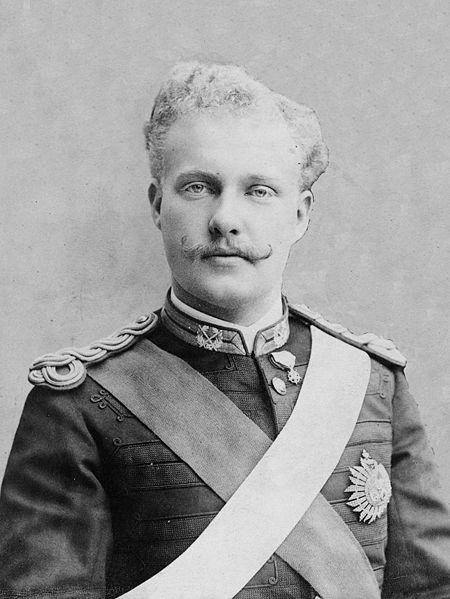
King Carlos I (Portuguese India)
Bombay or Calcutta mint

1903 Uma Rupia

Obverse: Portrait of King Carlos I; CARLOS I REI DE PORTUGAL; Engraver V. ALVES
Reverse: Portuguese coat of arms; INDIA PORTUGUEZA * UMA RUPIA *

Numista 37783
Zeno #312915

Curiosity: This issue uses a much higher silver fineness (0.920) compared to the later 1935 Republican issues. Carlos I was the penultimate king of Portugal; he was assassinated only five years after this coin was struck.
Carlos I Portrait
Republic of Portugal (Estado da India)
Lisbon mint

1935 Uma Rupia

Obverse: Portuguese shield on an armillary sphere superimposed on the Cross of Christ; ESTADO DA INDIA
Reverse: Coat of arms of the Portuguese Republic; REPUBLICA PORTUGUESA

Numista 23394
Zeno #247690

Design Note: This coin features the Armillary Sphere, an astronomical instrument that became a symbol of the Portuguese Age of Discovery and remains a central part of the modern Portuguese flag.
No photo available


Alwar State


Details Ruler Image
Alwar State (Mangal Singh Prabhakar Bahadur)
Calcutta mint

1877 One Rupee

Obverse: Crowned head of Empress Victoria facing left; VICTORIA EMPRESS
Reverse: Persian legend: Maharao Rajah Mangal Singh Bahadur; Date below; ONE RUPEE ALWAR STATE

Numista 33614
Zeno #69780

Historical Note: These coins were struck at the British Calcutta mint (though sometimes mistakenly attributed to Lisbon in older records due to their high production quality). This was part of an agreement where the British struck coins for Alwar to ensure they matched the weight and fineness of the Imperial Rupee.
Mangal Singh


Bikaner State


Details Ruler Image
Bikaner State (Maharaja Ganga Singh)
Bombay mint

1892 One Rupee

Obverse: Crowned head of Empress Victoria facing left; VICTORIA EMPRESS
Reverse: Persian legend: Maharaja Ganga Singh Bahadur; ONE RUPEE BIKANER STATE

Numista 36428
Zeno #69781

Historical Note: Look for the tiny Arabic letter "Ain" (?) just before the date 1892. This was a specific instruction from the Maharaja to indicate that the date was according to the Isawi (Christian) calendar rather than the Vikram Samvat era.
Ganga Singh
Bikaner State (Maharaja Dungar Singh)
Sri Bikanir mint

VS 1916 (1859 AD) Rupee

Obverse: Persian legend acknowledging Queen Victoria and Maharaja Dungar Singh
Reverse: VS date 1916; Collection of dynastic symbols

Numista 101993
Zeno #126750

Curiosity: This hammered issue is a "family history" in silver. The reverse features a sequence of marks—including a Trident (Trishul), Chauri (Fly-whisk), and Katar (Dagger)—representing the various rulers of Bikaner who preceded Dungar Singh.
Dungar Singh
Bikaner State (Maharaja Ratan Singh)
Sri Bikanir mint

AH 1229 Ry. (2)5 (1814 AD) Rupee

Obverse: Legend in Persian in the name of the Mughal Emperor Akbar II
Reverse: Legend in Persian; Mint name and Ry. 25

Numista 101995
Zeno #126750

Historical Note: Ratan Singh's coinage often uses a frozen Regnal Year 25, which technically refers back to the Mughal Emperor Shah Alam II, despite the obverse mentioning Akbar II. This blend of authorities was common in Rajput states to signal continuity.
Ratan Singh
Bikaner State (Maharaja Ratan Singh)
Sri Bikanir mint

AH 1229 (1814 AD) Rupee

Obverse: Persian legend; Sikka Mubarak Sahib Qiran Sani style
Reverse: Persian legend; Zarb Sri Bikanir

Numista 101995
Zeno #322169

Technical Note: This 22mm variant shows a broader flan, which was typical for early 19th-century Rajput hammered issues. Look for the "Sri" in Devanagari often tucked into the Persian calligraphy on the reverse—a subtle assertion of Hindu kingship.
Ratan Singh


Assam State


Details Ruler Image
Ahom Kingdom (Lakshmi Simha)
No mint name

SE 1694 (1772 AD) Rupee

Obverse: Assamese script; Sri Sri Hara Gauri Padambuja Madhukarasya (The honey-bee of the lotus-feet of Hara and Gauri); Winged lion at bottom facing right.
Reverse: Assamese script; Sri Sri Swarg Deva Sri Lakshmi Simha Nripasya Sake 1694.

Numista 79305
Zeno #70050

Historical Note: The Winged Lion is a classic Ahom symbol of sovereignty. The "Hara-Gauri" legend indicates the King’s devotion to Shiva and Parvati, a shift toward mainstream Hinduism during this period of Ahom history.
Lakshmi Simha
Ahom Kingdom (Gaurinatha Simha)
No mint name

SE 1715 Yr. 14 (1793 AD) Rupee

Obverse: Assamese script; Winged lion facing right at bottom; Sri Sri Hara Gauri Padasmrita legend.
Reverse: Assamese script; Sri Sri Swarg Deva Sri Gaurinatha Simha Nripasya Sake 1715.

Numista 50774
Zeno #283464

Numismatic Note: Gaurinatha Simha's reign was marked by internal strife and the Moamoria rebellion. Despite the political turmoil, the minting standards remained high, though the flans (20mm) became slightly more compact compared to earlier issues.
No photo available


Awadh (Oudh) State


Details Ruler Image
Awadh (Oudh) - Safdar Jang
Muhammadabad Benares mint

AH 1161 (1748 AD) Rupee

Obverse: Persian legend in the name of Emperor Ahmad Shah Bahadur.
Reverse: Persian legend; Zarb Muhammadabad Benares; Regnal Year Ahd (1).

Numista 363967
Zeno #245779

Historical Note: Struck during the early years of Safdar Jang's tenure as Nawab Wazir. During this period, the Nawabs still acknowledged Mughal sovereignty on their coins, though they operated with near-total autonomy.
Safdar Jang
Awadh (Oudh) - Shuja'-ud-Daula
Muhammadabad Benares mint

AH 1175 Ry. 2 (1762 AD) Rupee

Obverse: Persian legend; Sikka Mubarak Shah Alam Badshah Ghazi.
Reverse: Persian legend; Struck at Benares in the 2nd year of his tranquil prosperity.

Numista 60114
Zeno #298504

Numismatic Note: Shuja'-ud-Daula was a key figure in the Battle of Buxar. This "dumpy" rupee (18mm) is typical of the mid-18th century Benares style, where the thick planchet often results in parts of the date or mint name being cut off the flan.
Shuja-ud-Daula
Awadh (Oudh) - Sa'adat 'Ali Khan II
Muhammadabad-Banares mint

AH 1178 Ry. 1 (1764-65 AD) Rupee

Obverse: Persian legend in the name of Shah Alam II.
Reverse: Persian legend; Zarb Muhammadabad-Banares; Regnal Year 1 (Ahd).

Numista 182902
Zeno #279724

Historical Note: While the catalog entry notes this under Sa'adat 'Ali Khan II's period, AH 1178 actually falls during the era of Shuja'-ud-Daula. These were often struck with frozen dates. The 19mm flan is a classic "thick dump" rupee style typical of the Benares mint before British influence standardized the diameters.
Nawab of Awadh
Awadh (Oudh) - Sa'adat 'Ali Khan II
Muhammadabad-Banares mint

AH 1218 Ry. 26 (1803-04 AD) Rupee

Obverse: Persian legend; Sikka Mubarak Shah Alam Badshah Ghazi.
Reverse: Persian legend; Struck at Benares in the 26th year of his tranquil prosperity.

Numista 46019
Zeno #316986

Numismatic Note: The AH 1218 date corresponds to the actual reign of Sa'adat 'Ali Khan II. Note the Fish (Mahi) symbol starting to appear more prominently or associated floral marks in the Persian letters. This era reflects the transition where Benares was ceded to the British, yet the mint continued striking in the Nawab's style for a time.
Sa'adat 'Ali Khan II
Awadh (Oudh) - Sa'adat 'Ali Khan II
Muhammadabad-Banares mint

AH 1219 Ry. 26 (1804-05 AD) Rupee

Obverse: Persian legend in the name of Shah Alam II; Sikka Mubarak Shah Alam Badshah Ghazi.
Reverse: Persian legend; Zarb Muhammadabad-Banares; Regnal Year 26 (Frozen).

Numista 46019
Zeno #320106

Numismatic Note: This specimen features a 22mm flan, which is significantly broader than the 18-19mm "dumpy" rupees of the previous decade. This expansion allowed more of the elegant Persian calligraphy and the decorative floral border to be visible.
Nawab of Awadh
Awadh (Oudh) - Sa'adat 'Ali Khan II
Muhammadabad-Banares mint

AH 1221 Ry. 26 (1807-08 AD) Rupee

Obverse: Persian legend; Struck in the name of Shah Alam II.
Reverse: Persian legend; Frozen RY 26; Mint marks: Fish (Mahi), Flag, and Star.

Numista 46019
Zeno #302931

Historical Context: By AH 1221, the Fish (Mahi-Maratib) and the Flag symbols were firmly established as hallmarks of Awadh authority. The use of a frozen Regnal Year 26 (originally belonging to Shah Alam II) was a deliberate choice by the mint to maintain the "Sikka" status, ensuring the coins would not be devalued for being "new" or "unfamiliar."
Sa'adat Ali
Awadh (Oudh) - Sa'adat 'Ali Khan II
Muhammadabad-Banares mint

AH 1222 Ry. 26 (1807-08 AD) Rupee

Obverse: Persian legend; Struck in the name of Shah Alam II; Sikka Mubarak Shah Alam Badshah Ghazi.
Reverse: Persian legend; Zarb Muhammadabad-Banares; Frozen Regnal Year 26; Mint marks: Fish, Flag, and Star.

Numista 46019
Zeno #126515

Numismatic Note: This 24mm specimen shows the widest flan for this series, allowing nearly the entire border design and the complex array of mint marks (the Mahi fish, the Flag, and the Star) to be clearly visible on the reverse.
Sa'adat Ali
Awadh (Oudh) - Sa'adat 'Ali Khan II
Muhammadabad-Banares mint

AH 1228 Ry. 26 (1813-14 AD) Rupee

Obverse: Persian legend in the name of Shah Alam II.
Reverse: Persian legend; Frozen RY 26; Mint marks including Flag and Fish.

Numista 46019
Zeno #272531

Historical Context: AH 1228 marks the final full year of Sa'adat 'Ali Khan II's reign. This "Benares" rupee was actually the standard for trade across much of the Ganges valley at the time, frequently utilized by the East India Company to pay troops and settle administrative debts.
Sa'adat Ali
Awadh (Oudh) - Ghazi-ud-Din Haidar (as Nawab)
Muhammadabad-Banares mint

AH 1231 Ry. 26 (1815-16 AD) Rupee

Obverse: Persian legend in the name of Shah Alam II; Sikka Mubarak Shah Alam Badshah Ghazi.
Reverse: Persian legend; Zarb Muhammadabad-Banares; Frozen Regnal Year 26; Mint marks: Fish (Mahi), Flag, and Star.

Numista 46019
Zeno #341727

Historical Note: Struck shortly after Ghazi-ud-Din Haidar succeeded his father. Although he was now the ruler, the currency remained conservative, retaining the symbols of his predecessors to maintain mercantile trust across Northern India.
Ghazi-ud-Din Haidar
Awadh (Oudh) - Ghazi-ud-Din Haidar (as Nawab)
Muhammadabad-Banares mint

AH 1232 Ry. 26 (1816-17 AD) Rupee

Obverse: Persian legend in the name of Shah Alam II.
Reverse: Persian legend; Frozen RY 26; Fish and Flag symbols.

Numista 46019
Zeno #190302

Numismatic Note: This 21mm specimen represents the transition toward more compact, localized strikes. Within two years of this issue, the British East India Company would encourage the Nawab to claim the title of King, leading to a radical redesign of the Awadh coinage featuring the royal coat of arms.
Ghazi-ud-Din Haidar
Kingdom of Awadh (Oudh) - Ghazi-ud-Din Haidar
Subah Awadh Dar al-Saltanat Lakhnau mint

AH 1236 / Ry. 2 (1820-21 AD) Rupee

Obverse: Royal Coat of Arms: A crown flanked by two lions holding flags, with two fish (Mahi-Maratib) facing each other below.
Reverse: Persian legend containing the King's titles and the mint name: Dar al-Saltanat Lakhnau (The Seat of Sovereignty, Lucknow).

Numista 51951
Zeno #129672

Historical Note: This design is a fascinating hybrid of Eastern and Western heraldry. While the Lions and Crown reflect European influence (likely introduced via British advisors), the Fish remain the traditional Mughal-authorized symbols of high status in Awadh.
King Ghazi-ud-Din Haidar


Bangash State


Details Ruler Image
Bangash Nawabs of Farrukhabad
Ahmadnagar-Farrukhabad mint

AH 1189 Ry. 17 (1775-76 AD) Rupee

Obverse: Persian legend in the name of Shah Alam II.
Reverse: Persian legend; Zarb Ahmadnagar-Farrukhabad; Regnal Year 17.

Numista 64684
Zeno #256744

Historical Note: Struck during the height of the Bangash power. The 26mm flan allows for a broad display of the Persian calligraphy, which was traditionally quite refined at this mint.
Nawab of Farrukhabad
Bangash Nawabs of Farrukhabad
Ahmadnagar-Farrukhabad mint

AH 1205 Ry. 31 (1791-92 AD) Rupee

Obverse: Legend in the name of Shah Alam II.
Reverse: Zarb Ahmadnagar-Farrukhabad; Regnal Year 31.

Numista 64684
Zeno #321540

Numismatic Note: Year 31 is a very common date for this series, as the mint began "freezing" the regnal year around this period to ensure consistency for merchants.
Nawab of Farrukhabad
Bangash Nawabs of Farrukhabad
Ahmadnagar-Farrukhabad mint

AH 1212 Ry. 31 (1797-98 AD) Rupee

Obverse: Persian legend; name of Shah Alam II.
Reverse: Regnal Year 31 (Frozen); Broad 28mm flan.

Numista 64684
Zeno #322163

Technical Note: This specimen is unusually broad (28mm). Large flan rupees from Farrukhabad are highly prized as they showcase nearly the entire die, including the decorative floral borders.
Nawab of Farrukhabad
Bangash Nawabs of Farrukhabad
Ahmadnagar-Farrukhabad mint

Ry. 39 (1799-1800 AD) Rupee

Obverse: Legend in the name of Shah Alam II.
Reverse: Regnal Year 39; 23mm "Compact" style.

Numista 64684
Zeno #321529

Historical Context: Struck just a few years before the British EIC took full control of the Farrukhabad mint (1803). The "45" or "Lucknow" style symbols often found on these coins indicate the close proximity and shared commercial sphere with the Kingdom of Awadh.
Nawab of Farrukhabad


Baroda State


These two specimens represent the final years of the hand-hammered silver rupee in Baroda. The years AH 1299 and AH 1300 were a major turning point; while the mint was still producing these traditional "thick dump" coins, Sayaji Rao III was already planning the comprehensive modernization of the state’s infrastructure, including its currency. By AH 1300, the flans had become quite compact (19mm), often resulting in very thick coins where the "Sa Ga" (? ?) and Scimitar are deeply impressed into the silver. HTML
Details Ruler Image
Baroda State (Anand Rao Gaekwad)
Petlad mint

AH 1224 Ry. 4 (1809 AD) Rupee

Obverse: Persian legend; Horizontal Scimitar (Khanda) with a flower mint mark to the left.
Reverse: Persian legend; Year (1224) to the right; Regnal Year 4.

Numista 64278
Zeno #316104

Numismatic Note: The Scimitar is the defining feature of Baroda coinage. On Petlad mint issues, it is usually struck horizontally. Unlike some other states, the Hijri year and Regnal year on these coins represent the actual calendar year of striking.
Anand Rao Gaekwad
Baroda State (Anand Rao Gaekwad)
Petlad mint

AH 1226 Ry. 6 (1811 AD) Rupee

Obverse: Persian legend; Horizontal Scimitar and flower mark.
Reverse: Persian legend; Year (1226) and Regnal Year 6.

Numista 64278
Zeno #330090

Historical Context: During Anand Rao's reign, Baroda was increasingly falling under the influence of the British East India Company via the Subsidiary Alliance. However, the coinage remained traditional in style, reflecting the internal administrative continuity of the Gaekwad state.
Anand Rao Gaekwad
Baroda State (Anand Rao Gaekwad)
Petlad mint

AH 1227 Ry. 7 (1812 AD) Rupee

Obverse: Persian legend; Horizontal Scimitar (Khanda) with a flower mint mark to the left.
Reverse: Persian legend; Year (1227) and Regnal Year 7 visible.

Numista 64278
Zeno #273685

Numismatic Note: The 25x23mm measurement indicates an oblong flan. Because these were hand-hammered, the shape of the silver "nugget" before striking often dictated the final appearance, sometimes resulting in these broad, non-circular shapes that collectors find highly desirable.
Anand Rao Gaekwad
Baroda State (Anand Rao Gaekwad)
Petlad mint

AH 1228 Ry. 8 (1813 AD) Rupee

Obverse: Persian legend; Horizontal Scimitar and flower mark.
Reverse: Persian legend; AH year (1228) and RY 8.

Numista 64278
Zeno #319371

Historical Context: AH 1228 marks the penultimate year of this specific series before the mint began introducing minor stylistic shifts in the calligraphy. Note that the weight remains very consistent at 11.47g, showing the strict quality control of the Baroda state mints.
Anand Rao Gaekwad
Baroda State (Anand Rao Gaekwad)
Petlad mint

AH 1229 Ry. 9 (1814 AD) Rupee

Obverse: Persian legend; Horizontal Scimitar (Khanda) with a flower mint mark to the left; Regnal Year 9 below.
Reverse: Persian legend; Year (1229) clearly visible.

Numista 64278
Zeno #329216

Numismatic Note: On these later AH 1229 issues, the Regnal Year (9) is often very clearly struck at the bottom of the obverse, making them easier to identify than earlier, more crowded "dump" types.
Anand Rao Gaekwad
Baroda State (Anand Rao Gaekwad)
Petlad mint

AH 1229 Ry. 9 (1814 AD) Rupee

Obverse: Persian legend; Horizontal Scimitar and flower mark.
Reverse: Persian legend; Year (1229) and Ry. 9.

Numista 64278
Zeno #329216

Historical Context: The consistency in weight (11.55g–11.59g) between these two specimens highlights the precision of the Petlad mint workers. Despite being hand-struck, the silver content was strictly regulated to ensure the coins remained the preferred medium for tax payments in the Gujarat region.
Anand Rao Gaekwad
Baroda State (Anand Rao Gaekwad)
Petlad mint

AH 1230 Ry. 10 (1815 AD) Rupee

Obverse: Persian legend; Horizontal Scimitar (Khanda); Flower mint mark to the left.
Reverse: Persian legend; Year (1230) and Regnal Year 10.

Numista 64278
Zeno #330091

Numismatic Note: The "Scimitar" is the primary dynastic symbol of the Gaekwads of Baroda. In the Petlad series, it is consistently positioned horizontally on the obverse.
Anand Rao
Baroda State (Anand Rao Gaekwad)
Petlad mint

AH 1230 Ry. 10 (1815 AD) Rupee

Obverse: Persian legend; Horizontal Scimitar.
Reverse: Persian legend; AH 1230 and RY 10.

Numista 64278
Zeno #340806

Technical Detail: Despite the slightly smaller 21mm flan, the weight remains exceptionally consistent at 11.55g. This indicates that while the shape of the coins varied, the silver content was strictly controlled to maintain their value in trade.
Anand Rao
Baroda State (Anand Rao Gaekwad)
Petlad mint

AH 1233 (1818 AD) Rupee

Obverse: Persian legend; Horizontal Scimitar (Khanda) with flower mint mark to the left.
Reverse: Persian legend; AH date 1233 visible.

Numista 64278
Zeno #321530

Numismatic Note: The silver purity of these Petlad issues was kept high to compete with the British East India Company's "Farrukhabad" rupees circulating in the same trade routes.
Anand Rao Gaekwad
Baroda State (Anand Rao Gaekwad)
Petlad mint

AH 1233 Ry. 13/33 (1818 AD) Rupee

Obverse: Persian legend; Horizontal Scimitar and flower mark.
Reverse: Persian legend; AH 1233 with anomalous Regnal Year.

Numista 64278
Zeno #330092

Technical Detail: In some late issues of Anand Rao, the Regnal Year on the die was not updated correctly or was "frozen." While the AH 1233 date is the primary indicator of the minting period, the Ry. mark (appearing as 13 or 33) is a common die-sinker's error for this specific year.
Anand Rao Gaekwad
Baroda State (Anand Rao Gaekwad)
Baroda mint

AH 1234 Ry. 9 (1818-19 AD) Rupee

Obverse: Persian legend; Horizontal Scimitar (Khanda) with flower mint mark to the left.
Reverse: Persian legend; Year 1234 to the right; Regnal Year 9.

Numista 64278
Zeno #188262

Numismatic Note: This 20mm specimen is a classic "dump" rupee. The smaller flan size relative to the die results in a thick, chunky coin where the central Scimitar and the Hijri date are prioritized in the strike.
Anand Rao Gaekwad
Baroda State (Anand Rao Gaekwad)
Baroda mint

AH 1234 Ry. 14 (1818-19 AD) Rupee

Obverse: Persian legend; Horizontal Scimitar and flower mark.
Reverse: Persian legend; Year 1234 to the right; Regnal Year 14.

Numista 64278
Zeno #329424

Technical Detail: Note the difference in Regnal Years (9 vs 14) within the same Hijri year. This often occurred in Princely State mints due to the use of older dies or different administrative tracking of the ruler's "Julus" (accession). The 11.58g weight on this 22mm specimen is exceptionally full for the series.
Anand Rao Gaekwad
Baroda State (Anand Rao Gaekwad)
Baroda mint

(AH 1234) Ry. 13 (1818-19 AD) Rupee

Obverse: Persian legend; Horizontal Scimitar (Khanda) with flower mint mark to left; Regnal Year 13 below.
Reverse: Persian legend; AH 1234 (often partially off-flan).

Numista 64278
Zeno #264082

Numismatic Note: This specimen from the Baroda city mint demonstrates the "frozen" date period. While the AH year points to the end of Anand Rao's reign, the placement of the Regnal Year directly below the scimitar became a standard layout for capital mint issues.
Anand Rao
Baroda State (Sayaji Rao II)
Baroda mint

AH 1238 Ry. 18 (1822-23 AD) Rupee

Obverse: Struck in the name of Mughal Emperor Muhammad Akbar II; AH Date 1237 (frozen) or 1238.
Reverse: Scimitar to the left of Julus; Nagari "Sa" (?) for Sayaji Rao; Regnal Year 18 in center.

Numista 54937
Zeno #126861

Historical Detail: Sayaji Rao II's coinage is significant for the "Sa" (?) initial. This Devanagari character was a bold assertion of Maratha identity amidst the traditional Persian script of the Mughal suzerain.
Sayaji Rao II
Baroda State (Sayaji Rao II)
Baroda mint

AH 1238 Ry. 18 (1822-23 AD) Rupee

Obverse: Persian legend in the name of Muhammad Akbar II; AH Date 1237/1238.
Reverse: Scimitar to left of Julus; Nagari "Sa" (?); Regnal Year 18 in center.

Numista 54937
Zeno #320103

Numismatic Note: This specimen is slightly lighter at 11.43g but maintains the 21mm "thick dump" fabric. The "Sa" mark is well-placed, though the flower mint mark on the obverse is often found partially off the flan due to the die being larger than the silver planchet.
Sayaji Rao II
Baroda State (Sayaji Rao II)
Baroda mint

Ry. 19 (1824 AD) Rupee

Obverse: Legend in the name of Muhammad Akbar II; Date (1237) frozen.
Reverse: Nagari "Sa" (?); Scimitar to left; Regnal Year 19 in center.

Numista 54937
Zeno #302934

Technical Detail: By Regnal Year 19, the 11.55g–11.56g weight standard is very consistent. The "Sa" (for Sayaji) is the most prominent feature on the reverse, serving as a clear dynastic identifier for the Gaekwads even when the Hijri date is missing or obscured.
Sayaji Rao II
Baroda State (Sayaji Rao II)
Baroda mint

AH 1240 Ry. 20 (1824-25 AD) Rupee

Obverse: Struck in the name of Muhammad Akbar II; Date AH 1237 (frozen) or 1240.
Reverse: Nagari "Sa" (?); Scimitar to left of Julus; Regnal Year 20 in center.

Numista 54937
Zeno #291954

Numismatic Note: This 20mm specimen is exceptionally thick. The AH 1240 date corresponds perfectly with the Mughal Regnal Year 20, showing a rare moment of alignment between the lunar and regnal calendars in the Baroda mint records.
Sayaji Rao II
Baroda State (Sayaji Rao II)
Baroda mint

AH 1253 Ry. 33 (1837-38 AD) Rupee

Obverse: Persian legend; Vertical Scimitar; Flower mint mark above (stemless); Regnal Year 33 to left.
Reverse: Persian legend; AH year (1253) to the right.

Numista 54937
Zeno #127119

Style Transition: This specimen (KM C38.3) marks a departure in layout. The **vertical scimitar** becomes the focal point of the obverse, and the flower mint mark is simplified. By this time, the "Sa" mark on the reverse is often accompanied by more crowded calligraphy as the mint maximized the use of the die surface.
Sayaji Rao II
Baroda State (Sayaji Rao II)
Baroda mint

AH 1254 Ry. 33 (1838-39 AD) Rupee

Obverse: Persian legend; Vertical Scimitar; Regnal Year 33 to the left; Stemless flower mint mark above.
Reverse: Persian legend; AH Year 1254 to the right.

Numista 54939
Zeno #319372

Numismatic Note: At 19mm, this is a particularly "tight" strike. The vertical orientation of the scimitar allowed the mint masters to fit both the regnal year and the flower mark more symmetrically onto the increasingly smaller silver planchets.
Sayaji Rao II
Baroda State (Sayaji Rao II)
Baroda mint

AH 1256 Ry. 36 (1840-41 AD) Rupee

Obverse: Persian legend; Vertical Scimitar; Ry. 36 (or 37 variant) to left; Flower mint mark above.
Reverse: Persian legend; AH Year 1256 clearly visible to the right.

Numista 54939
Zeno #325929

Historical Detail: By AH 1256, the British East India Company was consolidating currency across India, but Baroda maintained its autonomous minting rights. The weight of 11.40g remains consistent with the local "Babashahi" rupee standard used in the Gujarat region.
Sayaji Rao II
Baroda State (Sayaji Rao II)
Baroda mint

AH 1257 Ry. 37 (1841-42 AD) Rupee

Obverse: Persian legend; Vertical Scimitar; Regnal Year 37 to the left; Flower mint mark above.
Reverse: Persian legend; AH Year 1257 clearly visible to the right.

Numista 54939
Zeno #245347

Numismatic Note: This is one of the final "Babashahi" rupees struck before the design began to incorporate more varied local inscriptions. The verticality of the scimitar is now perfectly balanced with the regnal year on the 20mm flan.
Sayaji Rao II
Baroda State - Khande Rao
Baroda mint

AH 128x (1864-70 AD) Rupee

Obverse: Nagari inscription "Kha Ga" (? ?); Scimitar to the right; Hijri date below.
Reverse: Persian legend in the name of Muhammad Akbar II; Includes the title "Commander of the Sovereign Band".

Numista 85482
Zeno #188263

Historical Detail: Khande Rao was a great patron of the arts and a loyal ally to the British during the 1857 uprising. His coins are distinct for the "Kha Ga" initials, which move the coinage further away from purely Mughal archetypes toward a unique Baroda identity.
Khande Rao
Baroda State - Khande Rao
Baroda mint

AH 1276 (1859-60 AD) Rupee

Obverse: Nagari initials "Kha Ga" (? ?); Scimitar to the right; AH date 1276 below.
Reverse: Persian legend; Title "Commander of the Sovereign Band".

Numista 85482
Zeno #267785

Numismatic Note: The AH 1276 date is significant as it follows immediately after the Indian Rebellion of 1857. Khande Rao's loyalty to the British during the conflict ensured the state's continued autonomy and minting privileges.
Khande Rao
Baroda State - Malhar Rao
Baroda mint

AH 1288 (1871-72 AD) Rupee

Obverse: Nagari initials "Ma Ga" (? ?); Scimitar to the right; AH Date 1288.
Reverse: Persian legend in the name of the Mughal Emperor (traditional formula).

Numista 61643
Zeno #159786

Historical Detail: Malhar Rao's coinage is easily identified by the "Ma Ga" initials. These coins are often found on slightly smaller, more compact 20mm flans compared to those of his predecessor.
Malhar Rao
Baroda State - Sayaji Rao III
Baroda mint

AH 1292 (1875 AD) Rupee

Obverse: Nagari initials "Sa Ga" (? ?); Scimitar to the right; AH Date 1292 below.
Reverse: Persian legend; Traditional Mughal-style formula.

Numista 84308
Zeno #302996

Historical Context: AH 1292 is the accession year for Sayaji Rao III. At only 12 years old, he was selected by the British and the Dowager Maharani to lead the state. These coins were struck while the state was under a Council of Regency.
Sayaji Rao III
Baroda State - Sayaji Rao III
Baroda mint

AH 1298 (1881 AD) Rupee

Obverse: Nagari initials "Sa Ga" (? ?); Scimitar to the right; AH Date 1298.
Reverse: Persian legend.

Numista 84308
Zeno #282873

Numismatic Note: 1881 was the year Sayaji Rao III was invested with full ruling powers. Shortly after this period, the Baroda mint began the process of modernization that would eventually lead to the discontinuation of these hammered "dump" rupees in favor of machine-struck, milled coinage.
Sayaji Rao III
Baroda State - Sayaji Rao III
Baroda mint

AH 1299 (1882 AD) Rupee

Obverse: Nagari initials "Sa Ga" (? ?); Scimitar to the right; AH Date 1299 below.
Reverse: Persian legend; Traditional Mughal-style formula.

Numista 84308
Zeno #320101

Numismatic Note: At 11.53g and 19mm, this coin is a "chunky" strike. The shift to a smaller diameter but maintaining the full weight indicates a very deliberate change in the preparation of the silver planchets during this late hammered period.
Sayaji Rao III
Baroda State - Sayaji Rao III
Baroda mint

AH 1300 (1882-83 AD) Rupee

Obverse: Nagari initials "Sa Ga" (? ?); Scimitar to the right; AH Date 1300.
Reverse: Persian legend.

Numista 84308
Zeno #320102

Historical Detail: AH 1300 is one of the very last dates for the hammered "Babashahi" rupee. Soon after this year, Baroda began the transition to fully machine-struck (milled) coinage. These coins are essentially the "Swan Song" of the ancient Maratha hammered minting tradition.
Sayaji Rao III
Baroda State - Sayaji Rao III
Baroda mint

AH 1301 (1883-84 AD) Rupee

Obverse: Nagari initials "Sa Ga"; Scimitar to the right; AH Date 1301 below.
Reverse: Persian legend; Traditional Mughal-style formula.

Numista 84308
Zeno #329217

Numismatic Note: By AH 1301, the dies show signs of the end of the era. The calligraphy is often more simplified, and the "Sa Ga" initials are struck with great depth into the 11.43g planchet.
Sayaji Rao III
Baroda State - Sayaji Rao III
Baroda mint

AH 1302 (1884-85 AD) Rupee

Obverse: Nagari initials "Sa Ga" ; Scimitar to the right; AH Date 1302.
Reverse: Persian legend.

Numista 84308
Zeno #188264

Historical Detail: The AH 1302 date marks the end of the hammered silver "dump" rupee tradition in Baroda. This specimen, with its 20mm flan, provides a clear view of the scimitar and date, serving as a historic bookend to the Gaekwad hammered series that began under Anand Rao.
Sayaji Rao III


Bharatpur State


Details Ruler Image
Bharatpur State (Ranjit Singh)
Braj Inderpur mint

c. 1803 AD / Ry. 46 Rupee

Obverse: Persian legend in the name of Shah Alam II; "Saya-e-fazle elah" couplet.
Reverse: Sana julus zarb; Mint marks: Star and Katar (dagger); Nagari letter "Sa" .

Numista 69972
Zeno #80623

Numismatic Note: The Katar is a traditional Indian push-dagger. Its presence as a mint mark is a strong identifier for the Bharatpur series during the late 18th and early 19th centuries.
Ranjit Singh
Bharatpur State (Ranjit Singh)
Braj Inderpur mint

AH 121x Ry. 49 (1798-99 AD) Rupee

Obverse: Persian legend; Shah Alam II couplet; AH date in upper left (partially visible).
Reverse: Nagari letter "Sa" (; Star and Katar mint marks.

Numista 69972
Zeno #244944

Technical Detail: Note the Regnal Year (Ry. 49). Because Shah Alam II had a very long nominal reign (even while blinded and under the "protection" of various powers), these high regnal years are common on coins of the Jat and Maratha states of this era.
Ranjit Singh


Bhopal State


Details Ruler Image
Bhopal State
Ghaus Muhammad Khan (Nasir Muhammad Khan, Regent)

i.n.o. Muhammad Akbar II
Braj Inderpur mint

Ry. 4 (1809-10 AD) Rupee

Obverse: Persian legend; Sikka Mubarak Sahab-e-Qiran Sani Muhammad Akbar Shah.
Reverse: Persian legend; Sana Julus Ry. 4; Braj Inderpur mint name.

Numista 53403
Zeno #159792

Numismatic Note: The 10.87g weight on this 19mm flan suggests a slightly worn or trimmed specimen, as the standard for this series typically aims for 11.00g.
Ghaus Muhammad Khan
Bhopal State
Ghaus Muhammad Khan (Nasir Muhammad Khan, Regent)

i.n.o. Muhammad Akbar II
Braj Inderpur mint

AH 12xx Ry. 4 (1809-10 AD) Rupee

Obverse: Persian legend.
Reverse: Persian legend; Sana Julus Ry. 4.

Numista 53403
Zeno #161970

Technical Detail: This 18mm specimen represents the "thick dump" variety. The smaller diameter results in a significantly thicker coin to maintain the 11.02g weight, common in Central Indian minting practices.
Ghaus Muhammad Khan
Bhopal State - Ghaus Muhammad Khan
i.n.o. Muhammad Akbar II
Braj Inderpur mint

Ry. 29 (c. 1834 AD) Rupee

Obverse: Persian legend; Trident (Trishul) at upper right.
Reverse: Persian legend in the name of Shah Alam II (frozen/traditional).

KM 27
Zeno Reference

Numismatic Note: The use of the Trident on Bhopal coinage is interesting given the state's Islamic governance. It likely served as a "merchant mark" that guaranteed the silver's purity to Hindu traders across the Malwa plateau.
Ghaus Muhammad Khan
Bhopal State - Nawab Hayat Muhammad Khan
i.n.o. Shah Alam II
Bhopal mint

AH 120(7) Ry. 33 (1792-93 AD) Rupee

Obverse: Persian legend; Sikka Mubarak Shah Alam.
Reverse: Sana Julus Ry. 33; Zarb Bhopal.

Zeno #162133

Technical Detail: During Hayat Muhammad Khan's reign, the Bhopal mint produced these high-purity silver rupees to stabilize the state's economy during the constant Maratha-Afghan conflicts. The 11.16g weight is a very full standard for this era.
Hayat Muhammad Khan
Bhopal State - Nawab Hayat Muhammad Khan
i.n.o. Shah Alam II
Bhopal mint

AH 1206 Ry. 34 (1791-92 AD) Rupee

Obverse: Persian legend; Trident (Trishul) at upper right.
Reverse: Sana Julus Ry. 34; Zarb Bhopal.

KM 27
Zeno #188444

Numismatic Note: This 18mm specimen demonstrates the "compact dump" style. By Ry. 34, the dies were significantly larger than the planchets, meaning only the central portion of the Persian couplet and the trident are visible.
Hayat Muhammad Khan
Bhopal State - Nawab Faiz Mohammad Khan
i.n.o. Shah Alam II
Bhopal mint

Ry. 15 (c. 1773 AD) Rupee

Obverse: Persian legend in the name of Shah Alam II.
Reverse: Sana Julus Ry. 15; Zarb Bhopal.

Numista 303504
Zeno #271821

Historical Detail: Struck during the reign of Faiz Mohammad Khan, this rupee features a broader 21mm flan characteristic of earlier 18th-century issues. The weight of 10.93g is slightly lower than the later 11.16g standard, reflecting earlier regional weight variances.
Faiz Mohammad Khan
Bhopal State - Nawab Sikandar Begum
Bhopal mint

AH 1272 (1855-56 AD) Rupee

Obverse: Persian legend; traditional imperial style formula.
Reverse: Zarb Bhopal; AH Date 1272 visible.

Numista 79055
Zeno #333057

Numismatic Note: During Sikandar Begum's reign, the Bhopal rupee became a preferred currency in Central India due to its stable weight (approx. 10.94g) and high silver fineness, often outperforming the British East India Company rupees in local village markets.
Sikandar Begum Era
Bhopal State - Nawab Sikandar Begum
Bhopal mint

AH 1275 (1858-59 AD) Rupee

Obverse: Persian legend; standard "Sikka Mubarak" type.
Reverse: Persian legend; AH Date 1275.

Numista 79055
Zeno #325936

Historical Context: Struck in the immediate aftermath of the 1857 Uprising. While the British were abolishing the names of Mughal emperors on their own coinage, Bhopal continued this "frozen" tradition for several more years to ensure merchant confidence.
Sikandar Begum Era
Bhopal State - Nawab Sikandar Begum
Bhopal mint

AH 1278 Ry. 2 (1861-62 AD) Rupee

Obverse: Persian legend; Sikka Mubarak Akbar Shah (frozen formula).
Reverse: Persian legend; Sana Julus Ry. 2; AH Date 1278.

Numista 79055
Zeno #333058

Chronology Note: The Regnal Year 2 corresponds to the period following Sikandar Begum's formal recognition as a sovereign ruler in her own right by the British, rather than just a regent, as a reward for her administrative reforms.
Sikandar Begum
Bhopal State - Nawab Sikandar Begum
Bhopal mint

AH 1285 Ry. 8 (1868-69 AD) Rupee

Obverse: Persian legend in standard imperial format.
Reverse: Zarb Bhopal; AH Date 1285 and Ry. 8 clearly visible.

Numista 79055
Zeno #333059

Historical Detail: AH 1285 was the year of Sikandar Begum's death and the accession of Shah Jahan Begum. This coin represents the final stylistic iteration of Sikandar's coinage before the introduction of new symbols under her successor.
[Image showing the placement of 'Sana Julus' and Regnal Year digits on Bhopal silver]
Sikandar Begum
Bhopal State - Nawab Shah Jahan Begum
Bhopal mint

AH 1295 (1878 AD) Rupee

Obverse: Persian legend in the name of Muhammad Akbar II (frozen).
Reverse: Zarb Bhopal; AH Date 1295 clearly visible.

Numista 50731
Zeno #333060

Numismatic Note: Under Shah Jahan Begum, the "Bhopal Rupee" maintained its reputation for purity. Despite the 19mm flan, the strike is often centered enough to show the century digits of the Hijri date.
Shah Jahan Begum Era
Bhopal State - Nawab Shah Jahan Begum
Bhopal mint

AH 1305 (1887-88 AD) Rupee

Obverse: Persian legend; standard imperial formula.
Reverse: Persian legend; AH Date 1305.

Numista 50731
Zeno #333061

Historical Detail: By AH 1305, the British "Victoria Empress" rupees were circulating widely alongside these local strikes. The compact 18mm flan of this issue is typical of the "late dump" style where thickness was favored over diameter to prevent edge-shaving.
Shah Jahan Begum Era


Broach State


Details Ruler Image
Broach (Bharuch)
British East India Company (B.E.I.C.) administration

i.n.o. Shah Alam II
Bharuch mint

ND (c. 1805 AD) Rupee

Obverse: Persian legend; St. Stephen's Cross mint mark (a small cross with expanded ends).
Reverse: Persian legend in the name of Shah Alam II; Sana Julus.

KM C# A36
Numista 61639
Zeno #130268

Numismatic Note: Broach was a vital port town that changed hands several times. In 1803, the British took it from the Marathas, but for a period, the mint continued to strike coins in the traditional Mughal style of Shah Alam II, using the cross mark to denote British authority or presence. The St. Stephen's Cross is the primary diagnostic for this series. While the fabric is Maratha in style (22mm broad flan), the cross confirms the B.E.I.C. influence following the Treaty of Surji-Anjangaon. Gwalior also utilized the cross mark on several of its issues. After the British ceded certain territories back to the Scindias or through complex local administrative arrangements, the iconography overlapped.
Gwalior/Broach influence


Bundi State


In this final set of silver rupees for the George V era, we see the Bundi mint maintaining its traditional hammered process even as the world moved toward industrial coinage. The VS 1982 specimen is a textbook example of the "Katar Type II," while the second coin—though labeled with a broader 21mm diameter in your notes—appears from the image and weight (11.02g) to be a much thicker, smaller-flan "dump" variety. The variable digit in VS 198x is quite common, as the final numeral was often the first part of the die to wear down or be obscured by a partial strike. Updated HTML Code HTML
Details Ruler Image
Bundi State - Maharao Raja Ram Singh
Bundi mint

i.n.o. Muhammad Bahadur Shah II
Ry. 18 (c. 1854-55 AD) Rupee

Obverse: Persian legend in the name of the last Mughal Emperor, Bahadur Shah II.
Reverse: Sana Julus Ry. 18; Bundi mint formula.

Numista 52093
Zeno #302935

Historical Context: This coin was struck just years before the 1857 Uprising. After the fall of Bahadur Shah II, Bundi coinage eventually transitioned to featuring the name of Queen Victoria. The 11.11g weight remains a high standard for Rajputana silver.
Maharao Raja Ram Singh
Bundi State - Bishen Singh
Bundi mint

i.n.o. Shah Alam II
Ry. 12 (Frozen) Rupee

Obverse: Persian legend; Sikka Mubarak Shah Alam.
Reverse: Sana Julus; Large **Leaf (Peepal or Betel leaf)** mint mark.

KM C10.1
Numista 83511
Zeno #334469

Diagnostic Mark: The Leaf is the primary symbol of Bundi’s early 19th-century silver. While many states used floral sprigs, the Bundi leaf is uniquely broad and often occupies a significant portion of the lower reverse flan. The Peepal leaf is not just a mint mark but a sacred symbol in Rajput culture.
Bishen Singh
Bundi State - Maharao Raja Ram Singh
Bundi mint

i.n.o. Muhammad Bahadur Shah II
Ry. 18 (c. 1854-55 AD) Rupee

Obverse: Persian legend; strike in the name of the last Mughal Emperor.
Reverse: Sana Julus Ry. 18.

Numista 52093
Zeno #302935

Numismatic Note: This specimen shows the transition to a smaller, thicker 18mm flan. The regnal year 18 refers to the reign of Bahadur Shah II, though Bundi was by this time firmly under British suzerainty.
Maharao Raja Ram Singh
Bundi State - Maharao Raja Bishen Singh
Bundi mint

i.n.o. Shah Alam II
Ry. 12 (Frozen) Rupee

Obverse: Persian legend in the name of Shah Alam II.
Reverse: Sana Julus; Large **Leaf** mint mark at bottom.

KM C10.1
Numista 83511
Zeno #334469

Diagnostic: The prominent leaf on the reverse is the signature of the Bundi mint during this era. At 11.26g, this is a heavy silver standard, reflecting the state's prosperity during the post-Maratha pacification of Rajasthan.
Bishen Singh
Bundi State - Maharao Raja Bishen Singh
Bundi mint

i.n.o. Shah Alam II
Ry. 14 (Frozen) Rupee

Obverse: Persian legend; Sikka Mubarak Shah Alam.
Reverse: Sana Julus Ry. 14; Bundi Leaf mint mark at bottom.

KM C10.1
Numista 83511
Zeno #334470

Numismatic Note: The Ry. 14 date on these issues is often considered "frozen," appearing on coins struck many years after the actual 14th regnal year of Shah Alam II. This was done to ensure the coin's continued acceptance by conservative local merchants.
Bishen Singh
Bundi State - Maharao Raja Bishen Singh
Bundi mint

i.n.o. Shah Alam II
AH 1204 Ry. 33 (1789-90 AD) Rupee

Obverse: Persian legend; AH 1204 usually placed in the upper fields.
Reverse: Sana Julus Ry. 33; Large **Leaf** mint mark.

KM C10.1
Numista 83511
Zeno #137882

Historical Detail: Struck during the early years of Bishen Singh's reign. The 11.32g weight is a very high "full" standard, indicating that the Bundi mint was using highly refined silver during this period of Maratha-Rajput transition.
Bishen Singh
Bundi State - Maharao Raja Bishen Singh
Bundi mint

i.n.o. Shah Alam II
Ry. 40 (c. 1798 AD) Rupee

Obverse: Persian legend in the name of Shah Alam II.
Reverse: Sana Julus Ry. 40; Bundi Leaf mint mark.

Numista 83511
Zeno #333056

Numismatic Note: The weight of 11.05g is very consistent for this series. By Ry. 40, the Bundi mint had achieved a high level of standardized production, which is why these "Leaf" rupees are found so frequently in Central Indian hoards.
Bishen Singh
Bundi State - Maharao Raja Bishen Singh
Bundi mint

i.n.o. Shah Alam II
Ry. 43 (c. 1801 AD) Rupee

Obverse: Persian legend; standard "Sikka Mubarak" formula.
Reverse: Sana Julus Ry. 43; Bundi Leaf at the bottom.

Numista 83511
Zeno #333052

Historical Detail: Ry. 43 marks the turn of the century. Despite the chaotic political landscape in Rajasthan due to Maratha incursions, Bundi maintained its minting privileges and preserved the silver purity of its local rupee.
Bishen Singh
Bundi State - Maharao Raja Bishen Singh
Bundi mint

i.n.o. Shah Alam II
Ry. 46 (c. 1804 AD) Rupee

Obverse: Persian legend; Sikka Mubarak Shah Alam.
Reverse: Sana Julus Ry. 46; Bundi Leaf mint mark at bottom.

KM C10.1
Numista 83511
Zeno #334468

Numismatic Note: Ry. 46 is one of the highest regnal years recorded for this series. The broad 20mm flan allows for a nearly complete view of the leaf symbol, which remained the state's hallmark for over half a century.
Bishen Singh
Bundi State - Maharao Raja Ram Singh
Bundi mint

i.n.o. Queen Victoria
AD 1859 / VS 1916 Rupee

Obverse: "QUEEN VICTORIA" in English around a central Katar (Dagger); Persian legend below.
Reverse: Nagari legend "Rangre" / "Maharao Raja Ram Singh"; Date VS 1916.

KM Y.9
Numista 50759
Zeno #291955

Historical Detail: This "Legend Type" was introduced following the 1857 Uprising. It is a trilingual issue: English (the Suzerain), Persian (the administrative tradition), and Devanagari (the local ruler). The 11.16g weight is a return to a very full silver standard.
Ram Singh Era
Bundi State - Maharao Raja Ram Singh
Bundi mint

i.n.o. Queen Victoria
AD 1859 / VS 1916 Rupee

Obverse: "QUEEN VICTORIA" in English around central Katar; Persian legend below.
Reverse: Nagari legend "Maharao Raja Ram Singh"; Date AD 1859 and VS 1916.

KM Y.9
Numista 50759
Zeno #314925

Numismatic Note: The VS 1916 issue is the "Year One" for this type. The 11.16g weight is exceptionally consistent, indicating a tight control over the minting process during this transition period.
Ram Singh Era
Bundi State - Maharao Raja Ram Singh
Bundi mint

i.n.o. Queen Victoria
AD 1861 / VS 1918 Rupee

Obverse: English and Persian legend; central Katar.
Reverse: Devanagari legend; Date VS 1918.

KM Y.9
Numista 50759
Zeno #323337

Historical Detail: By 1861, the design had become slightly more refined. Note the 11.20g weight—slightly higher than the previous year, highlighting the "heavy" silver standard Bundi maintained to ensure its coins were preferred over British Imperial rupees in local trade.
Ram Singh Era
Bundi State - Maharao Raja Ram Singh
Bundi mint

i.n.o. Queen Victoria
AD 1861 / VS 1918 Rupee

Obverse: English legend "QUEEN VICTORIA"; central Katar (Dagger); Persian legend below.
Reverse: Nagari legend "Maharao Raja Ram Singh"; AD and VS dates.

KM Y.9
Numista 50759
Zeno #340816

Numismatic Note: This 11.17g specimen is a very full-weight strike. The VS 1918 date corresponds to the year the British Crown issued the "Paper Currency Act," making these high-quality silver local coins even more vital for daily village commerce where paper was not yet trusted.
Ram Singh Era
Bundi State - Maharao Raja Ram Singh
Bundi mint

i.n.o. Queen Victoria
AD 1869 / VS 1926 Rupee

Obverse: Legend around central Katar.
Reverse: Nagari and AD/VS dates; Zarb Bundi formula.

KM Y.9
Numista 50759
Zeno #302936

Historical Detail: By 1869, Ram Singh had ruled for nearly 40 years. This issue demonstrates the longevity of the "Legend type," which became so well-recognized that it circulated as far as the markets of neighboring Mewar and Malwa.
Ram Singh Era
Bundi State - Maharao Raja Ram Singh
Bundi mint

i.n.o. Queen Victoria
AD 1870 / VS 1927 Rupee

Obverse: "QUEEN VICTORIA" around central Katar (Dagger); Persian legend at bottom.
Reverse: Nagari legend "Maharao Raja Ram Singh"; AD 1870 and VS 1927.

KM Y.9
Numista 50759
Zeno #326375

Numismatic Note: The 21mm flan allows for a clear view of the "70" in the AD date. The 11.14g weight reflects the consistent adherence to the local 'Hali' rupee standard during this decade.
Ram Singh Era
Bundi State - Maharao Raja Ram Singh
Bundi mint

i.n.o. Queen Victoria
AD 1873 / VS 1930 Rupee

Obverse: Trilingual legend type with central Katar.
Reverse: Nagari legend; AD 1873 and VS 1930 visible.

KM Y.9
Numista 50759
Zeno #272510

Historical Detail: VS 1930 marks the midpoint of Ram Singh's later reign. Notice the slightly more compact 20mm flan compared to the 1870 issue, resulting in the outer edges of the English legend being partially truncated—a common characteristic of these hand-struck issues.
Ram Singh Era
Bundi State - Maharao Raja Ram Singh
Bundi mint

i.n.o. Queen Victoria
AD 1877 / VS 1934 Rupee

Obverse: English legend "QUEEN VICTORIA" centered around a Katar.
Reverse: Nagari legend with dual dates AD 1877 and VS 1934.

KM Y.9
Numista 50759
Zeno #300034

Numismatic Note: 1877 was the year Queen Victoria was proclaimed Empress of India (Kaisar-i-Hind). While the British Imperial coinage changed to "Victoria Empress," Bundi maintained its "Queen Victoria" legend, reflecting the state's specific treaty status.
Ram Singh Era
Bundi State - Maharao Raja Ram Singh
Bundi mint

i.n.o. Queen Victoria
VS 1943 (1886 AD) Rupee

Obverse: Standard Katar design with English/Persian legends.
Reverse: Nagari legend; VS date 1943.

KM Y.11 (Updated type classification)
Numista 49407
Zeno #318999

Technical Detail: By VS 1943, the design had become very dense. The 10.73g weight is a "light" standard compared to the earlier 11.14g issues, which may indicate a change in minting fees or silver supply at the end of Ram Singh's long reign.
Ram Singh Era
Bundi State - Raghubir Singh (i.n.o. Ram Singh)
Bundi mint

i.n.o. Queen Victoria
VS 1947 (1890 AD) Rupee

Obverse: English legend "QUEEN VICTORIA" around central Katar (Dagger).
Reverse: Nagari legend "Maharao Raja Ram Singh"; VS date 1947.

KM Y.11
Numista 49407
Zeno #64232

Numismatic Note: Although struck during Raghubir Singh's reign, the coin retains the "Ram Singh" legend. The weight of 10.6g reflects the lighter late-19th-century standard for Bundi silver.
Raghubir Singh
Bundi State - Raghubir Singh (i.n.o. Ram Singh)
Bundi mint

i.n.o. Emperor Edward VII
VS 1964 (1907 AD) Rupee

Obverse: "EMPEROR EDWARD VII" in English; central Katar.
Reverse: Nagari legend; VS date 1964.

KM Y.14
Numista 50766
Zeno #297797

Historical Detail: This issue updates the British suzerain to Edward VII but maintains the traditional hand-hammered "dump" style and the name of Ram Singh on the reverse, nearly 20 years after his death.
Raghubir Singh
Bundi State - Raghubir Singh (i.n.o. Ram Singh)
Bundi mint

i.n.o. Emperor Edward VII
VS 1965 (1908 AD) Rupee

Obverse: English legend "EMPEROR EDWARD VII" around central Katar (Dagger).
Reverse: Nagari legend "Maharao Raja Ram Singh"; VS date 1965.

KM Y.14
Numista 50766
Zeno #273860

Numismatic Note: This 18mm specimen is a classic "dump" rupee. Because the die is significantly larger than the flan, the English legend is often partially cut off, leaving only the central Katar and portions of the emperor's name visible.
Raghubir Singh
Bundi State - Raghubir Singh (i.n.o. Ram Singh)
Bundi mint

i.n.o. Emperor Edward VII
VS 1966 (1909 AD) Rupee

Obverse: "EMPEROR EDWARD VII" in English; central Katar.
Reverse: Nagari legend; VS date 1966.

KM Y.14
Numista 50766
Zeno #245485

Technical Detail: At 21mm and 11.37g, this is a much larger and heavier strike than the previous year. The broader flan allows for nearly the entire English and Nagari legends to be visible, making it a highly desirable "well-centered" example for the type.
Raghubir Singh
Bundi State - Raghubir Singh (i.n.o. Ram Singh)
Bundi mint

i.n.o. George V Emperor
VS 1981 (1924 AD) Rupee

Obverse: English legend "GEORGE V EMPEROR" around central Katar (Dagger).
Reverse: Nagari legend "Maharao Raja Ram Singh"; VS date 1981.

KM Y.18.2
Numista 47842
Zeno #245346

Numismatic Note: The Type II series is distinguished by the clearer, more linear arrangement of the English text. By 1924, many other Princely States had moved to machine-milled coinage, but Bundi proudly maintained its traditional hammered technique.
Raghubir Singh
Bundi State - Raghubir Singh (i.n.o. Ram Singh)
Bundi mint

i.n.o. George V Emperor
VS 1982 (1925 AD) Rupee

Obverse: "GEORGE V EMPEROR" in English; central Katar.
Reverse: Nagari legend; VS date 1982.

KM Y.18.2
Numista 47842
Zeno #256087

Technical Detail: Note the consistent 10.6g weight. While slightly lighter than the British India Rupee (11.66g), these coins were widely accepted across Rajasthan. The 21mm flan allows for a nearly complete strike of the Nagari numerals at the bottom.
Raghubir Singh
Bundi State - Raghubir Singh (i.n.o. Ram Singh)
Bundi mint

i.n.o. George V Emperor
VS 1982 (1925 AD) Rupee

Obverse: English legend "GEORGE V EMPEROR" around central Katar (Dagger).
Reverse: Nagari legend "Maharao Raja Ram Singh"; VS date 1982 clearly struck.

KM Y.18.2
Numista 47842
Zeno #160754

Numismatic Note: This specimen shows the refined calligraphy of the 1920s. The spacing between the English "GEORGE" and "EMPEROR" is wider than in the Edwardian issues, a key diagnostic for Type II.
Raghubir Singh
Bundi State - Raghubir Singh (i.n.o. Ram Singh)
Bundi mint

i.n.o. George V Emperor
VS 198x (c. 1920s) Rupee

Obverse: "GEORGE V EMPEROR" around central Katar.
Reverse: Nagari legend; VS date 198 with final digit off-flan or worn.

KM Y.18.2
Numista 47842
Zeno #253006

Technical Detail: This coin is notably heavier at 11.02g. The smaller flan (noted as 17mm in the filename) indicates a "dump" fabric strike where the thickness was increased to maintain silver content. This variance in flan size was typical of the Bundi mint's hand-hammered output until its closure.
Raghubir Singh


Chhatarur State


Details Ruler Image
Chhatarpur State - Bundela Rajputs
Chhatarpur mint (Rewa jurisdiction)

i.n.o. Shah Alam II
(AH 1192) Ry. 22 (1776-77 AD) Rupee

Obverse: Persian legend; Double pennant to the left of a sunflower/rosette.
Reverse: Sana Julus Ry. 22.

KM 19
Numista 160273
Zeno #264081

Historical Note: Struck during the transition from Hindupat Singh's reign into the Civil War period. The sunflower is a solar symbol often associated with the Rajput claim of Suryavanshi (Solar Dynasty) descent.
Chhatarpur Bundela
Chhatarpur State - Bundela Rajputs
Chhatarpur mint (Rewa jurisdiction)

i.n.o. Shah Alam II
(AH 1195) Ry. 25 (1778-79 AD) Rupee

Obverse: Persian legend with sunflower and pennant symbols.
Reverse: Sana Julus Ry. 25.

KM 19
Numista 160273
Zeno #127198

Diagnostic: The "Double Pennant" is a primary identifier for Chhatarpur. During the Interregnum (AH 1193–1200), these symbols remained constant even as political control shifted, serving as a "stable" currency for the Bundelkhand region.
Chhatarpur Bundela


Datia State


Details Ruler Image
Datia State - Raja Shahi Series
Dalipnagar mint

i.n.o. Shah Alam II
AH (11)71/12 Ry. 6 (c. 1757-58 AD) Rupee

Obverse: Persian legend in the name of Shah Alam II; Date Error: "117112" inscribed.
Reverse: Sana Julus Ry. 6; Mint name Zarb Dalipnagar.

KM 6
Numista 87725
Zeno #253290

Numismatic Note: This early "Raja Shahi" issue is recognized by its broad, bold calligraphy. The "117112" date is a classic Datia blunder, where the engraver likely confused the AH 1171 date with subsequent digits.
Datia Raja
Datia State - Gaja Shahi Series
Dalipnagar mint

i.n.o. Shah Alam II
AH 1(1)311 Ry. 19 Rupee

Obverse: Persian legend; AH date 1311 (frozen/blundered).
Reverse: Sana Julus Ry. 19; Mint name Dalipnagar.

KM C# 38 / KM 6
Numista 56875
Zeno #341720

Diagnostic: The Gaja Shahi series (often associated with rulers like Bhavani Singh) is distinguished by its more compact calligraphy and specific floral or geometric symbols interspersed in the legend. The 10.91g weight is the standard "Bundelkhand Rupee" mass.
Datia Raja
Datia State - Raja Shahi Series
Dalipnagar mint

i.n.o. Shah Alam II
AH 1272 (Frozen) Ry. 30 Rupee

Obverse: Persian legend; AH date 1272 in upper field.
Reverse: Sana Julus Ry. 30; Mint name Dalipnagar at bottom.

KM 27
Zeno #341721   Numista 56875

Numismatic Note: The AH 1272 date is frozen across this series, representing a "fixed" point of authority. At 10.83g, this coin adheres to the standard silver purity of the Bundelkhand region during the mid-19th century.
Portrait Placeholder
Datia State - Raja Shahi Series
Dalipnagar mint

i.n.o. Shah Alam II
AH 1272 (Frozen) Ry. 38 Rupee

Obverse: Persian legend; standard "Sikka Mubarak" formula.
Reverse: Sana Julus Ry. 38; Mint name Dalipnagar.

KM 27
Zeno #341720   Numista 56875

Technical Detail: The 20mm flan on this specimen is exceptionally broad for a Datia rupee, showcasing the floral ornamentation and the full Zarb Dalipnagar mint name at the bottom of the reverse.
Portrait Placeholder
Datia State - Raja Shahi Series
Dalipnagar mint

i.n.o. Shah Alam II
AH 1272 (Frozen) Ry. 30 Rupee

Obverse: Persian legend; AH date 1272 in upper field.
Reverse: Sana Julus Ry. 30; Mint name Dalipnagar at bottom.

KM 27
Zeno #341721   Numista 56875

Numismatic Note: The AH 1272 date is a "frozen" date used across decades of Datia's Raja Shahi coinage. This specific Ry. 30 issue was struck during the height of the mid-19th century, maintaining a high silver purity that allowed Datia's currency to remain a trusted medium of exchange in the complex markets of Bundelkhand.
Portrait Placeholder
Datia State - Raja Shahi Series
Dalipnagar mint

i.n.o. Shah Alam II
AH 1272 (Frozen) Ry. 38 Rupee

Obverse: Persian legend; standard "Sikka Mubarak" formula.
Reverse: Sana Julus Ry. 38; Mint name Dalipnagar.

KM 27
Zeno #341720   Numista 56875

Technical Detail: The 20mm flan on this specimen is exceptionally broad for a Datia rupee, showcasing the floral ornamentation and the full Zarb Dalipnagar mint name at the bottom of the reverse.
Portrait Placeholder
Datia State - Raja Shahi Series
Dalipnagar mint

i.n.o. Shah Alam II
AH (12)74 Ry. 41 Rupee

Obverse: Persian legend; AH date 74 visible in upper field.
Reverse: Sana Julus Ry. 41; Mint name Dalipnagar at bottom.

KM 27
Zeno #343048   Numista 56875

Historical Detail: This issue features a slightly later AH date (1274) than the frozen 1272 standard. The 18mm flan gives it a classic "thick dump" fabric, a contrast to the broader Ry. 38 issue.
Portrait Placeholder
Datia State - Raja Shahi Series
Dalipnagar mint

i.n.o. Shah Alam II
AH - Ry. 46 Rupee

Obverse: Persian legend; AH date off-flan or frozen.
Reverse: Sana Julus Ry. 46; Mint name Dalipnagar at bottom.

KM 27
Zeno #253288   Numista 56875

Numismatic Note: Ry. 46 represents one of the later dates in the Raja Shahi sequence. The 19mm flan is well-proportioned, capturing the majority of the central legend and the distinctive "4" and "6" Nagari/Persian influenced numerals.
Portrait Placeholder
Datia State - Raja Shahi Series
Dalipnagar mint

i.n.o. Shah Alam II
AH - Ry. 45 Rupee

Obverse: Persian legend; standard "Sikka Mubarak" formula.
Reverse: Sana Julus Ry. 45; Mint name Dalipnagar.

KM 27
Zeno #253289   Numista 56875

Technical Detail: At 10.84g, this specimen sits perfectly within the expected weight range for the series. These later years often show a slight degradation in calligraphic sharpness compared to the earlier Ry. 6 issues, yet they maintain the full "Dalipnagar" mint signature.
Portrait Placeholder
Datia State - Raja Shahi Series
Dalipnagar mint

i.n.o. Shah Alam II
AH 1273 Ry. 39 Rupee

Obverse: Persian legend; AH 1273 date visible.
Reverse: Sana Julus Ry. 39; Mint name Dalipnagar.

KM 27
Zeno #277337   Numista 56875

Numismatic Note: The Ry. 39 issue is part of the later Raja Shahi period where the AH date 1273 appears as an alternative to the more common 1272 frozen date. The 10.83g weight is consistent with high-grade silver circulation issues of the period.
Portrait Placeholder
Datia State - Raja Shahi Series
Dalipnagar mint

i.n.o. Shah Alam II
AH 1273 Ry. 39 Rupee

Obverse: Persian legend; AH 1273 date visible.
Reverse: Sana Julus Ry. 39; Mint name Dalipnagar at bottom.

KM 27
Zeno #277134   Numista 56875

Technical Detail: At 10.95g, this specimen is slightly heavier than the standard average, suggesting it was struck on a thicker flan. The 19mm diameter allows for a clear rendering of the regnal year digits within the Persian text.
Portrait Placeholder


Orchha State


Here are the entries for your Ry. 39 and Ry. 41 Orchha rupees. I have updated the formatting to match your requested style, corrected the catalog numbers, and added historical/numismatic notes for each. HTML
Details Ruler Image
Orchha State - Raja Mahendra Vikramajit
Orchha (Tehri) mint

i.n.o. Shah Alam II
AH (1270) Ry. 33 (c. 1853/54 AD) Rupee

Obverse: Persian legend; AH date 1270.
Reverse: Sana Julus Ry. 33; Mint name Tehri at bottom.

KM C# 38
Zeno #321542   Numista 46463

Numismatic Note: This late Gaja Shahi issue is often confused with Datia coinage due to the similar "Shah Alam II" protocol. However, the specific floral "sprig" and the presence of the Tehri mint signature distinguish it as an Orchha strike.
Orchha Placeholder
Orchha State - Raja Mahendra Vikramajit
Orchha (Tehri) mint

i.n.o. Shah Alam II
AH 1211 Ry. 30 (1796/97 AD) Rupee

Obverse: Persian legend; AH 1211 clearly visible.
Reverse: Sana Julus Ry. 30; Mint name Tehri.

KM C# 32
Zeno #155219   Numista 46463

Technical Detail: Struck earlier in Vikramajit's reign, this specimen displays the classic 18th-century "thick dump" fabric. The Ry. 30 refers to the regnal year of the Mughal Emperor Shah Alam II.
Orchha Placeholder
Orchha State - Raja Mahendra Vikramajit
Orchha (Tehri) mint

i.n.o. Shah Alam II
AH 1211 Ry. 39 (1805/06 AD) Rupee

Obverse: Persian legend; frozen AH date 1211.
Reverse: Sana Julus Ry. 39; Mint name Tehri at bottom.

KM C# 32
Zeno #341728   Numista 46463

Historical Detail: Struck during the later regnal years of Shah Alam II, this coin uses the AH 1211 date as a frozen "base" date. The 10.91g weight is quite high for the period, indicating strict quality control at the Tehri mint.
Orchha Placeholder
Orchha State - Raja Mahendra Vikramajit
Orchha (Tehri) mint

i.n.o. Shah Alam II
AH 1211 Ry. 41 (1806/07 AD) Rupee

Obverse: Persian legend; standard "Sikka Mubarak" formula.
Reverse: Sana Julus Ry. 41; Mint name Tehri.

KM C# 32
Zeno #321542   Numista 46463

Numismatic Note: Ry. 41 marks one of the final regnal years used for Shah Alam II before his death. The calligraphy on this 19mm specimen remains sharp, specifically the digits for the regnal year located in the upper loop of the reverse.
Orchha Placeholder
Orchha State - Gaja Shahi Series
Orchha (Tehri) mint

i.n.o. Shah Alam II
AH 1214 Ry. 41 (1799/1800 AD) Rupee

Obverse: Persian legend; AH 1214 date visible.
Reverse: Sana Julus Ry. 41; Mint name Tehri.

KM C# 32
Zeno #154833   Numista 46463

Technical Detail: This specimen features a tighter 17x18mm "dump" flan, which is characteristic of the Gaja Shahi series during the late 18th century. Despite the smaller diameter, the weight remains a robust 10.84g.
Orchha Placeholder
Orchha State - Gaja Shahi Series
Orchha (Tehri) mint

i.n.o. Shah Alam II
AH 1212 Ry. 44 (1797/1798 AD) Rupee

Obverse: Persian legend; AH 1212 in upper field.
Reverse: Sana Julus Ry. 44; Mint name Tehri.

KM C# 32
Zeno #336142   Numista 46463

Numismatic Note: The Ry. 44 date is a high regnal year for the Shah Alam II series. On an 18mm flan, the "Tehri" mint mark at the bottom of the reverse is often partially truncated, but the specific sprig symbol in the legend confirms the Orchha attribution.
Orchha Placeholder
Orchha State - Gaja Shahi Series
Orchha mint

i.n.o. Shah Alam II
AH 1212 Ry. 44 (1797/1798 AD) Rupee

Obverse: Persian legend; AH 1212 date visible in upper field.
Reverse: Sana Julus Ry. 44; Mint name Tehri at bottom.

KM C# 32
Zeno #336143   Numista 46463

Technical Detail: This specimen is a duplicate from the same AH/Ry year but shows a slightly different die alignment. The Gaja Shahi "sprig" symbol is located near the center of the reverse, identifying the Orchha origin.
Orchha Placeholder
Orchha State - Gaja Shahi Series
Orchha mint

i.n.o. Shah Alam II
AH 1214 Ry. 42 (1800/1801 AD) Rupee

Obverse: Persian legend; AH 1214 visible.
Reverse: Sana Julus Ry. 42; Mint name Tehri.

KM C# 32
Zeno #321543   Numista 46463

Numismatic Note: The AH 1214 / Ry. 42 combination is less frequently encountered than the Ry. 44 issues. On this 18mm flan, the regnal year digits (??) are tucked into the upper curve of the Persian text on the reverse.
Orchha Placeholder
Orchha State - Gaja Shahi Series
Orchha (Tehri) mint

i.n.o. Shah Alam II
AH 1214 Ry. 47 (c. 1805/06 AD) Rupee

Obverse: Persian legend; AH 1214 date visible.
Reverse: Sana Julus Ry. 47; Mint name Tehri.

KM C# 32
Zeno #325877   Numista 46463

Technical Detail: At 10.99g, this is a heavy, high-quality specimen of the late Gaja Shahi series. While the AH date is 1214, the Ry 47 corresponds to the final years of Shah Alam II’s nominal reign.
Orchha Placeholder
Orchha State - Gaja Shahi Series
Orchha (Tehri) mint

i.n.o. Muhammad Akbar II
AH 1237 Ry. 17 over 16 (1821/22 AD) Rupee

Obverse: Persian legend in the name of Muhammad Akbar II.
Reverse: Sana Julus Ry. 17 (overstruck 16); Mint name Tehri.

KM C# 42
Zeno #126865   Numista 69087

Historical Detail: This coin marks the shift to the name of Emperor Akbar II. The over-date Ry 17/16 is a diagnostic feature of this specific year, showing the transition of the regnal year digits within the die itself.
Orchha Placeholder


Gwalior State


Details Ruler Image
Gwalior State - Mahadji Rao Scindia
Gwalior Fort mint

i.n.o. Shah Alam II
AH 1185 Ry. 13 (1771/72 AD) Rupee

Obverse: Persian legend; AH 1185 visible.
Reverse: Sana Julus Ry. 13; Mint name Gwalior (Fort).

KM 66
Zeno #331973   Numista 69628

Historical Detail: This rupee was struck at the iconic Gwalior Fort mint during the peak of Mahadji Rao's influence. The 22mm flan is typical for this era, showing a transition between the broad Mughal style and the more compact Maratha strikes.
Mahadji Rao
Gwalior State - Mahadji Rao Scindia
Dar-ul-Fath Ujjain mint

i.n.o. Shah Alam II
AH 1186 Ry. 14 (1772/73 AD) Rupee

Obverse: Persian legend; AH 1186 visible in upper field.
Reverse: Sana Julus Ry. 14; Mint name Dar-ul-Fath Ujjain.

KM 218
Zeno #325966   Numista 69628

Technical Detail: Struck at the "Abode of Victory" (Dar-ul-Fath) Ujjain. The 24mm flan on this 11.26g specimen is exceptionally broad, allowing for a nearly complete rendering of the mint name and the regnal year.
Mahadji Rao
Gwalior State - Mahadji Rao Scindia
Dar-ul-Fath Ujjain mint

i.n.o. Shah Alam II
AH 1187 Ry. 15 (1773/74 AD) Rupee

Obverse: Persian legend; AH 1187 clearly visible in upper field.
Reverse: Sana Julus Ry. 15; Mint name Dar-ul-Fath Ujjain.

KM 218
Zeno #316107   Numista 69628

Technical Detail: At 11.39g, this is an exceptionally heavy and well-preserved specimen. The 23mm flan is broad enough to show the intricate Persian calligraphy typical of the Ujjain mint, which was known as the "Abode of Victory."
Mahadji Rao
Gwalior State - Daulat Rao Scindia
Lashkar (Gwalior) mint

i.n.o. Muhammad Akbar II
1822 AD / Ry. 17 (Chandori-type) Rupee

Obverse: Persian legend in the name of Muhammad Akbar II.
Reverse: Sana Julus Ry. 17; Mint name Lashkar.

KM 119
Zeno #227753   Numista 48043

Historical Detail: The Chandori-type rupee was originally modeled after the coinage of Chandor. It features a distinct, smaller 18mm flan. The Lashkar mint was established in the military camp (Lashkar) of the Scindias, which eventually became the new city of Gwalior.
Daulat Rao
Gwalior State - Daulat Rao Scindia
Dar-ul-Fath Ujjain mint

i.n.o. Shah Alam II
AH 1209 Ry. 33 (1794/95 AD) Rupee

Obverse: Persian legend; AH 1209 date in upper field.
Reverse: Sana Julus Ry. 33; Mint name Dar-ul-Fath Ujjain.

KM 218
Zeno #341723   Numista 69628

Technical Detail: This 20mm specimen was struck shortly after Daulat Rao succeeded Mahadji Rao. It maintains the heavy Ujjain weight standard (11.34g) and the classical Mughal-style calligraphy of the "Abode of Victory" mint.
Daulat Rao
Gwalior State - Daulat Rao Scindia
Narwar mint

i.n.o. Muhammad Akbar II
AH 1230 Ry. 11 (1815/16 AD) Rupee

Obverse: Persian legend; AH 1230 date.
Reverse: Sana Julus Ry. 11; Mint name Narwar.

KM 190
Zeno #341722   Numista 314952

Numismatic Note: Identified by the specific mint marks of a lotus bud and a snake (Nag). This "Narwar" type is significantly more compact (17mm) than the Ujjain issues and represents the regional sub-mints active during the Maratha period.
Daulat Rao
Gwalior State - Daulat Rao Scindia
Dar-ul-Fath Ujjain mint

i.n.o. Shah Alam II
AH 12xx Ry. 46 (1804/05 AD) Rupee

Obverse: Persian legend; standard "Sikka Mubarak" formula.
Reverse: Sana Julus Ry. 46; Mint name Dar-ul-Fath Ujjain.

KM 218
Zeno #336172   Numista 69628

Technical Detail: This late reign Ujjain issue maintains a broad 21mm flan. The regnal year 46 is exceptionally high, struck in the final years of Shah Alam II's nominal rule. The weight of 11.28g remains consistent with the high silver standard of the Scindia Ujjain issues.
Daulat Rao
Gwalior State - Daulat Rao Scindia
Narwar mint

i.n.o. Muhammad Akbar II
AH 1228 Ry. 7 (1812/13 AD) Rupee

Obverse: Persian legend; AH 1228 date.
Reverse: Sana Julus Ry. 7; Mint name Narwar.

KM 190
Zeno #279248   Numista 314952

Numismatic Note: This Narwar specimen features the characteristic "Snake" (Nag) symbol on the reverse. Struck during the reign of Muhammad Akbar II, the 18mm flan represents the standard regional currency size for the Gwalior northern territories.
Daulat Rao
Gwalior State - Daulat Rao Scindia
Narwar mint

i.n.o. Muhammad Akbar II
AH 1230 Ry. 9 (1814/15 AD) Rupee

Obverse: Persian legend; AH 1230 date visible.
Reverse: Sana Julus Ry. 9; Mint name Narwar.

KM 190
Zeno #279247   Numista 314952

Technical Detail: This 19mm specimen from the Narwar mint displays the characteristic "Snake" symbol on the reverse. The weight of 11.00g is standard for this regional series struck during the middle of Daulat Rao's reign.
Daulat Rao
Gwalior State - Mahadji Rao Scindia
Narwar mint

i.n.o. Shah Alam II
AH 1201 Ry. 29 (1786/87 AD) Rupee

Obverse: Persian legend; AH 1201 in upper field.
Reverse: Sana Julus Ry. 29; Mint name Narwar.

KM 190
Zeno #314926   Numista 314952

Historical Detail: Struck under Mahadji Rao Scindia on a broad 22mm flan. This earlier issue from the Narwar mint follows the Mughal aesthetic more closely than later "dump" varieties, though it already features the "Snake" mint mark diagnostic of this location.
Mahadji Rao
Gwalior State - Daulat Rao Scindia
Sipri (Shivpuri) mint

i.n.o. Shah Alam II
AH 1106 Ry. 47 (Fictitious) Rupee

Obverse: Persian legend; fictitious AH date 1106.
Reverse: Sana Julus Ry. 47; Mint mark Flower Bud.

KM 206
Zeno #296954   Numista 314948

Numismatic Note: The AH 1106 date is purely fictitious, as Ry. 47 of Shah Alam II corresponds to 1805 AD. This was done to give the coin the "prestige" of an older, trusted issue. It is easily identified by the small, multi-petaled flower bud symbol on the reverse.
Daulat Rao
Gwalior State - Jankoji Rao Scindia
Lashkar (Gwalior) mint

i.n.o. Muhammad Akbar II
AH 1244 Ry. 23 (1828/29 AD) Rupee

Obverse: Persian legend in the name of Muhammad Akbar II.
Reverse: Sana Julus Ry. 23; symbol Bow and Arrow pointing up.

KM 73
Zeno #126560   Numista 324294

Technical Detail: This "Fort-type" rupee is a hallmark of Jankoji Rao's reign. The upward-pointing bow and arrow symbol on the reverse is the primary diagnostic for this issue. Despite being a "Lashkar" strike, it maintains the traditional 20mm diameter and 11.08g weight.
Jankoji Rao
Gwalior State - Jankoji Rao Scindia
Lashkar (Gwalior) mint

i.n.o. Muhammad Akbar II
AH 1244 (Ry. 23 Frozen) Rupee

Obverse: Persian legend in the name of Muhammad Akbar II.
Reverse: Sana Julus Ry. 23; symbol Bow and Arrow pointing down.

KM 73
Zeno #263259   Numista 324294

Numismatic Note: A significant variety of the Fort-type rupee where the bow and arrow symbol points downward. This minor die variation is highly sought after by Gwalior specialists to distinguish between different workshop outputs within the Lashkar mint.
Jankoji Rao
Gwalior State - Jayajirao Scindia
Alamgirpur (Bhilsa) mint

i.n.o. Shah Alam II
ND Ry. 25 (Fictitious) Rupee

Obverse: Persian legend; fictitious AH date/frozen formula.
Reverse: Sana Julus Ry. 25; symbol Peacock feather or Sprig.

KM 12
Zeno #160498   Numista 143003

Technical Detail: Struck at the Bhilsa mint (under the name Alamgirpur). This 17mm "dump" style rupee features fictitious dating, a common practice in later Scindia regional mints. The weight of 10.90g remains high, ensuring its acceptance in local commerce.
Jayajirao Scindia
Gwalior State - Jayajirao Scindia
Alamgirpur (Bhilsa) mint

i.n.o. Shah Alam II
ND Ry. 25 (Fictitious) Rupee

Obverse: Persian legend; frozen formula.
Reverse: Sana Julus Ry. 25; Mint name Alamgirpur.

KM 12
Zeno #336174   Numista 143003

Technical Detail: This 18mm specimen represents the standard trade currency of the Bhilsa region. The Ry. 25 is a "frozen" fictitious date. The "Alamgirpur" mint name is typically located at the bottom of the reverse, often partially visible on these dump-style flans.
Jayajirao Scindia
Gwalior State - Mahadji Rao Scindia
Dar-ul-Fath Ujjain mint

i.n.o. Shah Alam II
AH 1200 Ry. 29 (1787 AD) Rupee

Obverse: Persian legend; AH 1200 date visible in upper field.
Reverse: Sana Julus Ry. 29; Mint name Dar-ul-Fath Ujjain.

KM 218
Zeno #246218   Numista 69628

Historical Detail: Struck during the height of Mahadji Rao's power. The 23mm broad flan displays the elegant calligraphy of the Ujjain mint. This issue predates the more compact "dump" styles of the 19th century and adheres to the classical Mughal weight and diameter standards.
Mahadji Rao Scindia
Gwalior State - Mahadji Rao Scindia
Dar-ul-Fath Ujjain mint

i.n.o. Shah Alam II
AH 1202 Ry. 31 (1788 AD) Rupee

Obverse: Persian legend; AH 1202 date visible.
Reverse: Sana Julus Ry. 31; Mint name Dar-ul-Fath Ujjain.

KM 218
Zeno #271442   Numista 69628

Technical Detail: A classic broad-flan (23mm) Ujjain rupee. The AH 1202 date corresponds to a pivotal year in Maratha history when Mahadji Rao was consolidating his influence over the Mughal court in Delhi.
Mahadji Rao Scindia
Gwalior State - Jean Baptiste Filose
Sabalgarh mint (Seorha-type)

i.n.o. Shah Alam II
ND Ry. 34 (Frozen) Rupee

Obverse: Persian legend; stylized Seorha-type calligraphy.
Reverse: Sana Julus Ry. 34; Mint name Sabalgarh.

KM 201
Zeno #249373   Numista 115311

Historical Detail: Struck under the authority of the mercenary General Jean Baptiste Filose. These "Seorha-type" rupees are distinguished by their specific coarse calligraphy and the Sabalgarh mint mark. They represent a unique era where European military adventurers managed administrative and minting functions for the Maratha Scindias.
Jean Baptiste Filose Placeholder
Gwalior State - Bajranggarh (Feudatory)
Jainagar mint

Raja Ajit Singh (1797-1818 AD)
Ry. 21 Rupee

Obverse: Nagari legend "Sri Raghav Pratap Pavana Putra Bal Beedhu".
Reverse: Nagari legend "Ye Sikka Ajit Singhye Jai Nagar" with Ry. 21.

KM 6.1
Zeno #340844   Numista 51855

Numismatic Note: Bajranggarh coinage is unique for its use of Nagari script. The obverse invokes Hanuman (the son of the wind), while the reverse clearly names both the ruler and the mint, Jainagar (another name for the fortress of Bajranggarh).
Bajranggarh Placeholder
Gwalior State - Bajranggarh (Feudatory)
Jainagar mint

Raja Ajit Singh (1797-1818 AD)
Ry. 23 Rupee

Obverse: Nagari legend; invocation to Hanuman.
Reverse: Nagari legend; Mint name Jainagar and Ry. 23.

KM 6.1
Zeno #298503   Numista 51855

Technical Detail: Struck on a slightly broader 20mm flan. At 10.45g, these feudatory issues often sit at a lower weight standard than the primary Scindia mints in Lashkar or Ujjain. The Ry. 23 marks one of the later years of Ajit Singh's autonomous authority before the state was fully absorbed.
Bajranggarh Placeholder
Gwalior State - Sipri (Shivpuri) mint
i.n.o. Shah Alam II
ND Ry. 47 (Frozen) Rupee

Obverse: Persian legend; standard "Sikka Mubarak" formula.
Reverse: Sana Julus Ry. 47; Mint mark Flower Bud.

KM 206
Zeno #321543   Numista 314948

Technical Detail: This 10.99g specimen represents the "heavy" standard for the Sipri mint. The Ry. 47 refers to the frozen regnal year of Shah Alam II. The flan is well-centered, showing the majority of the central legend.
Gwalior Placeholder
Gwalior State - Sipri (Shivpuri) mint
Kachhawa Raja of Narwar

i.n.o. Shah Alam II
AH 1106 Ry. 47 (Fictitious/Frozen) Rupee

Obverse: Persian legend with fictitious AH 1106 date.
Reverse: Sana Julus Ry. 47; distinct floral mint mark.

KM 206
Zeno #336170   Numista 314948

Numismatic Note: Struck under the Kachhawa Rajas of Narwar at the Sipri mint. The AH 1106 date is purely fictitious (intended to mimic a prestigious older issue), as Ry. 47 of Shah Alam II corresponds to 1805 AD.
Gwalior Placeholder
Gwalior State - Jean Baptiste Filose
Sheopur mint

i.n.o. Muhammad Akbar II
AH 1228 (Frozen) Ry. 8 (1813/14 AD) Rupee

Obverse: Persian legend; AH 1228 date clearly visible.
Reverse: Sana Julus Ry. 8; Mint name Sheopur at bottom.

KM 202
Zeno #342051   Numista 143007

Historical Detail: Struck under the authority of Filose at the Sheopur fortress. This specimen is notable for its exceptionally broad 24mm flan, which is unusual for regional Gwalior issues of this period. The AH 1228 date is often frozen on these issues to maintain a consistent trade standard.
Jean Baptiste Filose Placeholder
Gwalior State - Jean Baptiste Filose
Sheopur mint

i.n.o. Muhammad Akbar II
AH 1228 (Frozen) Ry. 11 (1816/17 AD) Rupee

Obverse: Persian legend; AH 1228 date.
Reverse: Sana Julus Ry. 11; Mint name Sheopur at bottom.

KM 202
Zeno #336168   Numista 143007

Technical Detail: Struck on a 22mm flan, this coin demonstrates the consistency of the Sheopur mint under Filose’s command. The frozen AH 1228 date combined with Ry. 11 provides a specific window into the mercenary general's administrative period shortly before his fall from favor.
Filose Administration Placeholder
Gwalior State - Jean Baptiste Filose
Sheopur mint

i.n.o. Muhammad Akbar II
AH 1228 (Frozen) Ry. 13 (1818/19 AD) Rupee

Obverse: Persian legend; AH 1228 date.
Reverse: Sana Julus Ry. 13; Mint name Sheopur.

KM 202
Zeno #321545   Numista 143007

Numismatic Note: A well-preserved 11.03g specimen. The Ry. 13 is clearly visible within the reverse calligraphy. Despite the political turmoil of the Third Anglo-Maratha War during this period, the Sheopur mint maintained a high standard of silver purity and weight.
Filose Administration Placeholder
Gwalior State - Jean Baptiste Filose
Sheopur mint

i.n.o. Muhammad Akbar II
AH 1228 (Frozen) Ry. 15 (1820/21 AD) Rupee

Obverse: Persian legend; AH 1228 date.
Reverse: Sana Julus Ry. 15; Mint name Sheopur at bottom.

KM 202
Zeno #321544   Numista 143007

Technical Detail: A crisp strike weighing 10.97g. The Ry. 15 is nestled within the loop of the Persian 'ye' in 'Julus'. By this year, the Filose administration had achieved a very consistent "look" for the Sheopur coinage, making them easily distinguishable from the Lashkar mint's output.
Filose Administration Placeholder
Gwalior State - Jean Baptiste Filose
Sheopur mint

i.n.o. Muhammad Akbar II
AH 1228 (Frozen) Ry. 17 (1822/23 AD) Rupee

Obverse: Persian legend; AH 1228 date.
Reverse: Sana Julus Ry. 17; Mint name Sheopur.

KM 202
Zeno #341721   Numista 143007

Numismatic Note: This specimen shows the final stages of the Filose-supervised coinage at Sheopur. The Ry. 17 corresponds to the period just before Jean Baptiste Filose was imprisoned by Daulat Rao Scindia in 1824, leading to the eventual closure of his private mints.
Filose Administration Placeholder


Hyderabad State


Moving from the Maratha domains to the Deccan, we enter the Hyderabad State under the Nizams. These rupees of Afzal-ud-Daula (Nizam V) are famous for their high-quality silver and the distinctive "Farkhanda Bunyad" (The Auspicious Foundation) mint signature of Hyderabad. These coins represent the last phase of the "Mughal style" calligraphy before Hyderabad moved toward machine-struck (milled) coinage. HTML I have updated these two entries for the late hand-struck period of Mir Mahbub Ali Khan II. These specimens represent the final years of the traditional "Hali Sicca" hand-struck rupees before the Hyderabad mint transitioned to modern, milled coinage. Note the exceptionally clear AH 1307 and AH 1309 dates on these flans, which are often better centered than earlier issues. HTML I have updated these two entries for the reign of Mir Osman Ali Khan. These two specimens are historically significant as they bracket the transition from the high-purity silver era to the "Quaternary" silver used during World War II. Note that for the second specimen (AH 1361), the silver content dropped significantly to .500 fineness, and the die features the "Full Ain" variety in the archway, which is a key diagnostic for collectors. HTML
Details Ruler Image
Hyderabad State - Afzal-ud-Daula (Nizam V)
Farkhanda Bunyad Hyderabad mint

i.n.o. Bahadur Shah II (nominal)
AH 1275 Ry. 2 (1858/59 AD) Rupee

Obverse: Persian legend; AH 1275 date visible.
Reverse: Sana Julus Ry. 2; Mint name Farkhanda Bunyad.

KM Y# 6
Zeno #325931   Numista 47137

Technical Detail: A classic hand-struck silver rupee weighing 11.14g. Struck shortly after the 1857 uprising, these coins technically maintain the name of the Mughal emperor but were issued under the full authority of the Nizam. The 22mm flan is thick and well-formed.
Afzal-ud-Daula
Hyderabad State - Afzal-ud-Daula (Nizam V)
Farkhanda Bunyad Hyderabad mint

i.n.o. Bahadur Shah II (nominal)
AH 1277 (1860/61 AD) Rupee

Obverse: Persian legend; AH 1277 clearly visible.
Reverse: Sana Julus formula; Mint name Farkhanda Bunyad.

KM Y# 6
Zeno #137470   Numista 47137

Numismatic Note: This specimen is struck on a broader 24mm flan, providing an excellent view of the "Mim" of the Nizam’s initial often integrated into the legend. The AH 1277 date is a key year for this series before the transition to the more standardized milled coinage.
Afzal-ud-Daula
Hyderabad State - Afzal-ud-Daula (Nizam V)
Farkhanda Bunyad Hyderabad mint

i.n.o. Asaf Jah, Nizam al-Mulk
AH 1282 Ry. 9 (1865/66 AD) Rupee

Obverse: Persian legend; AH 1282 date at the top.
Reverse: Sana Julus Ry. 9; Mint name Farkhanda Bunyad.

KM Y# 6
Zeno #253518   Numista 47137

Technical Detail: A thick 21mm "dump" style rupee. This issue follows the post-1857 convention where the name of the Mughal Emperor was replaced with the titles of the dynasty founder, Asaf Jah. The weight is a precise 11.14g, reflecting the strict quality control of the Nizam's treasury.
Afzal-ud-Daula
Hyderabad State - Mir Mahbub Ali Khan II (Nizam VI)
Farkhanda Bunyad Hyderabad mint

i.n.o. Asaf Jah, Nizam al-Mulk
AH 1289 Ry. 6 (1872/73 AD) Rupee

Obverse: Persian legend; AH 1289 date.
Reverse: Sana Julus Ry. 6; Persian letter 'Mim' (M) for Mahbub.

KM Y# 17
Zeno #191685   Numista 38345

Numismatic Note: Struck during the early regency period of Mir Mahbub Ali Khan. The identifying mark for this ruler is the Persian letter 'Mim' (?) integrated into the reverse field. The 23mm flan on this specimen allows for a nearly complete rendering of the mint honorific 'Farkhanda Bunyad'.
Mir Mahbub Ali Khan II
Hyderabad State - Mir Mahbub Ali Khan II (Nizam VI)
Farkhanda Bunyad Hyderabad mint

i.n.o. Asaf Jah, Nizam al-Mulk
AH 1286 (1869/70 AD) Rupee

Obverse: Persian legend; AH 1286 date.
Reverse: Sana Julus formula; Initial 'Mim' (M) for Mahbub.

KM Y# 17
Zeno #246882   Numista 38345

Technical Detail: A heavy 11.18g specimen with a broad 23mm flan. Struck at the very beginning of the Nizam's reign, this coin retains the high-relief calligraphy characteristic of the early Hyderabad hand-struck issues.
Mir Mahbub Ali Khan II
Hyderabad State - Mir Mahbub Ali Khan II (Nizam VI)
Farkhanda Bunyad Hyderabad mint

i.n.o. Asaf Jah, Nizam al-Mulk
AH 1286 (1869/70 AD) Rupee

Obverse: Persian legend; AH 1286 date clearly visible.
Reverse: Sana Julus formula; Initial 'Mim' (M).

KM Y# 17
Zeno #260528   Numista 38345

Numismatic Note: This 11.05g specimen shows a slightly different die alignment than the previous entry. The 'Mim' initial is particularly prominent in the central reverse field, identifying the infant Nizam's authority under the regency of Salar Jung I.
Mir Mahbub Ali Khan II
Hyderabad State - Mir Mahbub Ali Khan II (Nizam VI)
Farkhanda Bunyad Hyderabad mint

i.n.o. Asaf Jah, Nizam al-Mulk
AH 1295 Ry. 11 (1878/79 AD) Rupee

Obverse: Persian legend; AH 1295 date.
Reverse: Sana Julus Ry. 11; Initial 'Mim' (M) for Mahbub.

KM Y# 17
Zeno #70326   Numista 38345

Technical Detail: This 23mm specimen shows a clear regnal year 11 (??). During this period, the Hyderabad mint maintained excellent calligraphic standards even as the transition to machine-struck coinage was being planned by the administration.
Mir Mahbub Ali Khan II
Hyderabad State - Mir Mahbub Ali Khan II (Nizam VI)
Farkhanda Bunyad Hyderabad mint

i.n.o. Asaf Jah, Nizam al-Mulk
AH 1295 Ry. 11 (1878/79 AD) Rupee

Obverse: Persian legend; AH 1295 date.
Reverse: Sana Julus Ry. 11; Initial 'Mim' (M).

KM Y# 17
Zeno #70326   Numista 38345

Numismatic Note: A notably heavy specimen (11.66g). Like other 'Hali Sicca' issues of this era, the coin features the characteristic 'Mim' initial on the reverse, denoting Mahbub Ali Khan's authority. The broad flan captures almost the entirety of the Persian legend.
Mir Mahbub Ali Khan II
Hyderabad State - Mir Mahbub Ali Khan II (Nizam VI)
Farkhanda Bunyad Hyderabad mint

i.n.o. Asaf Jah, Nizam al-Mulk
AH 1309 Ry. 25 (1891/92 AD) Rupee

Obverse: Persian legend; AH 1309 date clearly visible.
Reverse: Sana Julus Ry. 25; Initial 'Mim' (?) for Mahbub.

KM Y# 17
Zeno #68562   Numista 38345

Technical Detail: Weighing 11.06g, this specimen features a very high regnal year (25). By this time, the Hyderabad mint was producing very standardized blanks, resulting in a consistent weight and a diameter that captures nearly the entire die design.
Mir Mahbub Ali Khan II
Hyderabad State - Mir Mahbub Ali Khan II (Nizam VI)
Farkhanda Bunyad Hyderabad mint

i.n.o. Asaf Jah, Nizam al-Mulk
AH 1307 (1889/90 AD) Rupee

Obverse: Persian legend; AH 1307 date.
Reverse: Sana Julus formula; Initial 'Mim' (?).

KM Y# 17
Zeno #295512   Numista 38345

Numismatic Note: A well-preserved 22mm rupee weighing 11.20g. The 'Mim' initial is integrated into the calligraphy on the reverse. This coin represents the peak of hand-struck technology in the Deccan, showing remarkably sharp Persian script.
Mir Mahbub Ali Khan II
Hyderabad State - Mir Mahbub Ali Khan II (Nizam VI)
Farkhanda Bunyad Hyderabad mint

i.n.o. Asaf Jah, Nizam al-Mulk
AH 1308 (1890/91 AD) Rupee

Obverse: Persian legend; AH 1308 date.
Reverse: Sana Julus formula; Initial 'Mim' for Mahbub.

KM Y# 17
Zeno #295513   Numista 38345

Technical Detail: One of the final years of the traditional hand-struck "Hali Sicca" series. The calligraphy is tight and refined, a testament to the skill of the Hyderabad die-sinkers just prior to the mechanization of the mint.
Mir Mahbub Ali Khan II
Hyderabad State - Mir Mahbub Ali Khan II (Nizam VI)
Farkhanda Bunyad Hyderabad mint

Milled Coinage: Charminar Type
AH 1322 Ry. 38 (1904/05 AD) Rupee

Obverse: Representation of the Charminar gateway; initial 'Ain' in the archway.
Reverse: Persian legend; AH 1322 date; "92" (Abjad numeral for Muhammad) at top.

KM Y# 40.1
Zeno #253526   Numista 24278

Numismatic Note: A major design shift. The Charminar, the iconic 16th-century monument of Hyderabad, becomes the central motif. The weight is standardized at 11.78g (Full Tola). The presence of the numeral "92" is a religious invocation, while the 'Ain' in the doorway refers to the heir-apparent.
Mir Mahbub Ali Khan II
Hyderabad State - Mir Mahbub Ali Khan II (Nizam VI)
Farkhanda Bunyad Hyderabad mint

i.n.o. Asaf Jah, Nizam al-Mulk
AH 1308 (1890/91 AD) Rupee

Obverse: Persian legend; AH 1308 date.
Reverse: Sana Julus formula; Initial 'Mim' for Mahbub.

KM Y# 17
Zeno #295513   Numista 38345

Technical Detail: One of the final years of the traditional hand-struck "Hali Sicca" series. The calligraphy is tight and refined, a testament to the skill of the Hyderabad die-sinkers just prior to the mechanization of the mint.
Mir Mahbub Ali Khan II
Hyderabad State - Mir Mahbub Ali Khan II (Nizam VI)
Farkhanda Bunyad Hyderabad mint

Milled Coinage: Charminar Type
AH 1322 Ry. 38 (1904/05 AD) Rupee

Obverse: Representation of the Charminar gateway; initial 'Ain' in the archway.
Reverse: Persian legend; AH 1322 date; "92" (Abjad numeral for Muhammad) at top.

KM Y# 40.1
Zeno #253526   Numista 24278

Numismatic Note: A major design shift. The Charminar, the iconic 16th-century monument of Hyderabad, becomes the central motif. The weight is standardized at 11.78g (Full Tola). The presence of the numeral "92" is a religious invocation, while the 'Ain' in the doorway refers to the heir-apparent.
Mir Mahbub Ali Khan II
Hyderabad State - Mir Mahbub Ali Khan II (Nizam VI)
Farkhanda Bunyad Hyderabad mint

Milled Coinage: Charminar Type
AH 1323 Ry. 39 (1905/06 AD) Rupee

Obverse: Charminar gateway; Full 'Ain' in the archway.
Reverse: Persian legend; AH 1323 date; "92" at top.

KM Y# 40.1
Zeno #253526   Numista 24278

Technical Detail: This 30mm milled rupee represents the mature phase of Mahbub Ali Khan's standardized currency. The 11.78g weight (1 Tola) was strictly enforced to allow parity with the British Indian Rupee.
Mir Mahbub Ali Khan II
Hyderabad State - Mir Osman Ali Khan (Nizam VII)
Farkhanda Bunyad Hyderabad mint

Milled Coinage: Charminar Type
AH 1323 Ry. 39 (Transitional/Frozen Date) Rupee

Obverse: Charminar gateway; 'Ain' in doorway.
Reverse: Legend Nizam-ul-Mulk Asaf Jah; Date AH 1323.

KM Y# 53
Zeno #253527   Numista 24279

Numismatic Note: Struck with the 0.818 silver purity standard. While the date on the coin reads AH 1323, this specific die variety (KM 53) is generally categorized under Mir Osman Ali Khan's reign, as he continued using his father's dates for a short period on the new machinery before updating the AH years.
Mir Osman Ali Khan
Hyderabad State - Mir Osman Ali Khan (Nizam VII)
Farkhanda Bunyad Hyderabad mint

Milled Coinage: Charminar Type
AH 1329 Ry. 44 (1911 AD) Rupee

Obverse: Charminar gateway; 'Ain' in the archway.
Reverse: Persian legend; AH 1329 date; "92" at top.

KM Y# 53
Zeno #27364   Numista 24279

Historical Note: 1911 was the year of transition. This coin bears the frozen regnal year 44 of the late Nizam Mahbub Ali Khan, but the AH 1329 date marks the beginning of Mir Osman Ali Khan's record-breaking reign. It adheres to the 0.818 silver standard.
Mir Osman Ali Khan
Hyderabad State - Mir Osman Ali Khan (Nizam VII)
Farkhanda Bunyad Hyderabad mint

Milled Coinage: Charminar Type
AH 1335 Ry. 6 (1916/17 AD) Rupee

Obverse: Charminar gateway; 'Ain' in doorway.
Reverse: Legend Nizam-ul-Mulk Asaf Jah; Date AH 1335.

KM Y# 53
Zeno #190061   Numista 24279

Technical Detail: Struck during World War I. Despite global silver shortages, Hyderabad maintained its silver Rupee (Hali Sicca). This specimen clearly shows the Ry. 6 (?) integrated into the reverse legend, confirming the sixth year of Osman Ali Khan's rule.
Mir Osman Ali Khan
Hyderabad State - Mir Osman Ali Khan (Nizam VII)
Farkhanda Bunyad Hyderabad mint

Milled Coinage: Charminar Type
AH 1330 Ry. 1 (1911/12 AD) Rupee

Obverse: Charminar gateway; 'Ain' in archway.
Reverse: Persian legend; AH 1330 date; Sana 1 Ry.

KM Y# 53
Zeno #162134   Numista 24279

Numismatic Note: This is the formal "Accession Year" coinage for Mir Osman Ali Khan. While he ascended in late 1329 AH, Ry. 1 was officially struck beginning in AH 1330. The 11.78g weight remains the hallmark of the high-purity Hali Sicca standard.
Mir Osman Ali Khan
Hyderabad State - Mir Osman Ali Khan (Nizam VII)
Farkhanda Bunyad Hyderabad mint

Milled Coinage: Charminar Type
AH 1332 Ry. 3 (1913/14 AD) Rupee

Obverse: Charminar gateway; 'Ain' in doorway.
Reverse: Legend Nizam-ul-Mulk Asaf Jah; Date AH 1332.

KM Y# 53
Zeno #64562   Numista 24279

Technical Detail: Struck just before the outbreak of World War I. The "92" (numerical Muhammad) is clearly visible at the top of the reverse. The calligraphy on the 30mm flan is crisp, reflecting the high technical standards of the mechanized Hyderabad mint.
Mir Osman Ali Khan
Hyderabad State - Mir Osman Ali Khan (Nizam VII)
Farkhanda Bunyad Hyderabad mint

Milled Coinage: Charminar Type
AH 1334 Ry. 6 (1915/16 AD) Rupee

Obverse: Charminar gateway; 'Ain' in archway.
Reverse: Persian legend; AH 1334 date; "92" at top.

KM Y# 53
Zeno #152169   Numista 24279

Technical Detail: Struck during the early years of WWI. This specimen retains the traditional 0.818 silver purity. The calligraphy is sharp, and the Ry. 6 (?) is clearly integrated into the reverse field.
Mir Osman Ali Khan
Hyderabad State - Mir Osman Ali Khan (Nizam VII)
Farkhanda Bunyad Hyderabad mint

Milled Coinage: Charminar Type (Reduced Purity)
AH 1361 Ry. 32 (1942 AD) Rupee

Obverse: Charminar; Full 'Ain' in doorway.
Reverse: Legend Nizam-ul-Mulk Asaf Jah; Date AH 1361.

KM Y# 63
Zeno #192117   Numista 314950

Historical Note: Struck during WWII. Due to the global silver crisis, the purity was reduced to 50%. This "Full Ain" variety shows the Persian letter 'Ain' clearly formed within the archway. Despite the lower silver content, the 11.78g weight was maintained.
Mir Osman Ali Khan
Hyderabad State - Mir Osman Ali Khan (Nizam VII)
Farkhanda Bunyad Hyderabad mint

Milled Coinage: Charminar Type
AH 1334 Ry. 6 (1915/16 AD) Rupee

Obverse: Charminar gateway; 'Ain' in archway.
Reverse: Persian legend; AH 1334 date; "92" at top.

KM Y# 53
Zeno #152169   Numista 24279

Technical Detail: Struck during the early years of WWI. This specimen retains the traditional 0.818 silver purity. The calligraphy is sharp, and the Ry. 6 (?) is clearly integrated into the reverse field.
Mir Osman Ali Khan
Hyderabad State - Mir Osman Ali Khan (Nizam VII)
Farkhanda Bunyad Hyderabad mint

Milled Coinage: Charminar Type (Reduced Purity)
AH 1361 Ry. 32 (1942 AD) Rupee

Obverse: Charminar; Full 'Ain' in doorway.
Reverse: Legend Nizam-ul-Mulk Asaf Jah; Date AH 1361.

KM Y# 63
Zeno #192117   Numista 314950

Historical Note: Struck during WWII. Due to the global silver crisis, the purity was reduced to 50%. This "Full Ain" variety shows the Persian letter 'Ain' clearly formed within the archway. Despite the lower silver content, the 11.78g weight was maintained.
Mir Osman Ali Khan
Hyderabad State - Feudatories & Deccani Mints
Daulatabad mint

i.n.o. Shah Alam II ("Ali Gohar")
AH 1200 Ry. 27 (1785/86 AD) Rupee

Obverse: Persian legend "Sikka Mubarak Shah Alam Badshah Ghazi"; AH 1200.
Reverse: Sana Julus Ry. 27; Mint name Daulatabad at the bottom.

KM # (Similar to 452)
Zeno #252890

Numismatic Note: The Daulatabad mint (located at the famous hill fort) produced coins that are often categorized alongside Hyderabad due to the Nizam's territorial control. The "Ali Gohar" reference in your notes is the pre-regnal name of Shah Alam II, which is a common designation among collectors for this period of Mughal decline.
Shah Alam II


Indore State


I have updated these two entries for the reign of Tukoji Rao II. These specimens were struck in the years immediately surrounding the Indian Rebellion of 1857. These coins represent some of the final years of the "frozen" regnal year system. By Ry. 102 and 103, the fiction of striking coins in the name of the Mughal Emperor Shah Alam II (who died in 1806) had reached a century-long tradition, used primarily to ensure the "Hali" silver remained a trusted standard in the local bazaars. HTML
Details Ruler Image
Indore State - Ahalya Bai Holkar
Maheshwar mint

i.n.o. Shah Alam II
AH 1203 (1788/89 AD) Rupee

Obverse: Persian legend "Sikka Mubarak Badshah Ghazi Shah Alam"; AH 1203.
Reverse: Sana Julus; Mint marks: Bilva Leaf and Shivling.

KM 76
Zeno #130269   Numista 49386

Technical Detail: A classic 11.35g silver rupee. The Maheshwar mint was established by Ahalya Bai when she moved the capital from Indore. The presence of the sacred Bilva leaf and the Lingam makes this one of the most recognizable "devotional" coinages of the Maratha confederacy.
Ahalya Bai Holkar
Indore State - Yashwant Rao Holkar (in style of Ahalya Bai)
Maheshwar mint

i.n.o. Shah Alam II
AH 1216 Ry. 44 (1801/02 AD) Rupee

Obverse: Persian legend; AH 1216 date.
Reverse: Sana Julus Ry. 44; Bilva Leaf and Shivling.

KM 76
Zeno #329258   Numista 43788

Numismatic Note: Struck during the turbulent reign of Yashwant Rao Holkar. Although Ahalya Bai had passed away in 1795, her popular Maheshwar design—complete with the religious symbols—was maintained to ensure the coin's continued acceptance in trade.
Ahalya Bai Holkar
Indore State - Ahalya Bai Holkar
Maheshwar mint

i.n.o. Shah Alam II
AH 1205 Ry. 33 (1790/91 AD) Rupee

Obverse: Persian legend; AH 1205 date.
Reverse: Sana Julus Ry. 33; Bilva Leaf and Shivling symbols.

KM 58.2 / 76
Zeno #300974   Numista 49386

Technical Detail: Struck on a 20mm flan, this 11.29g rupee features a very clear regnal year 33 (??) on the reverse. The Lingam symbol is well-centered, appearing as a small vertical oval on a horizontal base.
Ahalya Bai Holkar
Indore State - Ahalya Bai Holkar
Maheshwar mint

i.n.o. Shah Alam II
AH 1207 Ry. 35 (1792/93 AD) Rupee

Obverse: Persian legend; AH 1207 date.
Reverse: Sana Julus Ry. 35; Bilva Leaf and Shivling symbols.

KM 76
Zeno #130269   Numista 49386

Numismatic Note: A 11.22g specimen from the penultimate years of Ahalya Bai’s reign. The Bilva leaf (three-pronged branch) and the Shivling are deeply struck, which served as a religious certification of the coin’s purity for the local population.
Ahalya Bai Holkar
Indore State - Post-Ahalya Bai Period
Maheshwar mint

i.n.o. Shah Alam II
AH 1230 Ry. 62 (1814/15 AD) Rupee

Obverse: Persian legend; AH 1230 date.
Reverse: Sana Julus Ry. 62; Bilva Leaf and Shivling symbols.

KM 76
Zeno #340838   Numista 49386

Technical Detail: A 19mm "dump" rupee weighing 11.16g. Despite Shah Alam II having passed away in 1806, the Holkars continued to use his name and regnal years on their coinage. The Ry. 62 (??) is a "frozen" or calculated year common to this series.
Ahalya Bai Holkar
Indore State - Hari Rao / Tukoji Rao II
Indore mint

i.n.o. Shah Alam II
AH 1264 Ry. 94 (1847/48 AD) Rupee

Obverse: Persian legend; AH 1264 date.
Reverse: Sana Julus Ry. 94; Bilva Leaf and Shivling.

KM 44 (Similar to)
Zeno #331977   Numista 50465

Numismatic Note: This specimen from the primary Indore mint shows the transition to a smaller, thicker flan (18mm). The regnal year 94 is a posthumous continuation of the Mughal era. The Shivling and Bilva leaf symbols remain the primary diagnostic for Holkar silver.
Indore Ruler
Indore State - Tukoji Rao II
Indore mint

i.n.o. Shah Alam II
AH 1265 Ry. 95 (1848/49 AD) Rupee

Obverse: Persian legend; AH 1265 date.
Reverse: Sana Julus Ry. 95; Bilva Leaf and Shivling symbols.

KM 44
Zeno #331977   Numista 50465

Technical Detail: A thick 19mm "dump" rupee weighing 11.18g. Struck during the early years of Tukoji Rao II's reign, this coin continues the posthumous use of Shah Alam II's titles. The Ry. 95 (??) is clearly visible in the upper reverse field.
Indore Ruler
Indore State - Ahalya Bai Holkar
Maheshwar mint

i.n.o. Shah Alam II
AH 1205 Ry. 32 (1790/91 AD) Rupee

Obverse: Persian legend; AH 1205 date.
Reverse: Sana Julus Ry. 32; Bilva Leaf and Shivling.

KM 76
Zeno #329874   Numista 43788

Numismatic Note: A premium specimen from the Maheshwar mint. Struck on a broad 21mm flan, it captures nearly the entire die design. The "Sikka Mubarak" legend is exceptionally clear, as is the devotional Shivling mark on the reverse.
Ahalya Bai Holkar
Indore State - Ahilya Bai Holkar
Maheshwar (Malharnagar) mint

i.n.o. Shah Alam II
AH 1185 Ry. 15 (1771/72 AD) Rupee

Obverse: Persian legend; AH 1185 date at top.
Reverse: Sana Julus Ry. 15; Bilva Leaf and Shivling symbols.

KM 76 / BHS 26
Zeno #319369   Numista 43788

Technical Detail: Malharnagar was an early name for the Maheshwar mint, named in honor of Ahilya Bai Holkar's father-in-law and the dynasty's founder, Malhar Rao Holkar. The Shivling symbol on the reverse acts as a royal seal of piety.
Ahilya Bai Holkar
Indore State - Ahilya Bai Holkar
Maheshwar mint

i.n.o. Shah Alam II
AH 1185 Ry. 15 (1771/72 AD) Rupee

Obverse: Persian legend; AH 1185.
Reverse: Sana Julus Ry. 15; Bilva Leaf and Shivling.

KM 76 / BHS 26
Zeno #333048   Numista 43788

Numismatic Note: An exceptional broad-flan specimen (23mm). The extra diameter allows for the full "Zarb Maheshwar" (Struck at Maheshwar) to be partially visible at the bottom of the reverse, a rarity for these hand-hammered issues which are usually smaller.
Ahilya Bai Holkar
Indore State - Ahalya Bai Holkar
Maheshwar mint

i.n.o. Shah Alam II
AH 1192 Ry. 22 (1778 AD) Rupee

Obverse: Persian legend; AH 1192 date at top.
Reverse: Sana Julus Ry. 22; Bilva Leaf and Shivling symbols.

KM 76 / BHS 26
Zeno #320190

Technical Detail: A well-preserved 22mm specimen weighing 11.23g. The date AH 1192 is clearly visible on the obverse. This coin represents the period when Ahalya Bai was actively rebuilding Maheshwar and its famous temple complexes.
Ahalya Bai Holkar
Indore State - Ahalya Bai Holkar
Maheshwar mint

i.n.o. Shah Alam II
AH 1209 Ry. 37 (1794/95 AD) Rupee

Obverse: Persian legend; AH 1209 date.
Reverse: Sana Julus Ry. 37; Bilva Leaf and Shivling.

KM 76 / BHS 26
Zeno #318293   Numista 43788

Numismatic Note: Struck in the final year of Ahalya Bai's reign. This 19mm rupee shows a slight reduction in flan diameter while maintaining the full 11.26g silver weight. The Ry. 37 (??) is exceptionally sharp on this strike.
Ahalya Bai Holkar
Indore State - Kashi Rao / Yashwant Rao Holkar
Maheshwar mint

i.n.o. Shah Alam II
AH 1212 Ry. 40 (1797/98 AD) Rupee

Obverse: Persian legend; AH 1212 date.
Reverse: Sana Julus Ry. 40; Bilva Leaf and Shivling symbols.

KM 76
Zeno #319003   Numista 43788

Technical Detail: A 19mm "dump" rupee weighing 11.29g. This specimen was struck during the succession struggles following Ahalya Bai's death. It maintains her iconic devotional design, which had become the "trade standard" for Holkar currency.
Ahalya Bai Holkar
Indore State - Ahalya Bai Holkar
Maheshwar (Malharnagar) mint

i.n.o. Shah Alam II
AH 1185 Ry. 15 (1771/72 AD) Rupee

Obverse: Persian legend; AH 1185 date at top.
Reverse: Sana Julus Ry. 15; Sun Face (Surya) and Bilva Leaf.

KM 76 (Var)
Zeno #136340

Numismatic Note: This rare 23mm broad-flan rupee features the Sun Face on the reverse instead of the standard Shivling. The Sun (Surya) is a primary emblem of the Holkar clan. Struck at Malharnagar (early name for Maheshwar), this is an exceptional example of Maratha artistic engraving.
Holkar Ruler
Indore State - Malhar Rao Holkar II
Maheshwar mint

i.n.o. Shah Alam II
AH 1228 Ry. 6(2) (1813 AD) Rupee

Obverse: Persian legend; AH 1228 date.
Reverse: Sana Julus Ry. 62; Sun Face (Surya) symbol.

KM 76 (Sun Face var)
Zeno #138622

Technical Detail: Struck shortly after Malhar Rao II's accession. This 11.21g rupee features a clear "Sun Face" on the reverse. The Sun is a core dynastic emblem of the Holkars, signifying their claim to Suryavanshi (Solar dynasty) descent.
Malhar Rao Holkar II
Indore State - Malhar Rao Holkar II
Maheshwar mint

i.n.o. Shah Alam II
AH 1234 Ry. 67 (1818/19 AD) Rupee

Obverse: Persian legend; AH 1234 date.
Reverse: Sana Julus Ry. 67; Sun Face and Bilva Leaf.

KM 76 (Sun Face var)
Zeno #333051

Numismatic Note: A 19mm specimen weighing 11.12g. The AH 1234 date is significant as it follows the Treaty of Mandsaur (1818), which concluded the Third Anglo-Maratha War. Despite political changes, the mint continued the traditional religious and dynastic iconography.
Malhar Rao Holkar II
Indore State - Malhar Rao Holkar II
Maheshwar mint

i.n.o. Shah Alam II
AH 1235 Ry. 67 (1819/20 AD) Rupee

Obverse: Persian legend; AH 1235 date.
Reverse: Sana Julus Ry. 67; Sun Face (Surya) symbol.

KM 76 (Sun Face var)
Zeno #277132

Technical Detail: A thick 18mm "dump" rupee weighing 11.22g. The Sun Face symbol is deeply struck into the center of the reverse. The AH date 1235 is situated at the bottom of the obverse legend.
Malhar Rao Holkar II
Indore State - Malhar Rao Holkar II
Maheshwar mint

i.n.o. Shah Alam II
AH 1237 Ry. 70 (1821/22 AD) Rupee

Obverse: Persian legend; AH 1237 date.
Reverse: Sana Julus Ry. 70; Sun Face and Bilva Leaf.

KM 76 (Sun Face var)
Zeno #336136

Numismatic Note: Struck on a broad 21mm flan, providing a clearer view of the peripheral Persian calligraphy. The Ry. 70 (??) is quite distinct on the reverse. The weight of 11.06g is slightly lower than the previous specimen but still within the acceptable tolerance for the period.
Malhar Rao Holkar II
Indore State - Hari Rao Holkar (Posthumous Malhar Rao II type)
Maheshwar mint

i.n.o. Shah Alam II
AH 1260 Ry. 90 (1844 AD) Rupee

Obverse: Persian legend; AH 1260 date.
Reverse: Sana Julus Ry. 90; Sun Face (Surya) symbol.

KM 76 (Sun Face var)
Zeno #336135

Technical Detail: A thick 18mm "dump" rupee weighing 11.24g. By 1844, the flans had become quite compact, resulting in much of the Shah Alam II legend being off-flan, though the AH 1260 date remains legible.
Malhar Rao Holkar II
Indore State - Tukoji Rao II (Posthumous Malhar Rao II type)
Maheshwar mint

i.n.o. Shah Alam II
AH 1265 Ry. 95 (1848/49 AD) Rupee

Obverse: Persian legend; AH 1265 date.
Reverse: Sana Julus Ry. 95; Sun Face and Bilva Leaf.

KM 76 / N. 43788
Zeno #319370

Numismatic Note: Struck on a broad 22mm flan, which is unusually large for this late period. The extra surface area provides a clear view of the "Sun Face" radiating rays and the AH 1265 (????) date at the bottom of the obverse.
Malhar Rao Holkar II
Indore State - Malhar Rao Holkar II
Maheshwar mint

i.n.o. Shah Alam II
AH 1243 Ry. 72 (1827/28 AD) Rupee

Obverse: Persian legend; AH 1243 date.
Reverse: Sana Julus Ry. 72; Sun Face (Surya) and Bilva Leaf.

KM 76 (Sun Face var)
Zeno #273861

Technical Detail: A classic 11.21g "thick dump" rupee. The AH 1243 date is located at the bottom of the obverse. Struck toward the end of Malhar Rao II's reign, the calligraphy is well-balanced despite the restricted space of the 18mm flan.
Malhar Rao Holkar II
Indore State - Tukoji Rao II
Maheshwar mint

i.n.o. Shah Alam II
AH 1264 (1847/48 AD) Rupee

Obverse: Persian legend; AH 1264 date.
Reverse: Sana Julus; Sun Face emblem.

KM 76 (Sun Face var)
Zeno #331977

Numismatic Note: Struck early in the long reign of Tukoji Rao II. By this time, the regnal years (Ry.) often became obscured or were omitted in favor of the larger Sun Face engraving. The 11.22g weight remains the hallmark of the Indore "Hali" silver standard.
Tukoji Rao II
Indore State - Tukoji Rao II
Maheshwar (Malharnagar) mint

i.n.o. Shah Alam II
AH 1266 (1849/50 AD) Rupee

Obverse: Persian legend; AH 1266 date.
Reverse: Sana Julus; Sun Face and Bilva Leaf symbols.

KM 76 (Sun Face var)
Zeno #188408

Technical Detail: A 11.26g specimen from the mid-19th century. The AH 1266 date is clearly legible on the obverse. The Sun Face on the reverse is accompanied by a stylized Bilva leaf, maintaining the dual dynastic-religious iconography of the state.
Tukoji Rao II
Indore State - Tukoji Rao II
Maheshwar mint

i.n.o. Shah Alam II
AH 1268 Ry. 98 (1851/52 AD) Rupee

Obverse: Persian legend; AH 1268 date.
Reverse: Sana Julus Ry. 98; Sun Face emblem.

KM 76 (Sun Face var)
Zeno #340837

Numismatic Note: This 18mm rupee features a distinct regnal year 98 on the reverse, counting from the beginning of the Shah Alam II era. The engraving of the Sun Face is particularly bold on this strike, showcasing the "fiery" radiating rays around the central face.
Tukoji Rao II
Indore State - Tukoji Rao II
Maheshwar mint

i.n.o. Shah Alam II
AH 1269 Ry. 99 (1852/53 AD) Rupee

Obverse: Persian legend; AH 1269 date at bottom.
Reverse: Sana Julus Ry. 99; Sun Face and Bilva Leaf.

KM 76 (Sun Face var)
Zeno #331978

Technical Detail: An exceptionally thick 17mm flan weighing 11.23g. On such a small surface, the Sun Face dominates the reverse, with the radiating rays extending to the very edge of the coin.
Tukoji Rao II
Indore State - Tukoji Rao II
Maheshwar mint

i.n.o. Shah Alam II
AH 1270 Ry. 100 (1853/54 AD) Rupee

Obverse: Persian legend; AH 1270 date.
Reverse: Sana Julus Ry. 100; Sun Face emblem.

KM 76 (Sun Face var)
Zeno #334454

Numismatic Note: A significant "Centenary" issue. Although Shah Alam II had long passed, the mint continued the regnal count, reaching year 100. The number "100" is usually placed near the top of the reverse field.
Tukoji Rao II
Indore State - Tukoji Rao II
Maheshwar mint

i.n.o. Shah Alam II
AH 1272 Ry. 102 (1855/56 AD) Rupee

Obverse: Persian legend; AH 1272 date at bottom.
Reverse: Sana Julus Ry. 102; Sun Face emblem.

KM 76 (Sun Face var)
Zeno #334455

Technical Detail: A 18mm "dump" rupee weighing 11.18g. The Sun Face (Surya) is the dominant feature on the reverse. The AH date 1272 is visible at the bottom of the obverse flan, though partially crowded by the thick rim.
Tukoji Rao II
Indore State - Tukoji Rao II
Maheshwar mint

i.n.o. Shah Alam II
AH 1273 Ry. 103 (1856/57 AD) Rupee

Obverse: Persian legend; AH 1273 date.
Reverse: Sana Julus Ry. 103; Sun Face and Bilva Leaf.

KM 76 (Sun Face var)
Zeno #334456

Numismatic Note: Struck on a very compact 17mm flan. The regnal year 103 is a continuation of the posthumous Mughal era. This coin was likely in circulation during the onset of the 1857 uprising. The 11.20g weight confirms it adhered to the strict Holkar silver standard.
Tukoji Rao II
Indore State - Tukoji Rao II
Maheshwar mint

i.n.o. Shah Alam II
AH 1277 (1860/61 AD) Rupee

Obverse: Persian legend; AH 1277 date at bottom.
Reverse: Sana Julus; Sun Face (Surya) and Bilva Leaf.

KM 76 (Sun Face var)
Zeno #300033

Technical Detail: A standard 18mm "dump" rupee weighing 11.17g. Struck in the years following the 1857 uprising, this coin shows the continued use of the Mughal "frozen" legend despite the official end of the Mughal Empire in 1858.
Tukoji Rao II
Indore State - Tukoji Rao II
Maheshwar mint

i.n.o. Shah Alam II
AH 1285 (1868/69 AD) Rupee

Obverse: Persian legend; AH 1285 date.
Reverse: Sana Julus; Sun Face and Bilva Leaf.

KM 76 (Sun Face var)


Numismatic Note: This specimen is unusual for the late 1860s due to its broad 22mm flan and heavy 11.34g weight. The calligraphy is remarkably clear, showing the full "Surya" rays on the reverse. The date AH 1285 is found at the bottom of the obverse.
Tukoji Rao II
Indore State - Tukoji Rao II
Maheshwar mint

i.n.o. Shah Alam II
AH 1286 (1869/70 AD) Rupee

Obverse: Persian legend; AH 1286 date.
Reverse: Sana Julus Ry. 2x; Sun Face (Surya) symbol.

KM 76 (Sun Face var)
Zeno #340840

Technical Detail: A 18mm "dump" rupee weighing 11.23g. The AH date 1286 is situated at the bottom of the obverse. The Sun Face on the reverse is flanked by the remnants of the "frozen" regnal year, a characteristic of the Maheshwar mint's conservative design.
Tukoji Rao II
Indore State - Tukoji Rao II
Maheshwar mint

i.n.o. Shah Alam II
AH 1294 (1877/78 AD) Rupee

Obverse: Persian legend; AH 1294 date.
Reverse: Sana Julus; Sun Face and stylized Bilva Leaf.

KM 76 (Sun Face var)
Zeno #331343

Numismatic Note: Struck on a very compact 17mm flan. Despite the small diameter, the weight remains a full 11.17g. By the late 1290s AH, the calligraphy becomes increasingly "blocky" as the hand-struck era nears its end in Indore.
Tukoji Rao II
Indore State - Tukoji Rao II
Maheshwar mint

i.n.o. Shah Alam II
AH 1294 Ry. 120 (1877/78 AD) Rupee

Obverse: Persian legend; AH 1294 date.
Reverse: Sana Julus Ry. 120; Sun Face (Surya) symbol.

KM 76 (Sun Face var)
Zeno #334457

Technical Detail: A 17mm "dump" rupee weighing 11.19g. The regnal year 120 (???) is one of the highest recorded in the frozen Shah Alam II series. It demonstrates how long the Holkar mints maintained the fiction of Mughal authority for the sake of currency tradition.
Tukoji Rao II
Indore State - Shivaji Rao Holkar
Maheshwar mint

i.n.o. Shah Alam II
VS 1947 (1890 AD) Rupee

Obverse: Persian legend with floral sprays/branches.
Reverse: Sana Julus; Sun Face and VS 1947 date.

KM 44
Zeno #190058

Numismatic Note: A significant design shift. Under Shivaji Rao, the flan becomes broader (21mm) and thinner. The date is now given in the Hindu Vikram Samvat era (????). The addition of floral sprays on the obverse marks the influence of contemporary European-style decoration on Indian hand-struck coinage.
Shivaji Rao Holkar


Jaisalmer State


Details Ruler Image
Jaisalmer State - Akhey Singh era
Jaisalmer mint (pseudo Shahjahanabad)

i.n.o. Muhammad Shah
Ry. 22 (Struck ca. 1756–1860 AD) Rupee

Obverse: Persian legend of Muhammad Shah; pseudo-mint name.
Reverse: Sana Julus Ry. 22; "108" retrograde (appearing as 801).

KM 10 (Early series)
Zeno #188265

Technical Detail: Weighing 10.86g with a 23mm diameter. This specimen features the distinctive "801" mark, which is actually a retrograde "108"—a spiritual or auspicious number often used in Hindu tradition, integrated here into the Persian script.
Jaisalmer Ruler
Jaisalmer State - Ranjit Singh era
Jaisalmer mint (pseudo Shahjahanabad)

i.n.o. Muhammad Shah
Ry. 22 (Late 18th/Early 19th Century) Rupee

Obverse: Persian legend.
Reverse: Sana Julus Ry. 22; stylized symbols.

KM 10
Zeno #232298

Numismatic Note: A 10.99g specimen. While the inscription name is Muhammad Shah, the filename indicates this was struck during the reign of Ranjit Singh of Jaisalmer. These coins were preferred for their high silver content and were the standard currency for caravans traveling the desert trade routes.
Jaisalmer Ruler
Jaisalmer State - Ranjit Singh
Jaisalmer mint (pseudo Shahjahanabad)

i.n.o. Queen Victoria (Traditional design)
Ry. 22 (Struck mid-19th Century) Rupee

Obverse: Persian legend; traditional "frozen" Mughal formula.
Reverse: Sana Julus Ry. 22; Bird and Umbrella (Chhatra) symbols.

KM 34
Zeno #232298

Numismatic Note: This variety is highly sought after for its distinct symbols. The Chhatra (Umbrella) is an ancient Indian symbol of royalty and protection, while the Bird (often interpreted as a peacock or a pigeon) is a local mint mark characteristic of this era.
Jaisalmer Ruler


Kotah State


Details Ruler Image
Kotah State - Maharao Ram Singh II
Nandgarh 'urf Kotah mint

i.n.o. Queen Victoria
(1863) Ry. 4 (Struck ca. 1867 AD) Rupee

Obverse: Persian legend naming "Malika Mu'azzama Queen Victoria."
Reverse: Sana Julus Ry. 4; Lulbi (triple leaf) and Cross symbols.

KM Y#6
Zeno #157010

Technical Detail: A thick 11.4g rupee. The mint name "Nandgarh 'urf Kotah" indicates the fort of Nandgarh, known as Kotah. The regnal year 4 refers to the specific cycle used under Ram Singh II after acknowledging British suzerainty.
Ram Singh II
Kotah State - Maharao Ram Singh II
Nandgarh 'urf Kotah mint

i.n.o. Queen Victoria
(1863) Ry. 15 (Struck ca. 1878 AD) Rupee

Obverse: Persian legend; Malika Mu'azzama Victoria.
Reverse: Sana Julus Ry. 15; Lulbi and Sword symbols.

KM Y#6
Zeno #334465

Numismatic Note: This later Ry. 15 issue shows a very bold strike of the "Lulbi" (three-petaled flower/leaf) mark. Kotah rupees were highly valued in the Hadoti region for their consistent high purity. The use of a sword or katar is a common Rajput heraldic device seen on the reverse.
Ram Singh II
Kotah State - Maharao Ram Singh II
Nandgarh 'urf Kotah mint

i.n.o. Queen Victoria
Ry. 31 (Struck ca. 1858/59 AD) Rupee

Obverse: Persian legend naming Victoria; floral decorations in fields.
Reverse: Sana Julus Ry. 31; Lulbi and Cross symbols.

KM Y#6
Zeno #334466

Technical Detail: A thick 11.4g rupee with a 19mm diameter. The high regnal year 31 refers to the local reign of Ram Singh II. This specimen shows a particularly clear "triple leaf" Lulbi mark, the primary diagnostic of Kotah.
Ram Singh II
Kotah State - Maharao Ram Singh II
Nandgarh 'urf Kotah mint

i.n.o. Queen Victoria
(1862) Ry. 3 (Struck ca. 1865/66 AD) Rupee

Obverse: Persian legend naming Victoria.
Reverse: Sana Julus Ry. 3; Lulbi and Sword/Katar.

KM Y#6
Zeno #277128

Numismatic Note: This 18mm specimen (11.27g) uses a restarted regnal count, likely corresponding to the Maharao's updated relationship with the British Crown after the 1862 Adoption Sanad. The "dump" strike is very deep, capturing the central emblems with sharp definition.
Ram Singh II
Kotah State - Maharao Ram Singh II
Nandgarh 'urf Kotah mint

i.n.o. Queen Victoria
Ry. 7 (Struck ca. 1870 AD) Rupee

Obverse: Persian legend naming Victoria; Malika Mu'azzama.
Reverse: Sana Julus Ry. 7; Lulbi (triple leaf) mark.

KM Y#6
Zeno #334471

Technical Detail: A standard 19mm "dump" rupee weighing 11.24g. The regnal year 7 (?) is neatly placed on the reverse. The thick flan prevents the full die from being visible, but the central symbols are sharply struck.
Ram Singh II
Kotah State - Maharao Ram Singh II
Nandgarh 'urf Kotah mint

i.n.o. Queen Victoria
Ry. 18 (Struck ca. 1881 AD) Rupee

Obverse: Persian legend; Malika Mu'azzama Queen Victoria.
Reverse: Sana Julus Ry. 18; Lulbi and Cross symbols.

KM Y#6
Zeno #333053

Numismatic Note: An impressive 21mm broad-flan specimen weighing 11.29g. The wider diameter allows for a nearly complete view of the reverse legend, including the mint name Zarb Nandgarh. The regnal year 18 (??) is quite prominent.
Ram Singh II
Kotah State - Maharao Ram Singh II
Nandgarh 'urf Kotah mint

i.n.o. Queen Victoria
Ry. 47 (Struck ca. 1874/75 AD) Rupee

Obverse: Persian legend; Malika Mu'azzama Queen Victoria.
Reverse: Sana Julus Ry. 47; Lulbi and Cross symbols.

KM Y#6
Zeno #333053

Numismatic Note: This exceptionally high regnal year (47) reflects the continuity of local minting traditions long after the British administrative shifts of 1858. The Lulbi (triple leaf) mark remains the definitive diagnostic for this series.
Ram Singh II


Jaipur State


Details Ruler Image
Jaipur State - Ram Singh II (Posthumous Muhammad Shah type)
Sawai Jaipur mint

i.n.o. Muhammad Shah
AH 115(7) Ry. 27 (Struck ca. 1841/42 AD) Rupee

Obverse: Persian legend; Sikka Mubarak Badshah Ghazi Muhammad Shah.
Reverse: Sana Julus Ry. 27; Jhar (6-branched sprig) symbol.

KM 145
Zeno #261850

Technical Detail: A 23mm silver rupee weighing 11.26g. This "Jhar Shahi" rupee maintains the high-purity standard of the Sawai Jaipur mint. The frozen date AH 1157 is a hallmark of the series' commercial legitimacy.
Ram Singh II of Jaipur
Jaipur State - Ram Singh II (Posthumous Muhammad Shah type)
Sawai Jaipur mint

i.n.o. Muhammad Shah
AH 1157 Ry. 27 (Struck ca. 1841/42 AD) Rupee

Obverse: Persian legend; AH 1157 date at top.
Reverse: Sana Julus Ry. 27; Jhar mark.

KM 145 / N. 90560
Zeno #319006

Numismatic Note: A slightly heavier specimen at 11.35g. The 23mm flan allows for a clear view of the "Jhar" (sprig) on the reverse, which typically has six branches in this period. These coins remained the standard in Rajputana long after the Mughal power had faded.
Ram Singh II of Jaipur
Jaipur State - Madho Singh II era
Sawai Jaipur mint

i.n.o. Alamgir II
Ry. 2 (Struck ca. 1881 AD) Rupee

Obverse: Persian legend; Sikka Mubarak Badshah Ghazi Alamgir.
Reverse: Sana Julus Ry. 2; Jhar (sprig) symbol.

KM 125 (var)
Zeno #319010

Technical Detail: A 11.33g silver rupee. In the Jaipur series, "Ry. 2" refers to a specific administrative cycle rather than the actual second year of the deceased Emperor. The calligraphy is tight and fits well within the 21mm flan.
Madho Singh II of Jaipur
Jaipur State - Madho Singh II era
Sawai Jaipur mint

i.n.o. Alamgir II
Ry. 4 (Struck ca. 1883 AD) Rupee

Obverse: Persian legend; Sikka Mubarak Alamgir.
Reverse: Sana Julus Ry. 4; Jhar mark.

KM 125 (var)
Zeno #302998

Numismatic Note: Weighing 11.37g, this specimen is quite thick for its 20mm diameter. The Jhar (sprig) on the reverse is exceptionally well-centered. These later strikes often show a more "mechanical" precision in the engraving of the sprig compared to the more artistic 18th-century prototypes.
Madho Singh II of Jaipur
Jaipur State - Madho Singh II era
Sawai Jaipur mint

i.n.o. Shah Alam II
Ry. 7 (Struck ca. 1886 AD) Rupee

Obverse: Persian legend; Sikka Mubarak Badshah Ghazi Shah Alam.
Reverse: Sana Julus Ry. 7; Jhar (sprig) symbol.

KM 145 (var)
Zeno #262380

Historical Note: By 1886, Maharaja Madho Singh II was a prominent figure in the British Raj, famously visiting London with huge silver urns of Ganges water. Despite his modernization efforts, the Jaipur mint continued striking these "frozen" Mughal types. The local merchants preferred the traditional 11.44g "Jhar Shahi" over British Indian currency because the high silver purity was a proven hedge against market fluctuations in the opium and grain trades.
Madho Singh II of Jaipur
Jaipur State - Pratap Singh era
Sawai Jaipur mint

i.n.o. Shah Alam II
Ry. 13 (1771/72 AD) Rupee

Obverse: Persian legend; Sikka Mubarak Shah Alam.
Reverse: Sana Julus Ry. 13; Jhar mark.

KM 50
Zeno #334464

Numismatic Note: A 20mm specimen from the earlier period of the Sawai Jaipur mint. Unlike the later "frozen" issues, the Ry. 13 here corresponds to the actual 13th year of Shah Alam II's reign. The calligraphy is more fluid, and the flan, while still small, is not as thick as the 1886 issue.
Pratap Singh of Jaipur
Jaipur State - Prithvi Singh II era
Sawai Jaipur mint

i.n.o. Shah Alam II
Ry. 14 (1772/73 AD) Rupee

Obverse: Persian legend; Sikka Mubarak Badshah Ghazi Shah Alam.
Reverse: Sana Julus Ry. 14; Jhar (sprig) symbol.

KM 50
Zeno #343060

Historical Note: Struck during the brief reign of Prithvi Singh II. At this time, Jaipur was the preeminent power in Rajasthan, successfully navigating the vacuum left by the weakening Mughal throne. By keeping the Emperor’s name on the coinage, Jaipur avoided the appearance of outright rebellion while effectively operating as an independent kingdom. The 22mm flan width allowed for a generous display of the state's signature Jhar mark.
Jaipur Ruler
Jaipur State - Pratap Singh era
Sawai Jaipur mint

i.n.o. Shah Alam II
Ry. 17 (1775/76 AD) Rupee

Obverse: Persian legend; Sikka Mubarak Shah Alam.
Reverse: Sana Julus Ry. 17; Jhar mark.

KM 50
Zeno #129792

Historical Note: Issued shortly after Maharaja Pratap Singh ascended the gadi. Pratap Singh is famously remembered as the builder of the Hawa Mahal (Palace of Winds). Under his rule, the Jaipur mint ramped up production to fund the defense of the state against Maratha incursions. The high silver content of these Ry. 17 rupees made them the preferred currency for paying the elite Rajput cavalries.
Jaipur Ruler
Jaipur State - Madho Singh II
Sawai Jaipur mint

i.n.o. Queen Victoria
Ry. 18 (1897 AD) Rupee

Obverse: Persian legend; Ba-zaman-i-mu'azzama Sultanat-i-Inglistan Victoria Queen.
Reverse: Sana Julus Ry. 18; Jhar (sprig) symbol.

KM 142
Zeno #246883

Historical Note: This issue represents the "Modern" Jhar Shahi. By Ry. 18, Maharaja Madho Singh II had fully integrated the name of Queen Victoria into the state’s coinage. This was a diplomatic necessity that signaled Jaipur's loyalty to the British Crown. Despite the change in titles, the mint kept the weight at 11.40g to ensure the coin remained compatible with the local bullion markets that still viewed "milled" British currency with skepticism.
Madho Singh II
Jaipur State - Madho Singh II
Sawai Jaipur mint

i.n.o. Queen Victoria
Ry. 18 (1897 AD) Rupee

Obverse: Persian legend naming Victoria.
Reverse: Sana Julus Ry. 18; Jhar mark.

KM 142
Zeno #329313

Historical Note: 1897 was a year of grand celebrations in the Pink City for the Queen's Diamond Jubilee. These rupees were the tangible link between the local economy and the global British Empire. The 21mm flan is slightly broader than the earlier "dump" types, allowing the "Victoria Queen" portion of the Persian script to be more legible for the money-changers (Sarrafs) who had to verify the new legends.
Madho Singh II
Jaipur State - Ram Singh II
Sawai Jaipur mint

i.n.o. Queen Victoria
ND Ry. 36 (Struck 1871 AD) Rupee

Obverse: Persian legend; Ba-zaman-i-mu'azzama Sultanat-i-Inglistan Victoria Queen.
Reverse: Sana Julus Ry. 36; Jhar (sprig) symbol.

KM 119
Zeno #68087

Historical Note: Maharaja Ram Singh II was a visionary reformer and a close ally of the British, often called the "Patron of the Arts." In 1871, when this coin was struck, Jaipur was undergoing a massive architectural transformation—it was during this decade that the city was painted pink to welcome the Prince of Wales. By placing Victoria's name on this rupee, Ram Singh II signaled Jaipur’s status as a sophisticated, modernizing state within the British Empire, while the 11.37g silver weight maintained the traditional economic trust of his subjects.
Maharaja Ram Singh II


Jhalawar State


Details Ruler Image
Jhalawar State - Prithvi Singh
Jhalawar mint

i.n.o. Queen Victoria
Ry. 3 (Struck ca. 1877/78 AD) Rupee

Obverse: Persian legend; Ba-zaman-i-mu'azzama Victoria Queen.
Reverse: Sana Julus Ry. 3; Madan Shahi symbol (long-handled chhatra).

KM Y#6.1
Zeno #339723

Historical Note: Maharaj Rana Prithvi Singh was a ruler who emphasized the legitimacy of his relatively new state through its coinage. By Ry. 3 of his updated series, the Jhalawar mint was producing these "Madan Shahi" rupees (named after the state's founder). These were intended to compete with the Kotah rupees from which Jhalawar had recently split, maintaining a nearly identical weight of 11.29g to ensure they were accepted by local grain merchants.
Prithvi Singh of Jhalawar
Jhalawar State - Prithvi Singh
Jhalawar mint

i.n.o. Queen Victoria
Ry. 6 (Struck ca. 1880/81 AD) Rupee

Obverse: Persian legend naming Victoria.
Reverse: Sana Julus Ry. 6; Madan Shahi mark.

KM Y#6.1
Zeno #339727

Historical Note: Struck toward the end of Prithvi Singh's reign. The extremely compact 18mm flan illustrates the "dump" style's evolution—the coin is so thick it resembles a small silver slug. Historically, these coins are significant because they circulated in the volatile opium-growing regions of Malwa, where silver weight was scrutinized far more than the artistic quality of the strike.
Prithvi Singh of Jhalawar
Jhalawar State - Prithvi Singh
Jhalawar mint

i.n.o. Queen Victoria
Ry. 14 (Struck ca. 1888/89 AD) Rupee

Obverse: Persian legend; Ba-zaman-i-mu'azzama Sultanat-i-Inglistan Victoria Queen.
Reverse: Sana Julus Ry. 14; Madan Shahi symbol.

KM Y#6.1
Zeno #339728

Historical Note: By the 14th regnal year of this series, Jhalawar had firmly established its "Madan Shahi" rupee as a reliable medium of exchange. During this period, the state was heavily involved in the opium trade, which was the backbone of the Malwa economy. Because these coins were hand-struck, their "dump" appearance made them resistant to the wear and tear of being transported in heavy bags by camel caravans across the Rajasthani desert.
Prithvi Singh of Jhalawar
Jhalawar State - Prithvi Singh
Jhalawar mint

i.n.o. Queen Victoria
Ry. 16 (Struck ca. 1890/91 AD) Rupee

Obverse: Persian legend naming Victoria.
Reverse: Sana Julus Ry. 16; Madan Shahi mark.

KM Y#6.1
Zeno #339724

Historical Note: Struck just before the Jhalawar mint was largely superseded by British imperial currency. The Ry. 16 issue is a late example of the "Intermediate Dump" style. Historically, the Jhala rulers maintained these high silver weights (11.29g) to ensure that their prestige remained high in the eyes of the local Sahukars (bankers), even as the British pushed for currency unification across India.
Prithvi Singh of Jhalawar
Jhalawar State - Prithvi Singh
Jhalawar mint

i.n.o. Queen Victoria
Ry. 17 (Struck ca. 1891/92 AD) Rupee

Obverse: Persian legend; Ba-zaman-i-mu'azzama Sultanat-i-Inglistan Victoria Queen.
Reverse: Sana Julus Ry. 17; Madan Shahi symbol (long-handled Chhatra).

KM Y#6.1
Zeno #138750

Historical Note: This rupee was struck at a time when Jhalawar was flourishing as a center for the Malwa opium trade. The "Ry. 17" indicates the seventeenth year of the specific series inaugurated to honor Victoria. These coins were essential for local transactions because the rural population and grain merchants (Banias) distrusted the thinner, machine-milled British coins, preferring the familiar, heavy feel of the 11.26g hand-struck Jhalawar silver.
Prithvi Singh of Jhalawar
Jhalawar State - Prithvi Singh
Jhalawar mint

i.n.o. Queen Victoria
Ry. 18 (Struck ca. 1892/93 AD) Rupee

Obverse: Persian legend naming Victoria.
Reverse: Sana Julus Ry. 18; Madan Shahi mark.

KM Y#6.1
Zeno #291959

Historical Note: As Jhalawar moved into its 18th regnal year of this series, the "dump" style had reached its most compact form. Historically, these coins are a testament to the Bhati Rajput tradition of "Sikka"—the right to coin money as a symbol of kingship. Even as the modern 20th century approached, the Jhalawar mint maintained the high-purity silver standard that had made the Madan Shahi rupee a staple in the desert bazaars for generations.
Prithvi Singh of Jhalawar
Jhalawar State - Prithvi Singh
Jhalawar mint

i.n.o. Queen Victoria
Ry. 19 (Struck ca. 1893 AD) Rupee

Obverse: Persian legend; Ba-zaman-i-mu'azzama Victoria Queen.
Reverse: Sana Julus Ry. 19; Madan Shahi symbol (long-handled Chhatra).

KM Y#6.1
Zeno #339725

Historical Note: By Ry. 19, the Jhalawar Rupee had circulated for over half a century since the state's inception. Its continued production in 1893 highlights the deep-seated preference of the rural peasantry for "solid" silver. Historically, these coins were essential for the Malwa region's social customs, where they were traditionally used in wedding dowries and temple offerings, ensuring that the Jhalawar "Chhatra" mark remained a respected sight in every desert bazaar.
Prithvi Singh of Jhalawar
Jhalawar State - Prithvi Singh
Jhalawar mint

i.n.o. Queen Victoria
Ry. 20 (Struck ca. 1894 AD) Rupee

Obverse: Persian legend naming Victoria.
Reverse: Sana Julus Ry. 20; Madan Shahi mark.

KM Y#6.1
Zeno #277130

Historical Note: The Ry. 20 issue represents one of the very last dates of this specific series. Shortly after this period, the British Indian government successfully pressured many smaller states to cease minting. Historically, this coin stands as a defiant relic of Rajputana’s "Sikka" rights. The 11.26g silver weight was a "hard" standard that survived the transition of empires, remaining a trusted store of value for the local *Sahukars* (bankers) even as machine-milled coins became the law of the land.
Prithvi Singh of Jhalawar
Jhalawar State - Prithvi Singh
Jhalawar mint

i.n.o. Queen Victoria
Ry. 20 (Struck ca. 1894 AD) Rupee

Obverse: Persian legend; Ba-zaman-i-mu'azzama Sultanat-i-Inglistan Victoria Queen.
Reverse: Sana Julus Ry. 20; Madan Shahi symbol (long-handled Chhatra).

KM Y#6.1
Zeno # (N/A)

Historical Note: This 11.25g rupee illustrates the final standard of the Madan Shahi series. Historically, these coins were the primary currency of the Malwa plateau’s opium and cotton trades. Their small, thick "dump" shape was a deliberate design choice; it protected the central legends from wear during the constant handling and weighing by money-changers (*Sarrafs*) who operated in the dusty desert marketplaces.
Prithvi Singh of Jhalawar
Jhalawar State - Prithvi Singh
Jhalawar mint

i.n.o. Queen Victoria
Ry. 20 (Struck ca. 1894 AD) Rupee

Obverse: Persian legend naming Victoria.
Reverse: Sana Julus Ry. 20; Madan Shahi mark.

KM Y#6.1
Zeno # (N/A)

Historical Note: Weighing 11.24g, this specimen reflects the incredible consistency maintained by the Jhalawar mint masters until the very end. Historically, the right to strike coins was the most visible sign of a Rajput ruler's sovereignty. Even as the British Raj expanded its administrative control, the persistence of Ry. 20 coins across the state served as a daily reminder to the people of Jhalawar that their Maharaj Rana still held the sacred right of *Sikka* (coinage).
Prithvi Singh of Jhalawar
Jhalawar State - Prithvi Singh
Jhalawar mint

i.n.o. Queen Victoria
Ry. 21 (Struck ca. 1895 AD) Rupee

Obverse: Persian legend; Ba-zaman-i-mu'azzama Sultanat-i-Inglistan Victoria Queen.
Reverse: Sana Julus Ry. 21; Madan Shahi symbol (long-handled Chhatra).

KM Y#6.1
Zeno #339726

Historical Note: As Jhalawar entered its 21st year of acknowledging Victoria, the minting process remained remarkably traditional. This specimen, weighing 11.26g, was produced just as the British were effectively demonetizing local silver. Historically, these coins are "ghosts" of the old system—while the British saw them as obsolete "dump" coinage, the local farmers and opium traders in the Jhalawar *parganas* viewed them as the only "true" silver, often hoarding them as family wealth rather than spending them.
Prithvi Singh of Jhalawar


Jodhpur Feudatory, Kuchaman


Details Ruler Image
Jodhpur Feudatory (Kuchaman) - i.n.o. Shah Alam II
Kuchaman 'allaqah Jodhpur mint

AH 1203 / Ry. 31 (Fictitious / Frozen Date)
Rupee

Obverse: Persian legend; Sikka Mubarak Shah Alam.
Reverse: Sana Julus Ry. 31; Mint name Dar al-Khair Ajmer (pseudo-mint).

KM #7.2
Zeno #126562

Historical Note: Struck by the Thakurs of Kuchaman under the nominal authority of Jodhpur. Interestingly, these coins bear the mint name "Dar al-Khair Ajmer" despite being struck in Kuchaman; this was done to imitate the prestigious imperial coins of Ajmer to ensure they were accepted in inter-regional trade. The date AH 1203 Ry. 31 is a "frozen" date, used for decades to maintain a consistent appearance for merchants.
Man Singh
Jodhpur State - Maharaja Man Singh era
Pali mint

i.n.o. Shah Alam II
AH 1218 / Ry. 45 (1803/04 AD) Rupee

Obverse: Persian legend; Badshah Ghazi Shah Alam.
Reverse: Sana Julus Ry. 45; Jodhpur sword symbol.

KM #216
Zeno #323340

Historical Note: Struck at the Pali mint, which was the primary commercial center of Marwar. This coin dates to the turbulent early years of Maharaja Man Singh’s reign. The presence of the AH 1218 date is significant, as it marks the period just before Jodhpur came under formal British protection. The 21mm flan is typical of the "intermediate" broadness used before Jodhpur transitioned to much smaller "dump" styles.
Man Singh
Jodhpur Feudatory (Kuchaman) - Maharaja Takhat Singh
Kuchaman 'allaqah Jodhpur mint

i.n.o. Queen Victoria
1863 AD Rupee

Obverse: Persian legend; Ba-zaman-i-mu'azzama Victoria Queen.
Reverse: Legend naming Maharaja Takhat Singh and the year 1863.

KM #283
Zeno #136339

Historical Note: A fascinating hybrid coin where the local Thakur of Kuchaman acknowledges both his suzerain, Maharaja Takhat Singh of Jodhpur, and the Empress Victoria. This was struck just a few years after the 1857 Rebellion, symbolizing the new order of British Paramountcy in Rajputana. The weight (10.75g) is slightly lower than the standard 11.6g imperial rupee, a common trait of feudatory "Iktisanda" silver.
Takhat Singh
Jodhpur Feudatory (Kuchaman) - Maharaja Takhat Singh
Kuchaman mint

i.n.o. Queen Victoria
AD 1863 Rupee

Obverse: Persian legend; Ba-zaman-i-mu'azzama Victoria Queen.
Reverse: Legend naming Takhat Singh; Christian date 1863.

KM #283

Historical Note: This coin represents the diplomatic balance held by the Thakur of Kuchaman. By placing Victoria's name on the obverse and his overlord Takhat Singh's name on the reverse, the Thakur acknowledged the hierarchy of the British Raj. The use of the Christian date "1863" in Persian script was a modern touch for a feudatory state, signaling its integration into the global economy through the nearby trade hub of Ajmer.
Takhat Singh
Jodhpur State (Marwar) - Maharaja Jaswant Singh II
Pali mint

i.n.o. Queen Victoria
VS 1945 (1888 AD) Rupee

Obverse: Persian legend naming Victoria; Jhar symbol.
Reverse: Legend naming Jaswant Singh; VS 1945 date; Khanda (sword).

KM #216 (var) / Lingen P.09.06.02
Zeno #319883

Historical Note: Maharaja Jaswant Singh II was one of Jodhpur's most capable rulers, known for establishing the police force and the judiciary. Struck at the Pali mint—the financial heart of Marwar—this coin uses the Hindu Vikram Samvat calendar (1945). The weight of 11.44g demonstrates that even as late as 1888, Jodhpur maintained a heavy silver standard, making these "Bijay Shahi" rupees highly trusted in the desert markets of Rajasthan and beyond.
Jaswant Singh II


Kashmir State


Details Ruler Image
Kashmir State - Ranbir Singh
Srinagar mint

i.n.o. Maharaja Ranbir Singh
VS 193x (Struck ca. 1877–1882 AD) Rupee

Obverse: Persian legend with Christian initials "J.H.S." at top.
Reverse: Gurmukhi legend with VS date; Leaf symbol.

KM Y#21a
Zeno #64457

Historical Note: Under Ranbir Singh, Kashmir’s coinage became a linguistic crossroads, featuring Persian (the court language), Gurmukhi (the Sikh religious script), and English/Latin initials. The 6.91g weight is a "half-standard" compared to the British Rupee, reflecting the local Kashmiri price index. The inclusion of the "J.H.S." is one of the great curiosities of Indian numismatics, appearing in a Hindu-Dogra state during the peak of British missionary activity in the valley.
Ranbir Singh
Kashmir State - Ranbir Singh
Srinagar mint

i.n.o. Maharaja Ranbir Singh
VS 1928 (1871 AD) Rupee

Obverse: Persian legend; "J.H.S." above; Leaf symbol.
Reverse: Gurmukhi legend; VS Date 1928.

KM Y#21a
Zeno #295220

Historical Note: Struck during the early middle period of Ranbir Singh's reign. The VS 1928 date corresponds to 1871 AD, a time when the Maharaja was reforming the administration and education system of the state. This coin, with its 22mm broader flan, showcases the Gurmukhi script clearly on the reverse—a nod to the Dogra dynasty's historical ties to the Sikh Empire of Ranjit Singh, from which they originally acquired the territory.
Ranbir Singh


Kishangarh State


Details Ruler Image
Kishangarh State - Prithvi Singh
Kishangarh mint

i.n.o. Queen Victoria
Ry. 24 (Struck ca. 1881 AD) Rupee

Obverse: Persian legend; Ba-zaman-i-mu'azzama Sultanat-i-Inglistan Victoria Queen.
Reverse: Sana Julus Ry. 24; Jhar (sprig) symbol.

KM #Y2
Zeno #261761

Historical Note: Maharaja Prithvi Singh reigned during a period of stability where Kishangarh was world-renowned for its school of miniature painting. This aesthetic sensibility is visible in the neat, balanced strike of its silver rupees. While Kishangarh used the "Jhar" symbol—mirroring the powerful Jaipur State—the Kishangarh sprig is distinctively more delicate. The 10.86g weight is a specific regional standard, slightly lighter than the British rupee but widely accepted across the Rajputana agency.
Maharaja Prithvi Singh


Maratha Confederation


I have updated these three entries for the Maratha Confederation, covering a wide geographic span from the northern mint of Kora to the southern Deccan mint of Gokak. These specimens are historically significant as they show the Maratha practice of "immobilizing" or "freezing" dates and names. In Chandore, the East India Company eventually took over the production of these local coins because the merchants so deeply trusted the Maratha "Chandori" standard. In Kora, we see the explicit use of Hindu symbols like the Trisula alongside the Mughal Emperor’s name—a clear sign of Maratha political dominance over former Mughal territories. HTML I have updated these two entries for the Maratha Confederation, featuring a heavy-weight specimen from Kora and a broad-flan rupee from the Ravishnagar Sagar mint. The Kora rupee is a particularly notable find due to its weight of 11.82g. In the 18th century, "standard" rupees typically hovered around 11.3g to 11.6g. A specimen at 11.82g suggests a "Nazarana" (presentation) style or a very early strike from a fresh, unclipped planchet, intended to demonstrate the wealth and purity of the Maratha-controlled treasury in the Doab. HTML
Details Ruler Image
Maratha Confederation - Gaekwad/Peshwa authority
Ahmedabad mint

i.n.o. Shah Alam II
AH 11(87) / Ry. 15 (1773 AD) Rupee

Obverse: Persian legend; Sikka Mubarak Badshah Ghazi Shah Alam.
Reverse: Sana Julus Ry. 15; Mint name Ahmedabad at top.

KM #252
Zeno #339721

Historical Note: Struck during a phase of shared administration in Ahmedabad between the Peshwa and the Gaekwads of Baroda. At 11.67g, this coin matches the heavy silver standard required for the lucrative cotton and textile trade of Gujarat. The "broad flan" style (22mm) was a hallmark of the Ahmedabad mint, intended to show as much of the imperial Persian couplet as possible to maintain its prestige in the eyes of local merchants.
Maratha Administration
Maratha Confederation - Gaekwad/Peshwa authority
Ahmadabad mint (Overlay)

i.n.o. Shah Alam II
AH - / Ry. 21 (1779/80 AD) Rupee

Obverse: Persian legend; Ankush (elephant goad) symbol.
Reverse: Sana Julus Ry. 21.

KM #252 (var)
Zeno #246446

Historical Note: The defining Maratha identifier on this rupee is the Ankush (elephant goad) placed on the obverse. Historically, the Marathas were reluctant to remove the Mughal Emperor's name because it served as a universal "legal tender" across India, but they inserted their own symbols to assert local sovereignty. By Ry. 21, the Ahmedabad mint was a vital strategic asset in the First Anglo-Maratha War, and these high-purity 11.68g coins were used to fund the Maratha armies.
Maratha Administration
Maratha Confederation - Jhansi Subahdari
Balwantnagar (Jhansi) mint

i.n.o. Ahmad Shah Bahadur
AH 116(5) / Ry. 5 (1752 AD) Rupee

Obverse: Persian legend; Sikka Mubarak Ahmad Shah Bahadur.
Reverse: Sana Julus Ry. 5; Mint name Balwantnagar.

KM #143
Zeno #317876

Historical Note: Struck shortly after the Marathas firmly established their administrative center at Jhansi. At this stage, the Marathas utilized the name of Ahmad Shah Bahadur to maintain commercial continuity in the Bundelkhand region. The weight of 11.29g and the 22mm flan reflect a transition toward the specific local standard that would define Jhansi silver for the next century.
Maratha Administration
Maratha Confederation - Jhansi Subahdari
Balwantnagar (Jhansi) mint

i.n.o. Alamgir II
AH 1168 / Ry. 2 (1755 AD) Rupee

Obverse: Persian legend; Sikka Mubarak Alamgir Badshah Ghazi.
Reverse: Sana Julus Ry. 2; Mint name Balwantnagar.

KM #143
Zeno #343056

Historical Note: Issued during the early reign of Alamgir II. Historically, Jhansi was a strategic gateway between the Deccan and the North. The Maratha Subahdars of Jhansi, such as Naro Shankar, used these rupees to pay their troops during the frequent skirmishes that characterized this era of shifting alliances between the Marathas, the Jats, and the Afghans.
Maratha Administration
Maratha Confederation - Jhansi Subahdari
Balwantnagar (Jhansi) mint

i.n.o. Alamgir II
AH 1172 / Ry. 6 (1758/59 AD) Rupee

Obverse: Persian legend naming Alamgir II.
Reverse: Sana Julus Ry. 6; Mint name Balwantnagar.

KM #143
Zeno #334871

Historical Note: This rupee dates to the peak of Maratha power, just before the disastrous Third Battle of Panipat. The mint name "Balwantnagar" (City of the Strong) was a point of Maratha pride, though they continued to respect the imperial "Sikka" of the Mughal Emperor. The 11.34g weight shows the high level of metallurgical discipline maintained in the Jhansi mint despite the political chaos of the time.
Maratha Administration
Maratha Confederation - Jhansi Subahdari
Balwantnagar (Jhansi) mint

i.n.o. Alamgir II
AH 1172 / Ry. 6 (1758/59 AD) Rupee

Obverse: Persian legend naming Alamgir II.
Reverse: Sana Julus Ry. 6.

KM #143
Zeno #344222

Historical Note: A contemporary strike to the previous entry. Historically, multiple dies were in use simultaneously at Balwantnagar to meet the massive demand for coinage as the Maratha Peshwa's armies moved northward. The consistency in weight (**11.32g vs 11.34g**) across your specimens indicates a highly regulated minting process intended to prevent the "clipping" or devaluation of the currency in central Indian bazaars.
Maratha Administration
Maratha Confederation - Jhansi Subahdari
Balwantnagar (Jhansi) mint

i.n.o. Shah Alam II
AH - / Ry. 7 (1765 AD) Rupee

Obverse: Persian legend; Sikka Mubarak Shah Alam Badshah Ghazi.
Reverse: Sana Julus Ry. 7; Mint name Balwantnagar.

KM #143
Zeno #344222

Historical Note: This 23mm broad-flan rupee was struck during the early years of Shah Alam II's reign. Historically, Ry. 7 is a significant year for the Marathas in Bundelkhand, as they were rebuilding their administrative structures following the chaos of the mid-1760s. The wide diameter allowed for a nearly full mint name to be visible, a sign of the mint's confidence in the purity and weight (11.32g) of its silver.
Maratha Administration
Maratha Confederation - Jhansi Subahdari
Balwantnagar (Jhansi) mint

i.n.o. Shah Alam II
AH 1192 / Ry. 20 (1778/79 AD) Rupee

Obverse: Persian legend naming Shah Alam II.
Reverse: Sana Julus Ry. 20; Mint name Balwantnagar.

KM #143
Zeno #317876

Historical Note: By Ry. 20 (AH 1192), the Jhansi rupee had transitioned into a more compact 19mm flan. This was a response to the practicalities of the central Indian bazaar. Despite the smaller size, the silver content remained high (11.27g). Historically, this period coincides with the First Anglo-Maratha War, and these coins were the lifeblood of the Maratha resistance in the North, used to fund the garrisons that held the fort at Jhansi.
Maratha Administration
Maratha Confederation - Jhansi Subahdari
Balwantnagar (Jhansi) mint

i.n.o. Shah Alam II
(AH 1209) / Ry. 35 (1794 AD) Rupee

Obverse: Persian legend; Sikka Mubarak Shah Alam Badshah Ghazi.
Reverse: Sana Julus Ry. 35; Mint name Balwantnagar.

KM #143
Zeno #159787

Historical Note: Struck during the administration of Raghunath Hari Newalkar. At 11.09g and 21mm, this specimen is slightly lighter and broader than the earlier "heavy" issues, reflecting a period of intense military spending. Ry. 35 is a key date in the Jhansi series, representing the state of the mint just before the British began to exert serious influence over the Maratha borders.
Maratha Administration
Maratha Confederation - Jhansi Subahdari
Balwantnagar (Jhansi) mint

i.n.o. Shah Alam II
(AH 1209) / Ry. 27 (Fictitious/Frozen) Rupee

Obverse: Persian legend naming Shah Alam II.
Reverse: Sana Julus Ry. 27.

KM #143
Zeno #322167

Historical Note: This specimen features a 19mm "dump" style flan. The use of Regnal Year 27 (which would technically be 1785 AD) on a coin struck in 1209 AH (1794/95 AD) is a classic example of a "frozen" date. In the Jhansi bazaar, certain years were favored by merchants for their known purity; the mint often continued using those old dies or copying the old regnal years to prevent the public from suspecting debasement during times of war.
Maratha Administration
Maratha Confederation - Jhansi Subahdari
Balwantnagar (Jhansi) mint

i.n.o. Shah Alam II
(AH 1209) / Ry. 24 (Frozen date)
Rupee

Obverse: Persian legend; Sikka Mubarak Shah Alam Badshah Ghazi.
Reverse: Sana Julus Ry. 24; Mint name Balwantnagar.

KM #143
Zeno #161181

Historical Note: Like many late 18th-century Maratha issues, this coin uses a frozen regnal year (Ry. 24). Historically, this was done to maintain the "face" of the coin that merchants already trusted. The 11.07g weight is consistent with the late-century Jhansi standard. This specific variety is a "dump" style, where the thickness of the silver planchet increases as the diameter shrinks to 19mm.
Maratha Administration
Maratha Confederation - Southern Maratha Country
Bagalkot mint

i.n.o. Shah Alam II
Ry. 5 (Frozen) Rupee

Obverse: Persian legend naming Shah Alam II.
Reverse: Sana Julus Ry. 5; Mint name Bagalkot.

KM #340 (under Maratha States)
Zeno #190303

Historical Note: Bagalkot (in modern Karnataka) was a major Maratha mint for the Carnatic region. These rupees are often called "New Bagalkoti" rupees. Historically, they were distinguished by their broad 21mm flans and a specific style of calligraphy that differs from the northern mints. They remained legal tender in the Southern Maratha Country until they were finally called in for melting by the British in the 1830s.
Maratha Southern Mints
Maratha Confederation (E.I.C. Issue)
Chandore mint

i.n.o. Shah Alam II
Ry. 20 (Frozen date, struck ca. 1800-1850 AD)
Rupee

Obverse: Persian legend; Sikka Mubarak Shah Alam.
Reverse: Sana Julus Ry. 20; Mint name Chandore.

KM #231
Zeno #161180

Historical Note: The "Chandori" Rupee was one of the most successful local currencies in the Nasik region. Even after the fall of the Peshwa in 1818, the East India Company continued to strike these coins at the Chandore mint because they were the only currency the local grain dealers would accept. The frozen "Ry. 20" was maintained for decades to ensure the coin's "face" remained familiar and trustworthy.
Maratha Administration
Maratha Confederation - Southern Maratha Country
Gokak (Azamnagar Gokak) mint

i.n.o. Muhammad Shah
Ry. 6 (Frozen date, struck ca. 1800-1850 AD)
Rupee

Obverse: Persian legend naming Muhammad Shah.
Reverse: Sana Julus Ry. 6; Mint name Azamnagar Gokak.

KM #313 (under Maratha States)
Zeno #166292

Historical Note: Struck in the Belgaum district, these rupees are characteristic of the Southern Maratha "fictitious" issues. Long after Muhammad Shah had died, the Gokak mint continued using his name. These coins were often referred to as "Gokak Rupees" and were known for their consistent silver weight (11.35g), making them a staple for the cotton trade in the southern Deccan.
Maratha Southern Mints
Maratha Confederation - Northern holdings
Kora mint

i.n.o. Shah Alam II
AH (117x) / Ry. 3 (ca. 1761 AD) Rupee

Obverse: Persian legend; Pataka (Banner) and Trisula (Trident) symbols.
Reverse: Sana Julus Ry. 3; Mint name Kora.

KM #162
Zeno #273862

Historical Note: This is a classic Maratha "Victory" issue from the Kora mint (near Allahabad). The inclusion of the **Pataka** (the Maratha orange banner) and the **Trisula** (the trident of Shiva) on the obverse was a bold theological and political statement, signaling that the Marathas had replaced the Mughals as the "Protectors" of the holy sites in the Doab region.
Maratha Administration
Maratha Confederation - Northern holdings
Kora mint

i.n.o. Shah Alam II
AH (117x) / Ry. 4 (ca. 1762 AD) Rupee

Obverse: Persian legend; Pataka (Banner) and Trisula (Trident) symbols.
Reverse: Sana Julus Ry. 4; Mint name Kora.

KM #162
Zeno #271820

Historical Note: This Ry. 4 issue follows the Maratha consolidation of the Kora and Allahabad regions. The 11.82g weight is exceptionally heavy for this series. Historically, the presence of the Trisula (Shiva's trident) alongside the Pataka (the Maratha saffron flag) served as a "visual counter-claim" to Mughal authority, announcing to the local population that the Hindu Pad Padshahi (Maratha Sovereignty) now governed the sacred confluence of the Ganges and Yamuna.
Maratha Administration
Maratha Confederation - Bundelkhand Agency
Ravishnagar Sagar mint

i.n.o. Shah Alam II
AH - / Ry. 26 (1784 AD) Rupee

Obverse: Persian legend naming Shah Alam II.
Reverse: Sana Julus Ry. 26; Mint name Ravishnagar Sagar.

KM #143 (Bundelkhand types)
Zeno #344224

Historical Note: Struck at Sagar (in modern Madhya Pradesh), which the Marathas developed into a major administrative hub. The mint name "Ravishnagar" was an honorific for the city. Historically, Sagar was a vital mint for the Maratha administration in Malwa, and this broad 22mm flan is typical of the early "Sagar Rupees" which were prized for their purity and large surface area, making them easy for money-changers to verify.
Maratha Administration
Maratha Confederation - Bundelkhand Agency
Ravishnagar Sagar mint

i.n.o. Shah Alam II
AH - / Ry. 29 (1787 AD) Rupee

Obverse: "Saya-e-fazle elah" couplet; Pataka and Trisula symbols.
Reverse: Sana Julus Ry. 29; Mint name Ravishnagar Sagar.

KM #143
Zeno #344223

Historical Note: Established in 1779 by the Peshwa's administration, the Sagar mint was a vital hub for financing the Maratha wars in Bundelkhand. At 10.85g and 20mm, this Ry. 29 specimen shows the clear "Pataka" (Maratha banner) and "Trisula" (Shiva's trident) which were added to differentiate these from the imperial Mughal rupees they imitated.
Maratha Administration
Maratha Confederation - Bundelkhand Agency
Ravishnagar Sagar mint

i.n.o. Shah Alam II
AH - / Ry. 33 (1791 AD) Rupee

Obverse: Persian legend; Trident and Flag symbols.
Reverse: Sana Julus Ry. 33; Star mark to the right of the date.

KM #143
Zeno #264089

Historical Note: By Ry. 33, the Sagar mint had standardized its "dump" style, as seen in this 19mm specimen. Despite the smaller flan, the weight remained relatively stable (10.92g), which was critical for its acceptance in the major grain and salt markets of Central India. These coins circulated alongside British currency well into the 19th century.
Maratha Administration
Maratha Confederation - Bundelkhand Agency
Ravishnagar Sagar mint

i.n.o. Shah Alam II
AH 1222 / Ry. 47 (1805/06 AD) Rupee

Obverse: "Saya-e-fazle elah" Persian couplet.
Reverse: Sana 47 Julus; AH 1222 date visible.

KM #143
Zeno #339744

Historical Note: Struck during the twilight of the Maratha Empire, AH 1222 Ry. 47 represents one of the final official years of Shah Alam II's reign before British influence fully curtailed local minting. This 11.03g specimen is remarkably well-preserved, showing the "About Extremely Fine" grade typical of coins that were struck but perhaps stayed in treasury during the Anglo-Maratha conflict.
Maratha Administration
Maratha Confederation - Bundelkhand Agency
Ravishnagar Sagar mint

i.n.o. Shah Alam II
AH - / Ry. 5 (Frozen) Rupee

Obverse: "Saya-e-fazle elah" couplet; Pataka and Trisula marks.
Reverse: Sana Julus Ry. 5; Mint name Ravishnagar Sagar.

KM #143
Zeno (Refer #344223 series)

Historical Note: This Ry. 5 issue uses a "frozen" regnal year, a common tactic for maintaining merchant confidence. At 11.18g and 19mm, it is a robust "dump" style coin. The Trisula (Trident) is exceptionally clear on this specimen, serving as the primary diagnostic for a Maratha strike at the Sagar mint.
Maratha Administration
Maratha Confederation - Bundelkhand Agency
Ravishnagar Sagar mint

i.n.o. Shah Alam II
AH 1220 / Ry. 45 (1805 AD) Rupee

Obverse: Persian legend; Trident and Flag symbols.
Reverse: Sana 45 Julus; AH 1220 date at bottom.

KM #321
Zeno #320188

Historical Note: Struck just one year before the death of Shah Alam II. Unlike the smaller "dump" issues, this specimen has a broader **21mm** flan, allowing more of the Persian calligraphy (the "Saya-e-fazle elah" couplet) to be seen. The 11.10g weight is slightly lighter than the earlier standard, reflecting the economic strain of the Second Anglo-Maratha War.
Maratha Administration
Maratha Confederation - Peshwa Baji Rao II
Srinagar (Nagar Hijri) mint

i.n.o. Shah Alam II
AH 1212 / Ry. 39 (1797/98 AD) Rupee

Obverse: Persian legend; small Trisula mark.
Reverse: Sana 39 Julus; Mint name Zarb Srinagar.

KM #295
Zeno #161413

Historical Note: This compact 16mm rupee was issued under the authority of Baji Rao II. The mint name "Srinagar" here refers to a location in the Garhwal/Bundelkhand region, often called **Nagar Hijri** to avoid confusion with the Kashmiri capital. These "tiny" rupees are prized for their thick fabric and high relief, representing the final era of independent Maratha coinage before the Treaty of Bassein.
Peshwa Baji Rao II


Maler Kotla


Details Ruler Image
Maler Kotla - Nawab Amir Khan
Maler Kotla (Sahrind) mint

i.n.o. Ahmad Shah Durrani
ND (c. 1821-1845 AD) Rupee

Obverse: Persian legend; "Hukm shud az Qadir-e-bechun ba Ahmad Badshah..." (By the order of God, the peerless, to Ahmad the King...).
Reverse: Sana Julus; Persian letter "Alif" (for Amir) in the curve of the Sin.

KM #C15 (also referenced as KM #15)
Zeno #324356

Historical Note: Nawab Amir Khan asserted greater independence during his reign, yet he maintained the tradition of using the Sahrind mint name and the Durrani couplet. This specific specimen is noted as a "debased" or contemporary issue, which was common in the local bazaars of the Cis-Sutlej states. The weight of 10.05g is lower than the standard 10.8g, suggesting it may have been struck during a period of local economic fluctuation or for specific regional circulation.
Maler Kotla State


Mysore State


Details Ruler Image
Mysore State - Krishnaraja Wadiyar III
Mahisoor (Mysore) mint

i.n.o. Shah Alam II
Regency of Dewan Purnaiya
AH 1224 / Ry. 74 (1809/10 AD) Rupee

Obverse: Persian legend; "Saya-e-fazle elah" couplet of Shah Alam II.
Reverse: Sana 74 Julus; Mint name Mahisoor at bottom; small Crescent mark.

KM #C207
Zeno #137871

Historical Note: While many Indian states froze their regnal years, Mysore's rupees under Purnaiya continued the Mughal regnal count of Shah Alam II even after the Emperor's death in 1806. The Ry. 74 is a "fictitious" continuation. These coins are noted for their high silver purity and the distinct Crescent symbol on the reverse, which remained a standard feature of Mysore silver until the mint was closed in 1843.
Krishnaraja Wadiyar III


Mewar, feudatory State


I have updated these three entries for the Mewar State (Udaipur), showcasing the dramatic evolution of the Sisodia Rajput coinage. These specimens transition from the early "Chitori" rupees struck in the name of the Mughal Emperor Alamgir II, through the transitionary Mehtashahi issues, and finally to the famous Dosti London (Friendship with London) series. This final type is one of the most iconic coins of the British Raj era, explicitly celebrating the alliance between the Maharana of Udaipur and the British Crown. HTML
Details Ruler Image
Mewar State - Maharana of Udaipur
Chitor mint

i.n.o. Alamgir II
ND (Late 18th Century) Rupee

Obverse: Persian legend; Sikka Mubarak Alamgir Badshah Ghazi.
Reverse: Sana Julus; Mint name Chitor.

KM #C32
Zeno #244018

Historical Note: The "Chitori" rupee was the standard silver currency of Mewar for over a century. While Chitor was the historical capital and the mint name used on the coin, the actual production often took place in Udaipur. These coins are identified by their "dump" fabric and a small symbol resembling a crossed sword or a shield tucked into the Persian calligraphy.
Mewar Sisodia Rajput
Mewar State - Mehtashahi Series
Pseudo-Shahjahanabad mint

i.n.o. Alamgir II
AH 1178 / Ry. 6 (1764/65 AD) Rupee

Obverse: Persian legend naming Alamgir II.
Reverse: Julus maymanat ma'nus; pseudo-mint name.

KM #C38
Zeno #162136

Historical Note: The "Mehtashahi" rupees were struck by the Mehta family, who served as hereditary Pradhans (Prime Ministers) of Mewar. These coins are distinct from the state-issued Chitori rupees and often feature a slightly different weight standard (11.15g). The use of the "Shahjahanabad" mint name was a purely formal tradition long after Delhi had lost control of the Rajputana mints.
Mewar Administration
Mewar State - Maharana Fatteh Singh
Alipore Mint, Calcutta

VS 1985 (1928 AD)

Obverse: Nagari script: Chitrakoot / Udaipur; Sun symbol (Sisodia emblem).
Reverse: Nagari script: Dosthi Londhon / 1985 (Friendship with London).

KM #Y22.2
Zeno #70321

Historical Note: Maharana Fatteh Singh was a staunch traditionalist, yet this coin—struck at the British mint in Calcutta—symbolizes the formal treaty between the oldest ruling house in India and the British Crown. The obverse features the Surya (Sun), as the Maharanas claimed descent from the Sun god. The phrase "Dosti London" is unique in Indian numismatics for explicitly naming the British capital in Nagari script.
Maharana Fatteh Singh


Narwar State


Details Ruler Image
Narwar State (Gwalior) - Mahadji Rao Scindia
Narwar mint

i.n.o. Shah Alam II
AH 1205 / Ry. 33 (1790/91 AD)
Rupee

Obverse: Persian legend naming Shah Alam II.
Reverse: Sana 33 Julus; Mint name Narwar at bottom.
Mint Mark: Lotus Bud / Star symbols.

KM #20 (Standard Gwalior/Narwar)

Historical Note: Mahadji Rao was the de facto regent of the Mughal Empire at this time. Coins struck at Narwar during his tenure are known for their high silver content and bold calligraphy. The Ry. 33 is a key date in the Scindia-Narwar series, marking the peak of Maratha influence over the North Indian plains.
Mahadji Rao Scindia
Narwar State (Gwalior) - Mahadji Rao Scindia
Narwar mint

i.n.o. Shah Alam II
AH 1208 / Ry. 35 (1793/94 AD)
Rupee

Obverse: Persian legend; Sikka Mubarak Shah Alam.
Reverse: Sana 35 Julus; Inverted Flag or Star symbols.

20mm, 10.98g
KM #20 (C25 series)
Zeno #81863

Historical Note: This was the final year of Mahadji Rao's life. The 10.98g weight is a standard "light" rupee of the era. Collectors look for the small inverted flag symbol, which was sometimes used as a specific identifier for the Narwar mint administration under the Kachhwaha tributaries.
Mahadji Rao Scindia
Narwar State (Gwalior) - Daulat Rao Scindia
Narwar mint

i.n.o. Shah Alam II
AH 1230 / Ry. 9 (1815 AD)
Rupee

Obverse: Saya-e-fazle elah couplet.
Reverse: Sana 9 Julus; Bilva Leaf (Aegle marmelos) mint mark.

19mm, 11.07g
KM #190
Zeno #320109

Historical Note: Under Daulat Rao, the Narwar mint began using "fictitious" regnal years (like Ry. 9 on an 1815 coin) as the original regnal count of Shah Alam II became increasingly disconnected from reality. The Bilva Leaf mark (three-lobed leaf) is sacred to the Hindu god Shiva and is a signature mark of Daulat Rao’s silver coinage.
Daulat Rao Scindia


Partabgarh State


Details Ruler Image
Partabgarh State - Udaya Singh
Partabgarh mint

i.n.o. Shah Alam II
VS 1236 / Ry. 45 (1820/21 AD)
Rupee (Salim Shahi)

Obverse: Persian legend naming Shah Alam II.
Reverse: Sana 45 Julus; VS Date 1236.

KM #36
Zeno #138618

Historical Note: Under Maharawat Udaya Singh, Partabgarh entered into a formal subsidiary alliance with the British. This coin is a "Salim Shahi" rupee, named after the previous ruler Salim Singh. The use of a Vikram Samvat (VS) date on a Mughal-style Persian coin is a distinctive feature of Partabgarh's transitional period.
Udaya Singh
Partabgarh State - Sawant Singh
Deogarh mint

i.n.o. Shah Alam II
AH 1199 / Ry. 29 (1784/85 AD)
Rupee

Obverse: Persian legend; Sikka Mubarak Shah Alam.
Reverse: Sana 29 Julus; Mint name Deogarh.

KM #13
Zeno #129986

Historical Note: Sawant Singh was a strong ruler who expanded the influence of the Deogarh mint. The coins from this period are characterized by their thick, "dump" fabric. The AH 1199 date is clearly visible, marking a period of relative stability before the Maratha and Pindari raids began to strain the state's finances.
Sawant Singh
Partabgarh State - Sawant Singh
Deogarh mint

i.n.o. Shah Alam II
AH 1236 / Ry. 52 (1807/08 AD)
Rupee

Obverse: Persian legend; Saya-e-fazle elah couplet.
Reverse: Sana 52 Julus; AH 1236 at bottom.

17mm, 11.00g
KM #13
Zeno #334453

Historical Note: This specimen features the "frozen" regnal year 52. Historically, even though Shah Alam II died in 1806, his regnal years were continued for decades in many Malwa states to preserve the coin's "identity." The 11.00g weight on a compact 17mm flan makes this a very dense, high-relief rupee, typical of the "dump" style preferred in local bazaars.
Sawant Singh


Rohilkhand State


Details Ruler Image
Rohilkhand State - Hafiz Rahmat Khan
Muradabad mint

i.n.o. Shah Alam II
AH 1182 / Ry. 10 (1768/69 AD)
Rupee

Obverse: Persian legend; Sikka Mubarak Shah Alam Badshah Ghazi.
Reverse: Sana 10 Julus; Mint name Muradabad at bottom.

KM #76.6
Zeno #159790

Historical Note: Hafiz Rahmat Khan was the last great leader of the Rohilla Afghans before their defeat by the combined forces of Shuja-ud-Daula of Oudh and the British East India Company in 1774. This rupee was struck during the height of Rohilla autonomy. The Muradabad mint was central to the region's economy, and these coins are noted for their high silver purity and the distinct Fish (Mahi) symbol, which was an emblem of high status in the Mughal world.
Hafiz Rahmat Khan


Sikh Empire - Feudatory state Jagadhari State


Details Ruler Image
Sikh Empire (Feudatory) - Jagadhari / Rai Singh
Najibabad mint (Pseudo-mint name)

i.n.o. Shah Alam II (Struck by Rani Sookum)
AH 1221 / Ry. 47 (1806/07 AD)
Rupee

Obverse: Persian legend of Shah Alam II.
Reverse: Sana 47 Julus; Najibabad mint style.

KM #Unlisted (Local strike)
Zeno #159789

Historical Note: Jagadhari was a key commercial center in the Cis-Sutlej region. Rai Singh was a prominent Sikh Chieftain, and after his death, his widow, Rani Sookum, continued to issue coinage. These coins often imitated the popular "Najibabad" style of the Rohillas to ensure they remained acceptable in the broad markets of the Doab.
Sikh Feudatory
Sikh Empire - Maharaja Ranjit Singh
Amritsar mint

Gobindshahi Couplet
VS 1884 (Frozen) / Actual date VS 1890 (1833 AD)
Rupee

Obverse: Deg Tegh O Fath Nusrat Be-dirang...
Reverse: Zarb Sri Amritsar Ji; Pipal Leaf symbol.

21mm, 10.98g
KM #22.1
Zeno #68573

Historical Note: This is the "Lion of Punjab's" signature coinage. The legend attributes victory to the Gurus. The VS 1884 date is often frozen on these issues, with the actual year of strike (VS 90) tucked into the reverse legend. The **Pipal Leaf** on the reverse is the most recognizable symbol of the Khalsa administration in Amritsar.
Sher-e-Punjab Ranjit Singh
Sikh Empire - Maharaja Ranjit Singh
Amritsar mint

Nanakshahi Series
VS 1867 (1810 AD)
Rupee

Obverse: Sikka zad bar har do 'alam... (By the grace of the true Lord).
Reverse: Zarb Sri Amritsar Ji; Ry. 1 (meaning the era of the Khalsa).

21mm, 10.95g
KM #20.1
Zeno #245706

Historical Note: Struck in the decade following Ranjit Singh's conquest of Amritsar (1805). These early "Nanakshahi" rupees established the weight and purity standard that would last until the British annexation. The use of "Sri Amritsar Ji" adds a religious honorific to the holy city of the Golden Temple.
Sikh Empire Coinage
Sikh Empire - Maharaja Ranjit Singh
Amritsar mint

Nanakshahi Series
VS 1867 (1810 AD)
Rupee

Obverse: Persian legend invoking the Gurus.
Reverse: Sana Julus; Mint name Amritsar.

22mm, 10.80g
KM #20.1
Zeno #245705

Historical Note: A contemporary variety to the previous specimen. Note the slight difference in weight and diameter (22mm). This indicates the use of different die-sinkers at the Amritsar mint during a high-production year. Despite the lack of the ruler's name, these coins were recognized across Asia as the "Ranjit Shahi" rupees.
Sikh Empire Coinage
Sikh Empire - Maharaja Ranjit Singh
Amritsar mint

Nanakshahi Series
VS 186x (c. 1805-1810 AD)
Rupee

Obverse: Persian legend; "Sikka zad bar har do 'alam fazl-e-sachcha sahib ast..." (Coin struck through each of the two worlds by the grace of the true Lord...).
Reverse: Zarb Sri Amritsar Ji; Pipal Leaf mark; Ry. (Regnal year) field.

20mm, 10.98g
KM #20.1
Zeno #245704

Historical Note: Struck during the formative years of the Sikh Empire. The legend on this coin is the "Nanakshahi" couplet, which attributes the sovereignty of the state directly to the blessings of Guru Nanak. The 20mm diameter is typical for this high-relief issue, where the thickness of the silver helps maintain the full imperial weight of nearly 11 grams.
Sikh Khalsa Symbol


Sur Empire


Details Ruler Image
Sur Empire - Sher Shah Suri
Mintless Type (Camp Mint)

Sultans of Delhi
AH 950 (1543/44 AD)
Rupee

Obverse: Kalima in center; Names of the four Rashidun Caliphs in margins.
Reverse: Sher Shah Sultan Khallada Allahu Mulkahu; Nagari legend: Sri Ser Sahi.

G&G #D826
Zeno #210191

Historical Note: Struck during the final years of Sher Shah's reign, AH 950 coincides with his campaigns in Rajputana. A defining feature of his coinage is the inclusion of his name in **Nagari script** (*Sri Ser Sahi*) alongside the Persian, a pragmatic move to ensure the currency was trusted by the local Hindu mercantile classes. This "mintless" variety is prized for its balanced aesthetics and the high-relief strike of the central square.
Sher Shah Suri


Tonk State


Details Ruler Image
Tonk State - Nawab Muhammad Ibrahim Ali Khan
Dar al-Riyasat Tonk mint

i.n.o. Queen Victoria
AH 1292 (1875/76 AD)
Rupee

Obverse: "Sikka Mubarak zad za Fazal-i-Yazdan Ra’ees-i-Tonk Ibrahim ‘Ali Khan"; Feather (Sarpech) symbol.
Reverse: Legend naming Queen Victoria as Empress; Mint name Dar al-Riyasat Tonk.

KM #Y20
Zeno #130860

Historical Note: Struck in the year Ibrahim Ali Khan attended the great Delhi Durbar. The Feather or Turban Ornament (Sarpech) mark on the obverse is the definitive signature of the Tonk mint. This issue reflects the Nawab's dual status as a sovereign ruler ("Ra’ees") and a loyal ally of the British Crown.
Ibrahim Ali Khan
Tonk State - Nawab Muhammad Ibrahim Ali Khan
Dar al-Riyasat Tonk mint

i.n.o. Queen Victoria
AH 1293 (1876/77 AD)
Rupee

Obverse: Persian legend invoking the Grace of God; Feather symbol.
Reverse: "Ahdi Malikah Muazzam Sultanat Inglistan wa Qaiser Hindustan..."

KM #Y20
Zeno #138619

Historical Note: The AH 1293 issue is notable for being struck exactly when Victoria was officially proclaimed Empress of India (January 1, 1877). The calligraphy on Tonk rupees is exceptionally crisp for hand-struck coinage of this period, often maintaining a very uniform thickness and diameter compared to the cruder "dump" rupees of the neighboring Rajput states.
Ibrahim Ali Khan
Tonk State - Nawab Muhammad Ibrahim Ali Khan
Sironj mint

i.n.o. Queen Victoria
AH 1301 (1883/84 AD)
Rupee

Obverse: "Sikka Mubarak zad za Fazal-i-Yazdan Ra’ees-i-Tonk Ibrahim ‘Ali Khan"; Feather (Sarpech) symbol.
Reverse: "Ahdi Malikah Muazzam Sultanat Inglistan wa Qaiser Hindustan"; Mint name Sironj.

KM #Y20 (Sironj variety)
Zeno #81862

Historical Note: The Sironj mint was one of the most productive regional mints of the Tonk state. By AH 1301, the "Qaiser-i-Hindustan" (Empress of India) title for Queen Victoria was a standard feature on the reverse. These coins are noted for their sharp, deep strikes which helped prevent the rapid wear common in softer regional silver.
Ibrahim Ali Khan
Tonk State - Nawab Muhammad Ibrahim Ali Khan
Sironj mint

i.n.o. Queen Victoria
AH 1304 (1886/87 AD)
Rupee

Obverse: Persian legend invoking Divine Grace; central Feather symbol.
Reverse: Legend naming the Queen-Empress; Mint name Zarb Sironj.

21mm, 11.05g
KM #Y20; N.61148
Zeno #318257

Historical Note: This specimen shows the 11.05g weight standard, which was slightly lighter than the British 11.66g rupee but widely accepted in Central Indian markets. The calligraphy remains remarkably consistent with the AH 1301 issues, suggesting a stable period of mint administration at Sironj before the transition to machine-struck coinage.
Ibrahim Ali Khan
Tonk State - Nawab Muhammad Ibrahim Ali Khan
Sironj mint

i.n.o. George V
AH 1341 / Ry. 13 (1922/23 AD)
Rupee

Obverse: "Sikka Mubarak zad za Fazal-i-Yazdan Ra’ees-i-Tonk Ibrahim ‘Ali Khan"; Feather (Sarpech) symbol.
Reverse: Legend naming George V; Mint name Sironj.

20mm, 11.17g
KM #Y28
Zeno #263260

Historical Note: By AH 1341, the reverse legend had been updated to reflect the reign of King George V. Despite the shift in British monarchs, the Nawab maintained his personal "Sarpech" mark, which had become a symbol of Tonk’s fiscal stability in the region.
Nawab Ibrahim Ali Khan
Tonk State - Nawab Muhammad Ibrahim Ali Khan
Sironj mint

i.n.o. George V
AH 1348 / Ry. 20 (1928/29 AD)
Rupee

Obverse: Persian legend; Feather symbol.
Reverse: "Ahdi Shahenshah Sultanat Inglistan George V"; Mint name Zarb Sironj.

19mm, 11.15g
KM #Y28; N.61069
Zeno #329224

Historical Note: Struck just two years before the Nawab's death. The 19mm diameter represents a very thick, compact planchet—a classic "dump" style that survived into the modern era. The weight of 11.15g remained incredibly consistent with the standards established fifty years earlier, a testament to the Sironj mint's quality control.
Nawab Ibrahim Ali Khan


Mughal Empire


Details Ruler Image
Mughal Empire - Akbar the Great
Ahmedabad mint

Ilahi Era Issue
Year 42 / Month: Farwardin (Aries)
(ca. 1597 AD)

Obverse: "Allahu Akbar, Jalla Jalaluhu" (God is Great, may His glory be glorified).
Reverse: Mint name Ahmedabad; Ilahi Year 42; Month Farwardin.

19mm, 11.28g
KM #93.2
Zeno #264077

Historical Note: Struck at the prosperous mint of Ahmedabad in Gujarat. Farwardin is the first month of the Persian solar year, corresponding to the vernal equinox (Aries). These square-in-circle or "unbordered" Ilahi types are known for their exceptionally clear calligraphy, reflecting the artistic peak of Akbar's administration.
Akbar the Great
Mughal Empire - Akbar the Great
Ahmedabad mint

Ilahi Era Issue
Year 4x / Month: Khurdad (Gemini)
(ca. 1595-1600 AD)

Obverse: "Allahu Akbar, Jalla Jalaluhu" in elegant Persian script.
Reverse: Month Khurdad; Ilahi Year (digit partially off-flan); Mint Ahmedabad.

20mm, 11.44g
KM #93.2
Zeno #164288

Historical Note: Khurdad is the third month of the Ilahi calendar. This specimen is slightly broader (20mm) and heavier (11.44g) than the previous entry, demonstrating the high standard of silver purity maintained in Gujarat. The Ilahi coins was part of Akbar's effort to standardize the empire's time-keeping and fiscal systems across diverse religious populations.
Akbar the Great
Mughal Empire - Akbar the Great
Ahmedabad mint

Ilahi Era Issue
Year 4x / Month: Azar (Sagittarius)
(ca. 1595-1600 AD)

Obverse: "Allahu Akbar, Jalla Jalaluhu".
Reverse: Month Azar; Ilahi Year 4x; Mint name Ahmedabad.

20mm, 11.41g
KM #93.2
Zeno #162982

Historical Note: Azar is the ninth month of the Ilahi calendar. This rupee represents the high-purity silver standard maintained in the Gujarat province. The Ahmedabad mint was crucial for the Mughal economy as it converted the vast influx of European and Middle Eastern silver "Reals" into imperial currency.
Akbar the Great
Mughal Empire - Akbar the Great
Ahmedabad mint

Ilahi Era Issue
Year 39 / Month: Bahman (Aquarius)
(ca. 1594 AD)

Obverse: "Allahu Akbar, Jalla Jalaluhu" in central field.
Reverse: Month Bahman; Ilahi Year 39; Mint name Ahmedabad.

20mm, 11.44g
KM #93.2
Zeno #165049

Historical Note: Bahman is the eleventh month. Struck in Ry. 39, this coin is part of the earlier wave of Ilahi standardized rupees. The weight of 11.44g is remarkably consistent, sitting exactly at the heavy end of the Mughal silver standard, intended to maintain merchant confidence in the newly introduced calendar system.
Akbar the Great
Mughal Empire - Akbar the Great
Ahmedabad mint

Ilahi Era Issue
Year 41 / Month: Isfandarmuz (Pisces)
(ca. 1596 AD)

Obverse: "Allahu Akbar, Jalla Jalaluhu".
Reverse: Month Isfandarmuz; Ilahi Year 41; Mint name Ahmedabad.

20mm, 11.52g
KM #93.2
Zeno #189690

Historical Note: Isfandarmuz is the twelfth and final month of the Ilahi calendar. This specimen is remarkably heavy at 11.52g, sitting at the absolute top of the silver Rupee weight standard. These Ahmedabad strikes are prized for their broad, clean flans that allow the full month name—one of the longest in the Ilahi series—to be legible.
Akbar the Great
Mughal Empire - Akbar the Great
Lahore mint

Hijri Era Traditional Issue
AH 986 (1578/79 AD)
Rupee

Obverse: The Kalima in a dotted border; Names of the four Caliphs in margins.
Reverse: "Jalal al-din Muhammad Akbar Badshah Ghazi"; Mint name Lahore; AH date 986.

24mm, 11.20g
KM #80.12
Zeno #64176

Historical Note: Struck before the introduction of the Ilahi calendar. This 24mm specimen is a "broad flan" rupee, typical of the Lahore mint during this period. The year AH 986 is highly significant as it was the year Akbar held major theological debates in the Ibadat Khana (House of Worship), which eventually led to the religious shifts seen in his later coinage.
Akbar the Great
Mughal Empire - Akbar the Great
Unattributed mint (likely Camp or Traveling Mint)

Kalima Type Traditional Issue
AH 992 (1584/85 AD)
Rupee

Obverse: "Khuld Allahu Ta'ala" above; "Jalal-ud-din Muhammad Akbar Badshah Ghazi" below; Date 992.
Reverse: The Kalima in a central field.

18mm, 11.12g
KM #82.1
Zeno #64177

Historical Note: Struck in AH 992, the same year Akbar officially inaugurated his Din-i-Ilahi. Despite his internal religious shift, the official coinage of the mobile court mints continued to bear the Kalima for several years to maintain trade confidence across the empire's fringes.
Akbar the Great
Mughal Empire - Akbar the Great
Ahmedabad Mint (Dar al-Sultanat)

Kalima Type Traditional Issue
AH 997 (1588/89 AD)
Rupee

Obverse: "Khuld Allahu Ta'ala... Akbar Badshah Ghazi"; Date 997.
Reverse: Kalima; Mint name Dar al-Sultanat Ahmedabad.

17mm, 11.28g
KM #82.1; N.18788
Zeno #302883

Historical Note: The honorific Dar al-Sultanat (The Abode of the Sultanate) was granted to Ahmedabad during the periods when the imperial court was present in the city or when it served as the administrative headquarters for the conquest of Gujarat. The 17mm diameter indicates a dense "dump" strike, common in the high-volume Ahmedabad mint.
Akbar the Great
Mughal Empire - Akbar the Great
Ahmedabad mint

Millennium (Alf) Issue
AH 1000 (1591/92 AD)
Rupee

Obverse: "Khuld Allahu Ta'ala" above; "Jalal-ud-din Muhammad Akbar Badshah Ghazi"; AH Date 1000.
Reverse: The Kalima in center; Names of the four Caliphs in margins.

KM #82.1
Zeno #165712

Historical Note: The year AH 1000 was a major turning point in Akbar's reign. On some coins of this year, the word "Alf" (Thousand) is written out in Persian, but on this Ahmedabad specimen, it is rendered in numerals. Struck on a dense, thick flan, this coin represents the final "orthodoxy" of Akbar's coinage in Gujarat before the Ilahi reforms took full effect in AH 1001/Ry. 30.
Akbar the Great
Mughal Empire - Prince Salim (Rebellion Issue)
Allahabad mint

Struck during the revolt against Akbar
ca. 1600-1604 AD (Undated / No month)
Rupee

Obverse: "Hamesha hamchu zar mihar wa mah raij bad"
(Like the gold of the sun and moon, may it ever be current).
Reverse: "Ba gharb wa sharq jahan sikka-e-Allahabad"
(In the world's East and West, the coin of Allahabad).

20mm, 11.41g
KM #97.1
Zeno #164290

Historical Note: While Salim occupied Allahabad, he seized the royal treasury and began striking these coins to pay his troops. By choosing a poetic couplet rather than the standard imperial titles, he maintained a strategic ambiguity—not quite claiming the throne, but clearly asserting his own sovereign authority. The floral motifs and scrollwork on the flan are a hallmark of the Allahabad mint's artistic rebellion.
Prince Salim / Jahangir
Mughal Empire - Jahangir
Ahmedabad mint

Ilahi Month Type
AH 1021 / Ry. 7 (Month: Aban - Scorpio)
Rupee

Obverse: "Nur-ud-din Jahangir Shah Akbar Shah" (Light of the Faith Jahangir Shah, [son of] Akbar Shah).
Reverse: Month Aban; AH date 1021; Ry. 7; Mint name Ahmedabad.

19.5mm, 11.40g
KM #145.2
Zeno #195515

Historical Note: Early in his reign, Jahangir continued his father's practice of using the Persian solar months. Aban is the 8th month (Oct/Nov). The Ahmedabad mint was known for these heavy, well-centered strikes that clearly display the regnal year and Hijri date simultaneously.
Emperor Jahangir
Mughal Empire - Jahangir
Lahore mint

Hamisha (Eternal) Couplet
AH 1027 / Ry. 12 (1617/18 AD)
Rupee

Obverse: "Hamisha bad bar rui zar az nam-e-Jahangir Shah..." (May the face of gold always be bright with the name of Jahangir Shah).
Reverse: "Shah Akbar Shah"; Mint name Lahore; Date and Ry.

21mm, 11.37g
KM #149.14
Zeno #321903

Historical Note: The "Hamisha" couplet is one of the most famous poetic legends in Mughal numismatics. It reflects Jahangir's deep interest in Persian literature. This Lahore strike features a broad flan and the characteristic floral ornamentation that distinguishes late-Jahangir issues.
Emperor Jahangir
Mughal Empire - Jahangir
Qandahar mint

Dilkhawa (Heart-Desired) Couplet
AH 1029 / Ry. 15 (1620/21 AD)
Rupee

Obverse: "Sikka-e-Qandahar shud dilkhawa" (The coin of Qandahar became heart-desired).
Reverse: "Az Jahangir Shah-e-Akbar Shah" (By Jahangir Shah, son of Akbar Shah).

20mm, 11.38g
KM #142.2
Zeno #242629

Historical Note: The "Dilkhawa" legend was specific to Qandahar. It celebrated the Mughal control over this disputed fortress city. This Ry. 15 issue was struck just two years before the city was finally lost to the Persians in 1622, making it a poignant record of the Empire's northwestern limit.
Emperor Jahangir
Mughal Empire - Jahangir
Qandahar mint

Dilkhawa (Heart-Desired) Couplet
AH 1031 / Ry. 17 (1622 AD)
Rupee

Obverse: Poetic legend as above; note the fine calligraphy.
Reverse: Zarb Qandahar; Ry. 17; AH 1031.

19mm, 11.30g
KM #142.2
Zeno #319882

Historical Note: This is one of the final Mughal issues from Qandahar before the Safavid Persian conquest of the city in the same year (AH 1031). These coins are historically rare as the mint was shut down or converted to Persian types shortly after this date.
Emperor Jahangir
Mughal Empire - Jahangir
Lahore mint

Ilahi Month Type
Regnal Year 9 (ca. 1614 AD)
Rupee

Obverse: "Nur-ud-din Jahangir Shah Akbar Shah" (Light of the Faith Jahangir Shah, [son of] Akbar Shah).
Reverse: Month Amardad; Zarb Lahore; Ry. 9.

21mm, 11.16g
KM #145.11
Zeno #251873

Historical Note: Amardad is the fifth month of the Persian solar year, corresponding to the sign of Leo. This 21mm specimen features a broad, thin flan characteristic of the Lahore mint, allowing for the elegant "Nasta'liq" script to be displayed in its entirety. Note the honorifics and the spacing, which mark this as a high-quality imperial strike.
Emperor Jahangir
Mughal Empire - Jahangir
Lahore mint

Ilahi Month Type
AH 1029 / Ry. 15 (1620 AD)
Rupee

Obverse: "Nur-ud-din Jahangir Shah Akbar Shah".
Reverse: Month Farwardin; AH 1029; Ry. 15; Mint name Lahore.

18mm, 11.32g
KM #145.11
Zeno #251873

Historical Note: Struck in Farwardin, the first month of the solar year (Aries/Vernal Equinox). By Ry. 15, the Lahore mint often utilized slightly smaller, thicker flans (18mm) compared to earlier years, resulting in a denser coin with high-relief lettering. This issue coincides with the peak of Jahangir's artistic patronage before his health began to decline.
Emperor Jahangir
Mughal Empire - Shah Jahan
Ahmedabad mint

Square Area Type
AH 1043 / Ry. 7 (1633/34 AD)
Rupee

Obverse: Kalima in square; Names of 4 Caliphs in margins with their virtues (Truth, Justice, Modesty, Wisdom).
Reverse: "Shah Jahan Badshah Ghazi" in square; "Sahib-e-Qiran Sani" and mint name Ahmedabad in margins.

21mm, 11.45g
KM #235.1
Zeno #278012

Historical Note: Struck during the height of Shah Jahan's reign. The Ahmedabad mint was one of the most prolific in the empire. This "Square Area" design is considered one of the most balanced and beautiful layouts in Mughal numismatics, providing a clear separation between the religious creed and the imperial titles.
Emperor Shah Jahan
Mughal Empire - Shah Jahan
Ahmedabad mint

Square Area Type
AH 1047 / Ry. 10 (1636/37 AD)
Rupee

Obverse: Kalima and Caliphs in margins.
Reverse: Imperial titles and Regnal Year 10.

21mm, 11.44g
KM #235.1
Zeno #318409

Historical Note: By Regnal Year 10, the "Square Area" rupee had become the definitive standard for the empire. The consistent weight (11.44g) and high silver purity of the Ahmedabad issues made them highly preferred by European trading companies (the Dutch and English) who were active in the Gujarat region at the time.
Emperor Shah Jahan
Mughal Empire - Shah Jahan
Akbarabad mint (Agra)

Square Area Type
AH 1043 / Ry. 7 (1633/34 AD)
Rupee

Obverse: Kalima in square; Names of the four Rashidun Caliphs in margins.
Reverse: "Shah Jahan Badshah Ghazi" in square; "Sahib-e-Qiran Sani" and mint Akbarabad in margins.

21mm, 11.45g
KM #235.3
Zeno #313570

Historical Note: Struck in the year the construction of the Taj Mahal was well underway. This "Square Area" design provided a clear, geometric structure to the coin, reflecting the architectural precision and formal aesthetics of Shah Jahan's court.
Emperor Shah Jahan
Mughal Empire - Shah Jahan
Akbarabad mint (Agra)

Circular Area Type
AH 104x / Ry. 7 (1633/34 AD)
Rupee

Obverse: Kalima within a central circle; Four Caliphs' names in the outer circle/margins.
Reverse: "Shah Jahan Badshah Ghazi"; "Sahib-e-Qiran Sani"; Mint name Akbarabad.

19mm, 11.35g
KM #227.2
Zeno #267606

Historical Note: This specimen features the scarcer Circular Area design. Struck early in his reign, it is a smaller, thicker "dump" variety (19mm). The circular layout was eventually phased out in favor of the square type, making these earlier Ry. 7 circular strikes highly collectible.
Emperor Shah Jahan
Mughal Empire - Shah Jahan
Akbarabad mint (Agra)

Square Area Type
AH 1046 / Ry. 9 (1636/37 AD)
Rupee

Obverse: Kalima in central square; Names of the four Rashidun Caliphs in margins.
Reverse: "Shah Jahan Badshah Ghazi" in square; "Sahib-e-Qiran Sani" and mint Akbarabad in margins.

22mm, 11.34g
KM #235.3
Zeno #277810

Historical Note: Struck during the decade of the empire's greatest architectural expansion. The 22mm diameter of this specimen is particularly wide for the series, preserving the delicate floral scrollwork that separates the central square from the marginal inscriptions.
Emperor Shah Jahan
Mughal Empire - Shah Jahan
Akbarabad mint (Agra)

Square Area Type
AH 1051 / Ry. 14 (1641/42 AD)
Rupee

Obverse: Kalima and Caliphs in margins.
Reverse: Imperial titles and Regnal Year 14; Mint name Akbarabad.

21mm, 11.34g
KM #235.3
Zeno #266697

Historical Note: By AH 1051, Shah Jahan's administration was at its peak stability. This coin maintains the exact weight (11.34g) of the previous issue, demonstrating the rigorous quality control of the central Akbarabad mint. The calligraphy remains sharp and balanced, a hallmark of the Agra-based master engravers.
Emperor Shah Jahan
Mughal Empire - Shah Jahan
Akbarnagar mint (Bengal)

Square Area Type
AH 103x (Early Reign)
Rupee

Obverse: Kalima in central square; Names of the four Rashidun Caliphs in margins.
Reverse: "Shah Jahan Badshah Ghazi" in square; "Sahib-e-Qiran Sani" and mint Akbarnagar in margins.

20mm, 11.28g
KM #235.4
Zeno #254697

Historical Note: Struck shortly after Shah Jahan's accession. Akbarnagar served as the capital of Bengal during the early Mughal period. This specimen shows a slightly lighter weight (11.28g), possibly due to minor wear, but retains the distinct bold calligraphy of the eastern mints.
Emperor Shah Jahan
Mughal Empire - Shah Jahan
Akbarnagar mint (Bengal)

Square Area Type
AH 1044 / Ry. 8 (1634/35 AD)
Rupee

Obverse: Kalima in center; Margins: bi-sidq Abu Bakr, bi-adl Umar, bi-haya Uthman, bi-ilm Ali.
Reverse: "Shah Jahan Badshah Ghazi"; Ry. 8; "Sahib-e-Qiran Sani"; Mint: Akbarnagar.

21mm, 11.47g
KM #235.4
Zeno #263256

Historical Note: This is an exceptional specimen of the Akbarnagar mint, weighing in at a heavy 11.47g. The legend on the reverse margins correctly identifies him as the "Star of the Faith" (Shahab-ud-Din) and the "Second Lord of the Fortunate Conjunction". The placement of the mint name at the left margin is clear and well-preserved.
Emperor Shah Jahan
Mughal Empire - Shah Jahan
Burhanpur mint (Deccan)

Square Area Type
AH 1045 / Ry. 8 (1635/36 AD)
Rupee

Obverse: Kalima in central square; Names of the four Rashidun Caliphs in margins.
Reverse: "Shah Jahan Badshah Ghazi" in square; Ry. 8; "Sahib-e-Qiran Sani" and mint Burhanpur in margins.

20mm, 11.28g
KM #235.9
Zeno (Reference Pending)

Historical Note: Struck while Shah Jahan was actively reorganizing the Deccan provinces. Burhanpur was the residence of the Mughal viceroys of the South (including Prince Aurangzeb later on). The 11.28g weight is slightly under the standard 11.4g, a common occurrence for coins that saw heavy circulation in the military camps of the Deccan.
Emperor Shah Jahan
Mughal Empire - Shah Jahan (AH1037-1068 / AD1628-1658)

Delhi mint - (Overlay)
Ob. inner circle ("There is no god but Allah" / "Muhammad is his messenger"); Outer circle (Caliph Abu Bakr / Caliph Umar / Caliph Uthman / Caliph Ali)
Rev. Line 1: BadShah Ghazi (Emperor and and fighter for Islam) /Line 2: Al-din Muhammad Shah Jahan (Of the religion, King of the World) / Line 3: Sahib Qiran Sani (Second Lord of the Conjunction of two Planets Jupiter and Saturn) /Line 4: Zarb Delhi (Struck at Delhi)
AH1041 (1631/1632 AD)
Rupee
Silver
23mm, 11.34g
KM
Zeno #165267
Also called "Shahab-ud-din Muhammad Khurram";
Mughal Empire - Shah Jahan
Khambayat mint (Cambay)

Square Area Type
AH 1062 / Ry. 26 (1652/53 AD)
Rupee

Obverse: Kalima in central square; Names of the four Rashidun Caliphs in margins.
Reverse: "Shah Jahan Badshah Ghazi" in square; "Sahib-e-Qiran Sani" and mint Khambayat in margins.

21mm, 11.43g
KM #235.16
Zeno #320110

Historical Note: Struck during a period of relative peace, this specimen at 11.43g sits perfectly at the imperial silver standard. Khambayat was a "Dar al-Zarb" (House of Coinage) that processed silver bullion arriving from the Red Sea and Persian Gulf, ensuring a high level of purity.
Emperor Shah Jahan
Mughal Empire - Shah Jahan
Khambayat mint (Cambay)

Square Area Type
AH 1065 / Ry. 28 (1654/55 AD)
Rupee

Obverse: Kalima and Caliphs in margins.
Reverse: Imperial titles and Regnal Year 28; Mint name Khambayat.

23mm, 11.37g
KM #235.16
Zeno #252885

Historical Note: This specimen features a particularly broad 23mm flan. Broad flan rupees from Khambayat are highly sought after as they often preserve the full marginal inscriptions, including the virtues of the four Caliphs, which are frequently clipped on narrower provincial strikes.
Emperor Shah Jahan
Mughal Empire - Shah Jahan
Lahore mint

Square Area Type
AH 1044 / Ry. 7 (1634/35 AD)
Rupee

Obverse: Kalima in square; Names of the 4 Caliphs in margins.
Reverse: "Shah Jahan Badshah Ghazi"; "Sahib-e-Qiran Sani"; Mint Lahore.

21mm, 11.11g
KM #235.17
Zeno #293879

Historical Note: Struck during the early standardization period. While the weight is slightly low (11.11g), the calligraphy is typical of the crisp, high-relief style of the Lahore mint, which was tasked with producing currency for the northern silk routes.
Emperor Shah Jahan
Mughal Empire - Shah Jahan
Lahore mint

Broad Flan Square Area Type
AH 1064 / Ry. 28 (1653/54 AD)
Rupee

Obverse: Kalima and Caliphs; exceptionally clear marginal script.
Reverse: Imperial titles; Ry. 28; AH 1064; Mint Lahore.

23mm, 11.37g
KM #235.17
Zeno #254711

Historical Note: This late-reign specimen demonstrates the broad flan (23mm) aesthetic. The extra surface area allows the full names and virtues of the four Caliphs to be visible, which were often clipped on provincial issues. It represents the peak of 17th-century Mughal numismatic art.
Emperor Shah Jahan
Mughal Empire - Shah Jahan
Lahore mint

Square Area Type
AH (1045) / Ry. 8 (1635/36 AD)
Rupee

Obverse: Kalima within central square.
Reverse: Shah Jahan Badshah Ghazi; Sahib-e-Qiran Sani.

23mm, 11.41g
KM #235.17
Zeno #285859

Historical Note: A heavy, high-grade specimen at 11.41g. Lahore was strategically located as the "Gateway to Kabul," and maintaining the full weight of these rupees was essential for ensuring they were accepted by merchants and tribesmen across the Hindu Kush.
Emperor Shah Jahan
Mughal Empire - Shah Jahan
Multan mint

Square Area Type
AH 1049 / Ry. 13 (1639/40 AD)
Rupee

Obverse: Kalima in central square; Names of the four Rashidun Caliphs in margins.
Reverse: "Shah Jahan Badshah Ghazi" in square; "Sahib-e-Qiran Sani" and mint Multan.

22mm, 11.43g
KM #235.19
Zeno #255372

Historical & Economic Note: In AH 1049, Multan was the logistics heart of the Empire as Shah Jahan prepared for the re-conquest of Qandahar. For a common laborer in the city, this single coin represented two weeks of hard wages. In the local serais, this rupee would pay for a merchant's room and fodder for his camels for an entire month as they prepared for the long journey through the Hindu Kush.
Emperor Shah Jahan
Mughal Empire - Shah Jahan
Multan mint

Square Area Type
AH 1050 / Ry. 14 (1640/41 AD)
Rupee

Obverse: Kalima and Caliphs' names in margins.
Reverse: Imperial titles and Regnal Year 14; Mint name Multan.

20mm, 11.38g
KM #235.19
Zeno #318297

Historical & Economic Note: AH 1050 saw a bumper crop of indigo and cotton in the surrounding Multan province, much of it destined for European markets via the port of Thatta. A weaver in the Multan bazaar could use this rupee to buy 8 kg of clarified butter (Ghee) to feed his family for weeks. The thick, "dump" fabric of this coin was designed to survive the constant clinking in the heavy leather purses of the Lohani and Powindah traders who dominated the overland routes.
Emperor Shah Jahan
Mughal Empire - Shah Jahan
Multan mint

Square Area Type
AH 1067 / Ry. 30 (1656/57 AD)
Rupee

Obverse: Kalima in central square; Names of the four Rashidun Caliphs in margins.
Reverse: "Shah Jahan Badshah Ghazi" in square; "Sahib-e-Qiran Sani" and mint Multan.

19mm, 11.43g
KM #235.19
Zeno #315181

Historical & Economic Note: Struck as Shah Jahan fell gravely ill. This 11.43g silver rupee was the "hard currency" used to maintain the loyalty of the garrison at Multan. At this time, the coin could purchase two healthy sheep in the Multan livestock market. The 19mm "dump" fabric made it easy to conceal in a soldier's waist-cloth (kammarband) during rapid marches.
Emperor Shah Jahan
Mughal Empire - Shah Jahan
Multan mint

Square Area Type
AH 1068 / Ry. 32 (1657/58 AD)
Rupee

Obverse: Kalima and Caliphs' names in margins.
Reverse: Imperial titles and Regnal Year 32; Mint name Multan.

21mm, 11.20g
KM #235.19
Zeno #318294

Historical & Economic Note: This is one of the final issues of Shah Jahan's reign. By the time this coin was struck, his son Murad Baksh had already declared himself Emperor in nearby Gujarat. In the chaos, the price of lead (for bullets) and horses skyrocketed; this rupee might only have bought half the grain it could have a year earlier due to wartime hoarding in the Punjab.
Emperor Shah Jahan
Mughal Empire - Shah Jahan
Patna mint (Bihar)

Square Area Type
AH (10)45 / Ry. 7 (1635/36 AD)
Rupee

Obverse: Kalima in central square; Names of the four Rashidun Caliphs in margins.
Reverse: "Shah Jahan Badshah Ghazi" in square; Ry. 7; "Sahib-e-Qiran Sani" and mint Patna in margins.

21mm, 11.28g
KM #235.20
Zeno #256741

Historical & Economic Note: In AH 1045, Patna was thriving as the administrative center for the fertile eastern plains. This rupee would pay a skilled stone-cutter working on the local forts for about five days. The slightly lighter weight (11.28g) suggests it may have been a well-traveled coin, passing through many hands in the busy river ports of the Ganges.
Emperor Shah Jahan
Mughal Empire - Shah Jahan
Patna mint (Bihar)

Square Area Type
Ry. 12 (1639/40 AD)
Rupee

Obverse: Kalima and Caliphs' names in margins.
Reverse: Imperial titles and Regnal Year 12; Mint name Patna.

21mm, 11.41g
KM #235.20
Zeno #256741

Historical & Economic Note: By Regnal Year 12, the Empire was at peace, and currency standards were strictly enforced. At 11.41g, this coin is of full imperial weight. In the Patna markets, this single rupee could buy 12 kg of high-quality vegetable ghee. The clear, sharp calligraphy reflects the high standard of the Patna mint, which rivaled the central imperial mints in quality during this period.
Emperor Shah Jahan
Mughal Empire - Shah Jahan
Patna mint (Bihar)

Circular Area Type
AH 1059 / Ry. 24 (1649/50 AD)
Rupee

Obverse: Kalima in central circle; names of the four Caliphs in margins.
Reverse: "Shah Jahan Badshah Ghazi"; Ry. 24; AH 1059; Mint name Patna.

18mm, 11.53g
KM #224.18
Zeno #263257

Historical & Economic Note: Struck during the 24th year of Shah Jahan's reign, a period of immense imperial expenditure. This rupee is notably heavy at 11.53g. In the bustling river-port of Patna, this coin would pay the monthly rent for a modest warehouse (godown) used to store saltpeter or textiles. Its thick, compact 18mm size was specifically designed to minimize "shaving" or clipping of the edges by unscrupulous money-changers.
Emperor Shah Jahan
Mughal Empire - Shah Jahan
Qandahar (Deccan) mint

Square Area Type
ca. AH 1045 / Ry. 9 (1636 AD)
Rupee

Obverse: Kalima in central square; Names of the four Rashidun Caliphs in margins.
Reverse: "Shah Jahan Badshah Ghazi" in square; "Sahib-e-Qiran Sani"; Mint Qandahar (Deccan).

Silver
KM #235.22
Zeno #154837

Historical & Economic Note: Struck at the strategic fort of Qandahar in the Deccan. In 1636, this rupee was vital for the "monetization" of the south, as Shah Jahan demanded tribute be paid in Mughal silver rather than local gold huns. For a local farmer, this single coin represented the entire tax burden for an acre of land. Its presence in the Deccan signaled the end of local autonomy and the total integration of the region into the Mughal fiscal system.
Emperor Shah Jahan
Mughal Empire - Shah Jahan
Surat mint (Gujarat)

Standard Square Area Type
AH 1040 (1630/31 AD)
Rupee

Obverse: Kalima in central square; Names of the four Rashidun Caliphs in margins.
Reverse: "Shah Jahan Badshah Ghazi" in square; "Sahib-e-Qiran Sani"; Mint Surat.

20mm, 11.43g
KM #235.23
Zeno #337866

Historical & Economic Note: Struck during the fourth year of Shah Jahan's reign, the year his beloved wife Mumtaz Mahal passed away. At 11.43g, this coin is of perfect weight. In the bustling Surat bazaar, this coin would pay for two months of laundry and cleaning services for a visiting European merchant. Its compact 20mm size and thick fabric were designed to handle the friction of global sea trade.
Emperor Shah Jahan
Mughal Empire - Shah Jahan
Surat mint (Gujarat)

Square Area Type
AH 1044 / Ry. 7 (1634/35 AD)
Rupee

Obverse: Kalima and Caliphs' names in margins.
Reverse: Imperial titles and Regnal Year 7; Mint name Surat.

21mm, 11.49g
KM #235.23
Zeno #280474

Historical & Economic Note: This specimen is exceptionally heavy at 11.49g, likely a fresh strike that saw little wear. In AH 1044, the price of indigo—Surat's biggest export—was booming. This single coin could purchase 5 kg of high-quality indigo dye, enough to color hundreds of meters of fabric. The sharp, deep strike reflects the high technical standards of the Surat mint, which was often considered the most efficient in the empire.
Emperor Shah Jahan
Mughal Empire - Shah Jahan
Surat mint (Gujarat)

Square Area Type
AH 1045 / Ry. 8 (1635/36 AD)
Rupee

Obverse: Kalima in central square; Names of the four Rashidun Caliphs in margins.
Reverse: "Shah Jahan Badshah Ghazi" in square; "Sahib-e-Qiran Sani" and mint Surat.

21mm, 11.49g
KM #235.23
Zeno #292716

Historical & Economic Note: These coins were struck during a pivotal moment in the 1630s. At this time, Surat was not just a city but a global economic engine. The silver used for these coins often arrived as Spanish "Reals" on European ships before being melted and re-struck with the Mughal Emperor's name. In AH 1045, Surat was the primary "Gateway to Mecca." This heavy 11.49g rupee was a traveler's best friend; it could pay for a luxury cabin on a pilgrim ship for a short coastal leg or buy 2 kg of fine aromatic incense from the Arabian trade. The sharp calligraphy indicates a fresh die, likely prepared to handle the massive influx of bullion from that year's European trade fleet.
Emperor Shah Jahan
Mughal Empire - Shah Jahan
Surat mint (Gujarat)

Square Area Type
AH 1046 / Ry. 9 (1636/37 AD)
Rupee

Obverse: Kalima and Caliphs' names in margins.
Reverse: Imperial titles and Regnal Year 9; Mint name Surat.

21mm, 11.22g
KM #235.23
Zeno #323338

Historical & Economic Note: AH 1046 was the year Shah Jahan concluded the Treaty of 1636, effectively vassalizing the Deccan Sultanates. The demand for silver in the army camps was so high that even slightly worn coins like this 11.22g specimen were guarded fiercely. In a Surat coffee house—a new novelty at the time—this coin could buy coffee and sweets for a party of twenty merchants discussing the price of indigo.
Emperor Shah Jahan
Mughal Empire - Shah Jahan
Surat mint (Gujarat)

Square Area Type
AH 1046 / Ry. 9 (1636/37 AD)
Rupee

Obverse: Kalima in square; Names of 4 Caliphs in margins.
Reverse: "Shah Jahan Badshah Ghazi" in square; "Sahib-e-Qiran Sani"; Mint Surat.

21mm, 11.47g
KM #235.23
Zeno #316108

Historical & Economic Note: Struck during the year the Treaty of 1636 brought the Deccan Sultanates under Mughal control. In the Surat shipyards, this coin would pay a skilled carpenter's wages for three days. The high weight (11.47g) reflects the "Sicca" standard—pristine silver that European traders preferred above all other currencies in the Indian Ocean.
Emperor Shah Jahan
Mughal Empire - Shah Jahan
Surat mint (Gujarat)

Square Area Type
AH 1047 / Ry. 10 (1637/38 AD)
Rupee

Obverse: Kalima and Caliphs' names in margins.
Reverse: Imperial titles and Regnal Year 10; Mint name Surat.

21mm, 11.49g
KM #235.23
Zeno #314923

Historical & Economic Note: As Shah Jahan celebrated a decade on the throne, the Surat mint was processing vast amounts of Spanish "Pieces of Eight." This heavy 11.49g rupee could buy 5 kg of high-quality indigo—the "blue gold" of Gujarat. The exceptionally deep strike suggests the use of fresh dies, prepared to signify the stability and wealth of the Empire at its height.
Emperor Shah Jahan
Mughal Empire - Shah Jahan
Surat mint (Gujarat)

Square Area Type
AH 1049 / Ry. 12 (1639/40 AD)
Rupee

Obverse: Kalima in central square; Names of the four Rashidun Caliphs in margins.
Reverse: "Shah Jahan Badshah Ghazi" in square; "Sahib-e-Qiran Sani"; Mint Surat.

21mm, 11.49g
KM #235.23
Zeno #314924

Historical & Economic Note: Struck during a period of relative peace in the empire. At 11.49g, this is a "full-weight" specimen. In AH 1049, this rupee could buy a fine woolen shawl or pay for the overland transport of a camel-load of spices from the docks of Surat to the inland city of Ahmedabad.
Emperor Shah Jahan
Mughal Empire - Shah Jahan
Surat mint (Gujarat)

Square Area Type
AH 1050 / Ry. 13 (1640/41 AD)
Rupee

Obverse: Kalima and Caliphs' names in margins.
Reverse: Imperial titles and Regnal Year 13; Mint name Surat.

21mm, 11.52g
KM #235.23
Zeno #258336

Historical & Economic Note: This specimen is notably heavy at 11.52g, exceeding the standard 11.4g. In AH 1050, as Shah Jahan was planning the Badakhshan campaign, demand for silver in the north was high. In Surat, this coin would buy 15 liters of clarified butter (ghee), a luxury staple. The sharp engraving reflects the prestige of the Surat mint, which operated almost like a modern factory to keep up with maritime demand.
Emperor Shah Jahan
Mughal Empire - Shah Jahan
Surat mint (Gujarat)

Square Area Type
AH 1051 / Ry. 14 (1641/42 AD)
Rupee

Obverse: Kalima in central square; Names of the four Rashidun Caliphs in margins.
Reverse: "Shah Jahan Badshah Ghazi" in square; "Sahib-e-Qiran Sani"; Mint Surat.

20mm, 11.47g
KM #235.23
Zeno #267766

Historical & Economic Note: Struck as the Mughal trade with the Persian Gulf expanded. At 11.47g, this coin is of perfect imperial weight. In AH 1051, this rupee could buy 15 liters of clarified butter (ghee)—a prized household staple. The 20mm compact "dump" fabric was highly durable, resisting the wear and tear of the heavy iron-bound chests used by the East India Company.
Emperor Shah Jahan
Mughal Empire - Shah Jahan
Surat mint (Gujarat)

Square Area Type
AH 1056 / Ry. 20 (1647/48 AD)
Rupee

Obverse: Kalima and Caliphs' names in margins.
Reverse: Imperial titles and Regnal Year 20; Mint name Surat.

21mm, 11.49g
KM #235.23
Zeno #335659

Historical & Economic Note: This rupee dates to the 20th anniversary of Shah Jahan's coronation. At 11.49g, it is a heavy, prestigious strike. In the Surat docks, this single coin would pay a shipwright's daily wage or buy 5 kg of high-grade copper imported by the Dutch. The clear, elegant calligraphy reflects the pride of the Surat mint, which by this time was the most prolific in all of Asia.
Emperor Shah Jahan
Mughal Empire - Shah Jahan
Surat mint (Gujarat)

Square Area Type
AH 1058 / Ry. 21 (1648/49 AD)
Rupee

Obverse: Kalima in central square; Names of the four Rashidun Caliphs in margins.
Reverse: "Shah Jahan Badshah Ghazi" in square; "Sahib-e-Qiran Sani"; Mint Surat.

21mm, 11.50g
KM #235.23
Zeno #267513

Historical & Economic Note: Struck during the year the **Red Fort** in Delhi was inaugurated. This 11.50g rupee is a "heavy" strike, perfect for the overseas trade. In the Surat docks, this coin would pay for 3 kg of fine black pepper or buy enough teak wood to repair a small fishing boat. The design is the classic "Square Area," symbolizing the four corners of the world under Mughal order.
Emperor Shah Jahan
Mughal Empire - Shah Jahan
Surat mint (Gujarat)

Circular Area Type
AH 1060 / Ry. 24 (1649/50 AD)
Rupee

Obverse: Kalima in central circle; names of the four Caliphs in margins.
Reverse: Imperial titles and Regnal Year 24; Mint name Surat.

21mm, 11.52g
KM #224.18
Zeno #267514

Historical & Economic Note: This specimen is a notable variety where the central area is circular rather than square. At 11.52g, it is exceptionally heavy. In AH 1060, this rupee would buy 15 kg of refined sugar or pay for two months of laundry for a merchant's household. The circular design was less common than the square type and often reflected a specific aesthetic choice by the Surat mint masters for that year.
Emperor Shah Jahan
Mughal Empire - Shah Jahan
Surat mint (Gujarat)

Circular Area Type
AH 1062 / Ry. 26 (1652/53 AD)
Rupee

Obverse: Kalima within central circle; Names of the four Rashidun Caliphs in margins.
Reverse: "Shah Jahan Badshah Ghazi"; "Sahib-e-Qiran Sani"; Mint Surat.

21mm, 11.52g
KM #224.18
Zeno #318295

Historical & Economic Note: Struck during the 26th year of the reign. At 11.52g, this is an exceptionally heavy "Sicca" rupee. In AH 1062, this coin could buy 2 kg of fine aromatic incense or pay the monthly tax for a small spice stall in the Surat bazaar. The circular design was a popular stylistic variant at the Surat mint during this period, offering a softer aesthetic compared to the rigid square types.
Emperor Shah Jahan
Mughal Empire - Shah Jahan
Surat mint (Gujarat)

Circular Area Type
AH 1064 / Ry. 27 (1653/54 AD)
Rupee

Obverse: Kalima and Caliphs' names in margins.
Reverse: Imperial titles and Regnal Year 27; Mint name Surat.

21mm, 11.53g
KM #224.18

Historical & Economic Note: This rupee dates to the very eve of the war of succession. At 11.53g, it remains at the top of the imperial silver standard. In the Surat docks, this coin would pay for 5 kg of copper—a vital military commodity—or purchase a luxury silk turban imported from Ahmedabad. The calligraphy is remarkably sharp, showing that even as the Emperor aged, the Surat mint maintained total technical mastery.
Emperor Shah Jahan
Mughal Empire - Shah Jahan
Surat mint (Gujarat)

Circular Area Type
AH 1064 / Ry. 27 (1653/54 AD)
Rupee

Obverse: Kalima in central circle; names of the four Caliphs in margins.
Reverse: "Shah Jahan Badshah Ghazi"; Ry. 27; Mint Surat.

21mm, 11.53g
KM #224.18

Historical & Economic Note: Struck as the Dutch East India Company (VOC) was aggressively expanding its trade in Surat. At 11.53g, this is a very heavy "Sicca" rupee. In the market, this coin would buy 12 kg of saltpeter—essential for the military's gunpowder—or pay for a luxury banquet for five at a merchant's villa.
Emperor Shah Jahan
Mughal Empire - Shah Jahan
Surat mint (Gujarat)

Circular Area Type
AH 1066 / Ry. 29 (1655/56 AD)
Rupee

Obverse: Kalima and Caliphs' names in margins.
Reverse: Imperial titles and Regnal Year 29; Mint name Surat.

22mm, 11.36g
KM #224.18
Zeno #316973

Historical & Economic Note: Struck just two years before the Emperor was deposed by his son Aurangzeb. The slightly broader 22mm flan makes for an attractive strike. In AH 1066, this rupee could buy 4 kg of high-quality indigo dye or pay for two months of professional security for a merchant's warehouse in the Surat castle district.
Emperor Shah Jahan
Mughal Empire - Shah Jahan
Surat mint (Gujarat)

Circular Area Type (Scarce)
AH (1068) / Ry. 31 (1657/58 AD)
Rupee

Obverse: Kalima within a central circle; names of the four Rashidun Caliphs in the outer margins.
Reverse: Emperor's titles and Regnal Year 31; Mint name Surat.

23mm, 11.41g
KM #228.5
Zeno #271492

Historical & Economic Note: This is a rare one-year type struck during the chaotic transition of power. At 23mm, it is broader than standard issues, giving it a majestic presence. In the crisis-hit markets of AH 1068, this coin could purchase 8 kg of clarified butter (ghee)—which had become a luxury as supply lines were cut by moving armies. It is a "twilight" coin, representing the last gasp of Shah Jahan's imperial authority before the Kalima was removed from the coinage by his successor.
Emperor Shah Jahan
Mughal Empire - Shah Jahan
Tatta mint (Sindh)

Circular Area Type
AH 1059 / Ry. 22 (1649/50 AD)
Rupee

Obverse: Kalima in central circle; names of the four Caliphs in margins.
Reverse: "Shah Jahan Badshah Ghazi"; Ry. 22; Mint Tatta.

18mm, 11.53g
KM #224.18
Zeno #191106

Historical & Economic Note: Struck during the year Shah Jahan was heavily focused on the siege of Qandahar. Tatta served as a vital supply link for the armies in the west. This exceptionally heavy 11.53g rupee could buy 5 kg of high-quality Sindh honey or pay a riverboat pilot's fee to navigate the treacherous Indus delta. Its thick 18mm size made it incredibly rugged—perfect for the rough leather pouches of the Baluchi traders.
Emperor Shah Jahan
Mughal Empire - Shah Jahan
Tatta mint (Sindh)

Circular Area Type
AH 1064 / Ry. 27 (1654/55 AD)
Rupee

Obverse: Kalima and Caliphs' names in margins.
Reverse: Imperial titles and Regnal Year 27; Mint name Tatta.

19mm, 11.41g
N.72913
Zeno #319007

Historical & Economic Note: By AH 1064, Tatta was a booming "European" trade hub; the British had recently established a factory here to export Tatta cloth. This rupee would buy 10 meters of fine local muslin or a hand-crafted silver ring in the Tatta goldsmiths' lane. While slightly lighter than the previous issue, its 11.41g was still the gold standard of the Indus, accepted by merchants all the way to the Persian Gulf.
Emperor Shah Jahan
Mughal Empire - Aurangzeb (Alamgir)
Dar-ul-Khair Ajmer mint

Standard Rupee Type
AH 1117 / Ry. 50 (1705/06 AD)
Rupee

Obverse: "Sikka Zad Dar Jahan Chu Bad-e-Munir, Shah Aurangzeb Alamgir" (Struck coin in the world like the shining sun, Shah Aurangzeb Alamgir).
Reverse: "Manus Maimanat Sanat"; Ry. 50; Mint Dar-ul-Khair Ajmer.

21mm, 11.43g
KM #300.5
Zeno #315179

Historical & Economic Note: This is a remarkable "Ry. 50" issue, struck just two years before the Emperor's death. Despite a half-century of constant warfare, the silver standard remains perfect at 11.43g. In 1705, this coin could buy 5 kg of high-quality wool—essential for the cold Rajasthan nights—or pay the monthly tax for a small merchant's stall near the Dargah.
Emperor Aurangzeb
Mughal Empire - Aurangzeb (Alamgir)
Dar-ul-Khair Ajmer mint

Standard Rupee Type
AH 1106 / Ry. 38 (1694/95 AD)
Rupee

Obverse: Persian poetic couplet with AH 1106.
Reverse: Ry. 38; Mint formula for Ajmer.

20mm, 11.61g
KM #300.5
Zeno #285051

Historical & Economic Note: This specimen is exceptionally heavy (11.61g), likely a "Sicca" rupee fresh from the mint. At this time, Ajmer was a key base for the Mughal campaigns against the Rajputs. This single coin was enough to buy a sturdy leather saddle or pay a cavalryman's full allowance (including horse fodder) for three days.
Emperor Aurangzeb
Mughal Empire - Aurangzeb (Alamgir)
Dar-ul-Khair Ajmer mint

Standard Rupee Type
AH 1110 / Ry. 42 (1698/99 AD)
Rupee

Obverse: Persian poetic couplet with AH 1110.
Reverse: Ry. 42; Mint formula for Ajmer.

22mm, 11.55g
KM #300.5
Zeno #318296

Historical & Economic Note: Struck as Aurangzeb was deeply involved in the Siege of Satara. Despite the drain on the treasury, the Ajmer mint’s 11.55g weight shows the strict control the Emperor maintained over currency. In the Ajmer market, this rupee could buy 2 kg of fine aromatic tobacco or 12 kg of clarified butter (ghee).
Emperor Aurangzeb
Mughal Empire - Aurangzeb (Alamgir)
Ahmedabad mint (Gujarat)

Standard Rupee Type
AH 1075 / Ry. 7 (1665/66 AD)
Rupee

Obverse: "Sikka Zad Dar Jahan Chu Bad-e-Munir, Shah Aurangzeb Alamgir" (Struck coin in the world like the shining sun, Shah Aurangzeb Alamgir).
Reverse: "Manus Maimanat Sanat"; Ry. 7; Mint Ahmedabad.

22mm, 11.59g
KM #300.2
Zeno #329879

Historical & Economic Note: Struck during the year the French East India Company was established. This 11.59g specimen is exceptionally heavy, even for the strict Mughal standards. In AH 1075, this coin would buy 15 liters of fine sesame oil or a high-quality cotton turban in the Ahmedabad markets. The broad 22mm flan shows the complete mint name with great clarity.
Emperor Aurangzeb
Mughal Empire - Aurangzeb (Alamgir)
Ahmedabad mint (Gujarat)

Standard Rupee Type
AH 1081 / Ry. 13 (1670/71 AD)
Rupee

Obverse: Persian poetic couplet with AH 1081 clearly visible.
Reverse: Ry. 13; Mint name Ahmedabad at bottom.

22mm, 11.55g
KM #300.2
Zeno #264656

Historical & Economic Note: By Regnal Year 13, Aurangzeb had consolidated his power. This 11.55g rupee was struck as Ahmedabad was supplying massive quantities of "Chintz" cloth to European ships. This single coin could purchase 5 kg of high-grade sugar or pay for four days of a private guard's service for a merchant caravan traveling toward Surat.
Emperor Aurangzeb
Mughal Empire - Aurangzeb (Alamgir)
Ahmadabad mint (Gujarat)

Standard Rupee Type
AH 1116 / Ry. 48 (1704/05 AD)
Rupee

Obverse: "Sikka Zad Dar Jahan Chu Bad-e-Munir, Shah Aurangzeb Alamgir" (Struck coin in the world like the shining sun, Shah Aurangzeb Alamgir).
Reverse: "Manus Maimanat Sanat"; Ry. 48; Mint Ahmadabad.

23mm, 11.61g
KM #300.2
Zeno #267769

Historical & Economic Note: A remarkably heavy strike (11.61g) on a broad 23mm flan. Struck during the 48th year of Aurangzeb's reign, while the Emperor was personally leading the siege of Wagingera. In Ahmadabad, this coin would buy 12 liters of clarified butter (ghee) or pay for five days of skilled labor in the city's famous textile karkhanas (workshops). Its broad size ensured that the poetic couplet remained fully legible, a point of imperial pride.
Emperor Aurangzeb
Mughal Empire - Aurangzeb (Alamgir)
Akbarnagar mint (Bengal/Bihar border)

Standard Rupee Type
AH (107)1 / Ry. 4 (1661/62 AD)
Rupee

Obverse: "Sikka Zad Dar Jahan Chu Mihr-e-Munir..." (Struck coin in the world like the shining sun).
Reverse: "Manus Maimanat Sanat"; Ry. 4; Mint Akbarnagar.

20mm, 11.48g
KM #300.7
Zeno #232194

Historical & Economic Note: Struck in the early years when Aurangzeb was consolidating his hold over the eastern provinces. At 11.48g, it is a sturdy imperial strike. In 1661, this rupee could buy 20 liters of mustard oil or pay for the monthly tax of a local weaver's loom in the Bengal hinterlands.
Emperor Aurangzeb
Mughal Empire - Aurangzeb (Alamgir)
Akbarnagar mint

Standard Rupee Type
AH (107)2 / Ry. 5 (1662/63 AD)
Rupee

Obverse: Persian poetic couplet with partial AH date 1072.
Reverse: Ry. 5; Mint name Akbarnagar.

20mm, 11.50g
KM #300.7
Zeno #335665

Historical & Economic Note: This specimen is slightly heavier at 11.50g. During Ry. 5, the Mughal governor of Bengal, Mir Jumla, was campaigning in Assam. This coin was the type of currency used to pay the imperial river flotilla. In the Akbarnagar bazaar, it was worth 5 kg of high-quality sugar or a pair of fine leather sandals.
Emperor Aurangzeb
Mughal Empire - Aurangzeb (Alamgir)
Akbarnagar mint

Standard Rupee Type
Ry. 31 (1687/88 AD)
Rupee

Obverse: "Sikka Zad Dar Jahan..." couplet.
Reverse: Ry. 31; Mint name Akbarnagar at bottom.

20mm, 11.57g
KM #300.7
Zeno #232194

Historical & Economic Note: Struck decades later, during the conquest of the Deccan sultanates. Despite the empire's expansion, the weight standard at Akbarnagar remained high (11.57g). In the late 1680s, this coin would buy 12 kg of saltpeter—essential for the military—or 30 kg of coarse grain to feed a family for a month.
Emperor Aurangzeb
Mughal Empire - Aurangzeb (Alamgir)
Bareli mint (Rohilkhand)

AH 1088 / Ry. 21 (1677/78 AD)
Rupee

Obverse: "Sikka Zad Dar Jahan Chu Badr-e-Munir..." (Struck coin in the world like the shining full moon).
Reverse: "Manus Maimanat Sanat"; Ry. 21; Mint Bareli.

22mm, 11.53g
KM #300.19
Zeno (Bareli Series)

Historical Note: The AH date 1188 in the original notes is likely a scribal error for 1088, as AH 1188 falls long after Aurangzeb's death. This 11.53g rupee was struck as Aurangzeb was increasingly focused on the religious and administrative reforms of his middle reign.
Emperor Aurangzeb
Mughal Empire - Aurangzeb (Alamgir)
Bareli mint

AH 1098 / Ry. 30 (1686/87 AD)
Rupee

Obverse: Persian poetic couplet with AH 1098.
Reverse: Ry. 30; Mint name Bareli at bottom.

23mm, 11.53g
KM #300.19
Zeno #231634

Historical & Economic Note: Struck during the year the Deccan Sultanate of Bijapur fell to Mughal forces. Despite the war's cost, the Bareli mint produced this broad 23mm specimen with exceptional weight (11.53g). In Bareli, it could buy a quality hand-woven cotton blanket or pay for the rental of a bullock cart for a 50-mile journey.
Emperor Aurangzeb
Mughal Empire - Aurangzeb (Alamgir)
Bareli mint

AH 1103 / Ry. 35 (1691/92 AD)
Rupee

Obverse: "Badr-e-Munir" couplet.
Reverse: Ry. 35; Mint name Bareli.

22mm, 11.45g
KM #300.19
Zeno #277814

Historical & Economic Note: Struck at the peak of Aurangzeb's territorial expansion. This rupee would buy 12 liters of clarified butter (ghee)—a prized household staple—or pay for a night of luxury accommodation and feed for a horse at a royal caravansary.
Emperor Aurangzeb
Mughal Empire - Aurangzeb (Alamgir)
Bareli mint

AH 1114 / Ry. 46 (1702/03 AD)
Rupee

Obverse: Poetic couplet.
Reverse: Ry. 46; Mint name Bareli at bottom.

23mm, 11.41g
KM #300.19
Zeno #321534

Historical & Economic Note: A broad, late-reign strike. By Ry. 46, the empire was financially strained by the 27-year war in the Deccan, yet the Bareli mint in the north maintained a very respectable 11.41g. This coin could buy 2 kg of fine tobacco or 5 meters of locally produced calico cloth.
Emperor Aurangzeb
Mughal Empire - Aurangzeb (Alamgir)
Bijapur mint (Dar al-Zafar)

Standard Rupee Type
AH 1105 / Ry. 37 (1693/94 AD)
Rupee

Obverse: "Sikka Zad Dar Jahan Chu Badr-e-Munir, Shah Aurangzeb Alamgir" (Struck coin in the world like the shining full moon...).
Reverse: "Manus Maimanat Sanat"; Ry. 37; Mint Dar al-Zafar Bijapur.

21mm, 11.37g
KM #300.23
Zeno #273856

Historical & Economic Note: Struck during the intense Mughal-Maratha wars. This 11.37g rupee was likely part of a payroll for the imperial garrison at Bijapur. In the local markets, it could buy 4 kg of high-quality ghee or pay for the forage and stabling of a warhorse for nearly a week.
Emperor Aurangzeb
Mughal Empire - Aurangzeb (Alamgir)
Bijapur mint (Dar al-Zafar)

Standard Rupee Type
AH 1105 / Ry. 37 (1693/94 AD)
Rupee

Obverse: Persian poetic couplet with AH 1105.
Reverse: Ry. 37; Mint name at bottom.

22mm, 11.37g
KM #300.23
Zeno #319879

Historical & Economic Note: Despite the slightly broader 22mm flan, the weight is identical to the previous specimen, showing the strict recalibration of the Bijapur mint under Mughal administrators. In AH 1105, this coin could purchase 10 meters of local coarse cotton cloth or 3 kg of gunpowder-grade saltpeter.
Emperor Aurangzeb
Mughal Empire - Aurangzeb (Alamgir)
Burhanpur mint (Madhya Pradesh)

Standard Rupee Type
Ry. 39 (1695/96 AD)
Rupee

Obverse: "Sikka Zad Dar Jahan Chu Badr-e-Munir, Shah Aurangzeb Alamgir" (Struck coin in the world like the shining full moon, Shah Aurangzeb Alamgir).
Reverse: "Manus Maimanat Sanat"; Ry. 39; Mint Zarb Burhanpur.

22mm, 11.49g
KM #300.24
Zeno #279245

Historical & Economic Note: Burhanpur was the second most important trading center in the Mughal Empire after Ahmedabad. At 11.49g, this is a full-weight imperial standard coin. In 1695, it was enough to buy 12 kg of salt or 6 kg of high-quality indigo. Because Burhanpur was the passage to the south, these coins circulated heavily among both the military elite and the international merchants trading in fine transparent Muslins.
Emperor Aurangzeb
Mughal Empire - Aurangzeb (Alamgir)
Golkunda mint (Hyderabad)

Standard Rupee Type
AH 1076 / Ry. 8 (1665/66 AD)
Rupee

Obverse: "Sikka Zad Dar Jahan Chu Mihr-e-Munir..." couplet; AH 1076.
Reverse: "Manus Maimanat Sanat"; Ry. 8; Mint Golkunda.

21mm, 11.36g
KM #300.28
Zeno #329229

Historical & Economic Note: Struck while Golkunda was still an independent Sultanate under the Qutb Shahis, but forced to coin in Aurangzeb's name. In the diamond-rich markets of Golkunda in 1665, this 11.36g rupee would buy 30 kg of rice or pay for four days of labor for a diamond miner. The calligraphy is distinct, often reflecting local Deccani artistic influences.
Emperor Aurangzeb
Mughal Empire - Aurangzeb (Alamgir)
Golkunda mint (Hyderabad)

Standard Rupee Type
AH 1076 (Frozen) / Ry. 23 (1679/80 AD)
Rupee

Obverse: "Mihr-e-Munir" couplet; AH 1076 date visible.
Reverse: Ry. 23; Mint name Golkunda at bottom.

22mm, 11.53g
KM #300.28
Zeno #337862

Historical & Economic Note: A "Frozen Date" issue where the AH year remains 1076 while the Ry. 23 indicates it was actually struck 15 years later. This specimen is significantly heavier at 11.53g. In 1679, this rupee could buy 5 kg of high-quality sugar or 10 meters of local dyed cotton. The broader 22mm flan allows for a more complete strike of the mint name.
Emperor Aurangzeb
Mughal Empire - Aurangzeb (Alamgir)
Golkunda mint (Deccan)

Standard Rupee Type
Ry. 9 (1666/67 AD)
Rupee

Obverse: "Sikka Zad Dar Jahan Chu Mihr-e-Munir, Shah Aurangzeb Alamgir" (Struck coin in the world like the shining sun, Shah Aurangzeb Alamgir).
Reverse: "Manus Maimanat Sanat"; Ry. 9; Mint Golkunda.

23mm, 11.44g
KM #300.28
Zeno #273655

Historical & Economic Note: This broad 23mm strike shows the full elegance of the "shining sun" couplet. In Ry. 9, the Mughals were tightening their grip on the Deccan. This 11.44g rupee was worth 5 kg of high-quality copper or could pay for a dozen hand-woven cotton towels. The large flan is characteristic of early Golkunda issues under Mughal influence.
Emperor Aurangzeb
Mughal Empire - Aurangzeb (Alamgir)
Golkunda mint (Deccan)

Standard Rupee Type
AH 1073 / Ry. 20 (1677/78 AD)
Rupee

Obverse: Persian poetic couplet with AH 1073 (often a "frozen" or early date).
Reverse: "Manus Maimanat Sanat"; Ry. 20; Mint Golkunda.

21mm, 11.58g
KM #300.28
Zeno #319373

Historical & Economic Note: This specimen is exceptionally heavy (11.58g). Struck during Ry. 20, as the Maratha leader Shivaji was campaigning in the south, forcing the Golkunda Sultans to pay even larger tributes in Mughal coin. In 1677, this rupee would buy 15 liters of sesame oil or a pair of high-quality leather boots in the Hyderabad markets.
Emperor Aurangzeb
Mughal Empire - Aurangzeb (Alamgir)
Golkunda mint (Hyderabad)

Standard Rupee Type
AH (1113) / Ry. 45 (1701/02 AD)
Rupee

Obverse: "Sikka Zad Dar Jahan Chu Mihr-e-Munir, Shah Aurangzeb Alamgir" (Struck coin in the world like the shining sun...).
Reverse: "Manus Maimanat Sanat"; Ry. 45; Mint Golkunda.

20mm, 11.57g
KM #300.28
Zeno #299140

Historical & Economic Note: This specimen shows the Regnal Year 45 (??). It was struck while Aurangzeb was personally leading the siege of Khelna. At 11.57g, it is a heavy, high-quality strike. In AH 1113, this rupee could buy 4 kg of fine aromatic incense or pay for two weeks of labor for a stone-cutter at the fortress.
Emperor Aurangzeb
Mughal Empire - Aurangzeb (Alamgir)
Golkunda mint (Hyderabad)

Standard Rupee Type
AH (1)076 (Frozen) / Ry. 23 (1679/80 AD)
Rupee

Obverse: Persian poetic couplet with the "frozen" AH 1076 date.
Reverse: Ry. 23; Mint name Golkunda at bottom.

21mm, 11.46g
KM #300.28
Zeno #137876

Historical & Economic Note: This is a classic "frozen date" issue. While the obverse shows AH 1076, the Ry. 23 (??) confirms it was minted in 1679. This was a peak trade year for Golkunda's iron and steel exports. This rupee would purchase 8 kg of high-grade sugar or a pair of silver-thread embroidered slippers in the Hyderabad bazaar.
Emperor Aurangzeb
Mughal Empire - Aurangzeb (Alamgir)
Golkunda mint (Deccan)

Standard Rupee Type
Ry. 29 (1685/86 AD)
Rupee

Obverse: "Sikka Zad Dar Jahan Chu Mihr-e-Munir, Shah Aurangzeb Alamgir" (Struck coin in the world like the shining sun...).
Reverse: "Manus Maimanat Sanat"; Ry. 29; Mint Golkunda.

21mm, 11.48g
KM #300.28
Zeno #321533

Historical & Economic Note: Struck just one year before the final fall of Golkunda to Mughal forces in 1687. This 11.48g rupee was part of the massive silver tribute flowing toward the Mughal camp. In the local markets, this coin was enough to purchase 6 kg of high-grade sugar or pay the monthly tax for a small merchant's shop in the Hyderabad bazaar.
Emperor Aurangzeb
Mughal Empire - Aurangzeb (Alamgir)
Gwalior mint (Madhya Pradesh)

Standard Rupee Type
AH 1108 / Ry. 4x (1696/97 AD)
Rupee

Obverse: "Badr-e-Munir" couplet; AH 1108.
Reverse: "Manus Maimanat Sanat"; Ry. 4x; Mint Gwalior.

21mm, 11.46g
KM #300.30
Zeno (Gwalior Series)

Historical Note: In AH 1108, the Gwalior Fort was more than just a mint; it was the empire's most dreaded prison. This very year, the fort held several Maratha chieftains captured during the Deccan wars. While this coin was being struck, the fort's commander was under strict orders to increase security, as rumors of a rescue plot by Raja Ram's forces were circulating through the nearby Chambal valley.
Emperor Aurangzeb
Mughal Empire - Aurangzeb (Alamgir)
Itawa mint (Uttar Pradesh)

Standard Rupee Type
AH 1097 / Ry. 29 (1685/86 AD)
Rupee

Obverse: "Badr-e-Munir" couplet with AH 1097.
Reverse: "Manus Maimanat Sanat"; Ry. 29; Mint Itawa.

21mm, 11.29g
KM #300.39
Zeno #317875

Historical Context: In AH 1097, the attention of the entire empire was fixed on the Siege of Bijapur. As Aurangzeb personally directed the trench warfare in the south, the administrators in Itawa were dealing with the domestic impact of his absence. This was the year the English East India Company declared war on the Mughals in Bengal (Child's War), leading to a massive mobilization of troops and resources through the very river routes Itawa guarded.
Emperor Aurangzeb
Mughal Empire - Aurangzeb (Alamgir)
Itawa mint

Standard Rupee Type
AH 1100 / Ry. 32 (1688/89 AD)
Rupee

Obverse: Persian poetic couplet with AH 1100.
Reverse: Ry. 32; Mint name Itawa at bottom.

KM #300.39
Zeno #246965

Historical Context: Struck in the milestone Hijri year 1100. This year marked the absolute zenith of Aurangzeb's power—the Maratha king Shambhaji was captured and executed, and the southern sultanates were fully annexed. However, this same year, a massive plague outbreak struck the Mughal camp in the Deccan, killing thousands. In the peaceful markets of Itawa, this coin likely bought grain to be shipped downriver to the starving imperial armies.
Emperor Aurangzeb
Mughal Empire - Aurangzeb (Alamgir)
Itawa mint

Standard Rupee Type
AH 1101 / Ry. 33 (1689/90 AD)
Rupee

Obverse: "Badr-e-Munir" couplet.
Reverse: Ry. 33; Mint name Itawa.

21mm, 10.44g
KM #300.39
Zeno #255697

Historical Context: By Ry. 33, the Jat rebellion in the Agra-Itawa region was becoming a major thorn in the side of the Mughal administration. Rebels had recently raided the tomb of Akbar at Sikandra. This lighter-weight specimen (10.44g) might suggest local wear or a variation in the minting batch during a period of intense regional unrest. In the Itawa bazaar, this coin would buy roughly 30 kg of wheat—if the supply lines weren't cut by rebel skirmishers.
Emperor Aurangzeb
Mughal Empire - Aurangzeb (Alamgir)
Itawa mint

Standard Rupee Type
AH 1102 / Ry. 22 (1690/91 AD)
Rupee

Obverse: "Badr-e-Munir" couplet; AH 1102.
Reverse: "Manus Maimanat Sanat"; Ry. 22; Mint Itawa.

23mm, 11.48g
KM #300.39
Zeno #253288

Historical Note: This coin features a curious date/Ry mismatch (AH 1102 should typically be Ry. 34/35). In 1690, the year this was struck, the Job Charnock was finally permitted by the Mughals to settle at a small trading post called Sutanuti—the site that would eventually grow into Calcutta. While the British were making a foothold in the East, this rupee was part of the imperial silver standard maintaining order in the Doab.
Emperor Aurangzeb
Mughal Empire - Aurangzeb (Alamgir)
Itawa mint

Broad Flan Rupee
AH 1102 / Ry. 35 (1690/91 AD)
Rupee

Obverse: Persian poetic couplet with AH 1102 clearly visible.
Reverse: Ry. 35; Mint name Itawa at bottom.

27mm, 11.30g
KM #300.39
Zeno #318404

Historical Note: An exceptionally broad 27mm flan strike. In Ry. 35, Aurangzeb was at the height of his "Grand Army" phase in the Deccan. Interestingly, while this coin circulated, the French East India Company was just establishing its headquarters at Chandernagore. These broad-flan Itawa rupees were highly prized by international merchants for their aesthetic beauty and full inscriptions.
Emperor Aurangzeb
Mughal Empire - Aurangzeb (Alamgir)
Itawa mint

Standard Rupee Type
AH 1109 / Ry. 41 (1697/98 AD)
Rupee

Obverse: "Badr-e-Munir" couplet.
Reverse: Ry. 41; Mint name Itawa.

25mm, 11.39g
KM #300.39
Zeno #291960

Historical Note: Struck in 1697, the year the Treaty of Ryswick was signed in Europe. Though seemingly unrelated, this peace between the Dutch, French, and English led to a surge in European demand for Indian textiles. Itawa, being a center for cotton production, saw these rupees used to pay local weavers for massive export orders bound for the European fashion markets.
Emperor Aurangzeb
Mughal Empire - Aurangzeb (Alamgir)
Itawa mint

Broad Flan Rupee
AH 1102 / Ry. 34 (1690/91 AD)
Rupee

Obverse: "Badr-e-Munir" couplet with AH 1102.
Reverse: "Manus Maimanat Sanat"; Ry. 34; Mint Itawa.

27mm, 11.12g
KM #300.39
Zeno #283767

Historical Note: Struck during the year Aurangzeb successfully captured the Maratha stronghold of Panhala. While the Emperor celebrated this victory in the Deccan, this 27mm rupee was being used in Itawa to purchase massive quantities of saltpeter and sulfur. These raw materials were shipped down the Yamuna river to be converted into gunpowder for the imperial artillery train.
Emperor Aurangzeb
Mughal Empire - Aurangzeb (Alamgir)
Itawa mint

Broad Flan Rupee
AH 1102 / Ry. 35 (1691/92 AD)
Rupee

Obverse: Persian poetic couplet with clear AH 1102 date.
Reverse: Ry. 35; Mint name Itawa at bottom.

26mm, 11.50g
KM #300.39
Zeno #319875

Historical Note: In Ry. 35, the Mughal court was abuzz with the news of the execution of the English pirate Henry Every's captives, which had almost caused a diplomatic break with the East India Company. In the busy river-port of Itawa, this heavy 11.50g coin would have been the preferred currency for Armenian merchants buying local cotton textiles to be sold in the markets of Isfahan and Venice.
Emperor Aurangzeb
Mughal Empire - Aurangzeb (Alamgir)
Itawa mint

Broad Flan Rupee
AH 1104 / Ry. 36 (1692/93 AD)
Rupee

Obverse: "Badr-e-Munir" couplet with AH 1104.
Reverse: "Manus Maimanat Sanat"; Ry. 36; Mint Itawa.

27mm, 11.35g
KM #300.39
Zeno #277811

Historical Note: In AH 1104, while this broad-flan rupee was being struck, Aurangzeb was orchestrating the Siege of Gingee. The fortress was so remote and the war so costly that the imperial treasury began to rely heavily on the revenue from northern agricultural hubs like Itawa. This coin was part of the massive silver flow required to keep the supply lines open through Maratha-held territories.
Emperor Aurangzeb
Mughal Empire - Aurangzeb (Alamgir)
Itawa mint

Broad Flan Rupee
AH 1104 / Ry. 37 (1692/93 AD)
Rupee

Obverse: Persian poetic couplet with clear AH 1104 date.
Reverse: Ry. 37; Mint name Itawa at bottom.

26mm, 11.08g
KM #300.39
Zeno #252381

Historical Note: Ry. 37 marks the year the Mughal General Zulfiqar Khan was struggling against the Maratha "scorched earth" tactics in the south. In Itawa, this was a year of administrative reorganization; these broad-flan coins were often used by regional governors as a display of imperial stability despite the chaos on the war fronts.
Emperor Aurangzeb
Mughal Empire - Aurangzeb (Alamgir)
Itawa mint

Standard Rupee Type
AH 1106 / Ry. 37 (1694/95 AD)
Rupee

Obverse: "Badr-e-Munir" couplet with AH 1106.
Reverse: Ry. 37; Mint name Itawa.

22mm, 11.43g
KM #300.39
Zeno #319876

Historical Note: Struck in 1694, the year Aurangzeb issued a famous decree forbidding Hindus from carrying arms or riding horses in North India, an act that fueled local unrest in the Itawa-Agra region. While the flan is a standard 22mm, the weight is a very solid 11.43g, showing that even during social tension, the mint master maintained strict metal quality to prevent inflation.
Emperor Aurangzeb
Mughal Empire - Aurangzeb (Alamgir)
Itawa mint

Broad Flan Rupee
AH 1106 / Ry. 38 (1694/95 AD)
Rupee

Obverse: "Badr-e-Munir" couplet; AH 1106.
Reverse: "Manus Maimanat Sanat"; Ry. 38; Mint Itawa.

27mm, 11.40g
KM #300.71
Zeno #129575

Historical Context: While this coin was being struck, the North was experiencing a period of relative agricultural bounty. However, in the Deccan, the Mughal army faced a grueling stalemate. This year, 1694, saw the death of the Maratha Queen Tarabai’s father-in-law, leading to a surge in Maratha resistance that forced Aurangzeb to divert even more silver from northern hubs like Itawa to the war front.
Emperor Aurangzeb
Mughal Empire - Aurangzeb (Alamgir)
Itawa mint

Standard/Broad Flan Rupee
AH 1106 / Ry. 39 (1694/95 AD)
Rupee

Obverse: Persian poetic couplet with AH 1106.
Reverse: Ry. 39; Mint name Itawa at bottom.

25mm, 11.41g
KM #300.39
Zeno #259087

Historical Context: In Ry. 39, the French traveler Francois Martin noted the increasing discipline of the Mughal administration in the provinces. Despite the war's cost, the mints remained efficient. In Itawa, the local governors were dealing with the **rebellion of the Jat peasantry**, who had begun to disrupt the vital trade routes between Agra and Delhi, yet the silver purity of these rupees remained uncompromised.
Emperor Aurangzeb
Mughal Empire - Aurangzeb (Alamgir)
Itawa mint

Broad Flan Rupee
AH 1107 / Ry. 40 (1695/96 AD)
Rupee

Obverse: "Badr-e-Munir" couplet; AH 1107.
Reverse: Ry. 40; Mint name Itawa.

25mm, 11.59g
KM #300.39
Zeno #246216

Historical Context: This "Anniversary" year (Ry. 40) coincided with one of the most famous naval incidents in history. In 1695, the pirate Henry Every captured the Mughal ship Ganj-i-Sawai, which was carrying gold and silver worth a fortune. The subsequent outrage nearly led to the expulsion of all Europeans from India. This exceptionally heavy 11.59g rupee would have been the exact type of "trustworthy" silver the Mughals demanded as compensation from the East India Company.
Emperor Aurangzeb
Mughal Empire - Aurangzeb (Alamgir)
Itawa mint

Broad Flan Rupee
AH 1107 / Ry. 40 (1695/96 AD)
Rupee

Obverse: "Badr-e-Munir" couplet with AH 1107.
Reverse: "Manus Maimanat Sanat"; Ry. 40; Mint Itawa.

25mm, 11.31g
KM #300.39
Zeno #283768

Historical Context: The 40th year of the reign was celebrated with great pomp, yet in the background, the Jat peasants of the Itawa and Agra districts were increasingly restless. While this coin was being struck, the imperial administration was forced to strengthen the river-forts along the Yamuna to protect the transport of silver from the northern mints to the hungry war treasury in the south.
Emperor Aurangzeb
Mughal Empire - Aurangzeb (Alamgir)
Itawa mint

Broad Flan Rupee
AH 1107 / Ry. 41 (1696 AD)
Rupee

Obverse: "Badr-e-Munir" couplet; AH date at top.
Reverse: Ry. 41; Mint name Itawa at bottom.

25mm, 11.29g
KM #300.39
Zeno #322166

Historical Note: In 1696, the year of Ry. 41, the Mughal Governor of Bengal was grappling with the rebellion of Sobha Singh. This unrest in the East caused a sudden spike in the demand for military silver in the North. This rupee would have been vital for paying the cavalry units dispatched from the Agra-Itawa region to stabilize the commercial routes to the Bay of Bengal.
Emperor Aurangzeb
Mughal Empire - Aurangzeb (Alamgir)
Itawa mint

Standard Rupee Type
AH 1108 / Ry. 40 (1696/97 AD)
Rupee

Obverse: Persian poetic couplet with AH 1108.
Reverse: Ry. 40; Mint name Itawa.

24mm, 11.33g
KM #300.39
Zeno #246964

Historical Note: This coin features a date/Ry overlap. While AH 1108 began in mid-1696, the regnal year 40 was still in effect for several months. During this year, the Italian physician Gemelli Careri visited the Mughal camp and marveled at the immense wealth of the Emperor, even as the empire began to crack under the weight of the endless Deccan wars. Itawa remained a pillar of the northern economy, as evidenced by the high weight and silver quality of this specimen.
Emperor Aurangzeb
Mughal Empire - Aurangzeb (Alamgir)
Itawa mint

Broad Flan Rupee
AH 1109 / Ry. 41 (1697/98 AD)
Rupee

Obverse: "Badr-e-Munir" couplet; AH 1109.
Reverse: "Manus Maimanat Sanat"; Ry. 41; Mint Itawa.

25mm, 11.39g
KM #300.39
Zeno #291961

Historical Note: In 1697, while this coin was being struck, the Mughal General Zulfiqar Khan was finally closing in on the fortress of Gingee after a seven-year siege. The victory required a massive payout to the troops; silver from the Itawa mint, like this 11.39g specimen, was sent south in armored caravans to prevent desertion among the weary imperial soldiers.
Emperor Aurangzeb
Mughal Empire - Aurangzeb (Alamgir)
Itawa mint

Broad Flan Rupee
AH 1109 / Ry. 42 (1698 AD)
Rupee

Obverse: "Badr-e-Munir" couplet; AH 1109 visible.
Reverse: Ry. 42; Mint name Itawa at bottom.

24mm, 11.32g
KM #300.39
Zeno #259083

Historical Note: Ry. 42 marks the year the Maratha King Rajaram escaped from Gingee and returned to the Deccan to lead a new wave of resistance. This escalated the war into a "war of movement," making the security of the Yamuna trade route—where Itawa sits—even more critical. This coin was likely part of the tax revenue collected from local indigo and cotton farmers to fund the increased garrison at Agra.
Emperor Aurangzeb
Mughal Empire - Aurangzeb (Alamgir)
Itawa mint

Standard Rupee Type
AH 1110 / Ry. 42 (1698/99 AD)
Rupee

Obverse: Persian poetic couplet with AH 1110.
Reverse: Ry. 42; Mint name Itawa.

21mm, 11.01g
KM #300.86
Zeno #242685

Historical Note: Struck during a year of extreme climate distress; a severe famine was reported across central India in 1698. The smaller 21mm flan and slightly lighter weight (11.01g) reflect a period where the mint was likely working at high speed to produce liquidity for emergency relief and military logistics. Despite the smaller size, the calligraphy remains remarkably sharp.
Emperor Aurangzeb
Mughal Empire - Aurangzeb (Alamgir)
Itawa mint

Broad Flan Rupee
AH 1110 / Ry. 42 (1698/99 AD)
Rupee

Obverse: "Badr-e-Munir" couplet; AH 1110.
Reverse: "Manus Maimanat Sanat"; Ry. 42; Mint Itawa.

25mm, 11.40g
KM #300.86
Zeno #263252

Historical Note: In 1698, the Emperor was focusing his military might on the siege of Satara. To support this, the revenue collectors in the Doab were under immense pressure to convert agricultural taxes into silver. This 11.40g rupee was likely part of a shipment sent to the imperial "moving capital" (the *Lashkar-i-Mansur*) to pay the soldiers' overdue salaries.
Emperor Aurangzeb
Mughal Empire - Aurangzeb (Alamgir)
Itawa mint

Broad Flan Rupee
AH 1110 / Ry. 43 (1699 AD)
Rupee

Obverse: Persian poetic couplet with AH 1110 visible.
Reverse: Ry. 43; Mint name Itawa at bottom.

24mm, 11.39g
KM #300.39
Zeno #258159

Historical Note: Ry. 43 marks the year Aurangzeb successfully captured Satara after a grueling siege. While the victory was celebrated, the cost of the campaign was bleeding the northern treasury dry. This rupee circulated in a time when the Maratha 'Vargiri' (guerrilla) tactics were beginning to make the trade routes between the Itawa mint and the southern camps increasingly perilous.
Emperor Aurangzeb
Mughal Empire - Aurangzeb (Alamgir)
Itawa mint

Broad Flan Rupee
AH 1111 / Ry. 44 (1699/1700 AD)
Rupee

Obverse: "Badr-e-Munir" couplet; AH 1111.
Reverse: Ry. 44; Mint name Itawa.

24mm, 11.36g
KM #300.x
Zeno #277812

Historical Note: Struck in the auspiciously numbered year AH 1111. This was the year the Maratha leader Rajaram died, briefly raising Mughal hopes for a final end to the war. However, his widow **Tarabai** took command, continuing the struggle. These silver rupees were the "fuel" of the Mughal war machine, used to buy provisions from the very merchants who were simultaneously being raided by Maratha light cavalry.
Emperor Aurangzeb
Mughal Empire - Aurangzeb (Alamgir)
Itawa mint

Standard Rupee Type
AH 1113 / Ry. 45 (1702/03 AD)
Rupee

Obverse: "Badr-e-Munir" couplet with AH 1113.
Reverse: "Manus Maimanat Sanat"; Ry. 45; Mint Itawa.

24mm, 11.37g
KM #300.39
Zeno #299139

Historical Note: In 1702, the year of Ry. 45, Aurangzeb was orchestrating the grueling Siege of Khelna. To boost morale, the Emperor ordered a massive distribution of silver to his troops. These Itawa rupees, minted from the agricultural taxes of the fertile northern plains, were the primary source of the "treasure trains" that trekked southward to sustain the imperial camp.
Emperor Aurangzeb
Mughal Empire - Aurangzeb (Alamgir)
Itawa mint

Standard Rupee Type
AH 1113 / Ry. 46 (1702/03 AD)
Rupee

Obverse: Persian poetic couplet with AH 1113.
Reverse: Ry. 46; Mint name Itawa at bottom.

23mm, 11.43g
KM #300.39
Zeno #259084

Historical Note: Ry. 46 marks a period of significant regional tension. In 1702, the Jat leader Churaman began expanding his influence, occasionally raiding the roads near Itawa. Despite these localized rebellions, the mint maintained an exceptionally high weight of 11.43g for this specimen, ensuring that the currency remained "unclippable" and trusted by the international merchants in the Agra markets.
Emperor Aurangzeb
Mughal Empire - Aurangzeb (Alamgir)
Itawa mint

Standard Rupee Type
AH 1114 / Ry. 47 (1703/04 AD)
Rupee

Obverse: "Badr-e-Munir" couplet; AH 1114.
Reverse: Ry. 47; Mint name Itawa.

23mm, 11.41g
KM #300.39
Zeno #259086

Historical Note: Struck in the year 1703, when the Maratha 'Vargiris' (light cavalry) actually crossed the Narmada river and entered Malwa, bringing the war closer to the northern heartlands than ever before. This silver rupee would have been used by the local administration to strengthen the defenses of the river-ghats along the Yamuna to prevent the war from spilling directly into the Doab.
Emperor Aurangzeb
Mughal Empire - Aurangzeb (Alamgir)
Itawa mint

Standard Rupee Type
AH 1114 / Ry. 47 (1703/04 AD)
Rupee

Obverse: "Badr-e-Munir" couplet; AH 1114.
Reverse: "Manus Maimanat Sanat"; Ry. 47; Mint Itawa.

23.5mm, 11.41g
KM #300.39
Zeno #259085

Historical Note: In 1703, as this coin was being struck, the **Deccan Famine** reached its peak. While millions were suffering in the south, the northern plains around Itawa remained the "breadbasket" of the empire. This rupee would have been used by imperial agents to buy massive quantities of grain from the Doab farmers to be shipped down the Yamuna river to the starving imperial armies.
Emperor Aurangzeb
Mughal Empire - Aurangzeb (Alamgir)
Itawa mint

Standard Rupee Type
AH 1115 / Ry. 47 (1703/04 AD)
Rupee

Obverse: Persian poetic couplet with AH 1115.
Reverse: Ry. 47; Mint name Itawa at bottom.

24mm, 11.44g
KM #300.39
Zeno #335657

Historical Note: Struck during the year Aurangzeb successfully captured the fort of **Rajgarh**. The 11.44g weight of this specimen is exceptionally high for late-reign coinage, suggesting it may have been part of a "fresh strike" intended for the imperial paymasters. This was a time when the mere sight of high-quality silver like this could prevent a mutiny among soldiers who hadn't been paid in months.
Emperor Aurangzeb
Mughal Empire - Aurangzeb (Alamgir)
Itawa mint

Standard Rupee Type
AH 1116 / Ry. 49 (1705/06 AD)
Rupee

Obverse: "Badr-e-Munir" couplet; AH 1116.
Reverse: Ry. 49; Mint name Itawa.

23mm, 11.41g
KM #300.39
Zeno #245826

Historical Note: By Ry. 49, the 87-year-old Emperor was in failing health at his camp in Ahmednagar. While the central authority was beginning to weaken, the mint at Itawa continued to function with mechanical precision. This coin was in circulation while the **Sikhs under Guru Gobind Singh** were fighting the Battle of Muktsar, a period that signaled the beginning of the end for Mughal hegemony in the North.
Emperor Aurangzeb
Mughal Empire - Aurangzeb (Alamgir)
Itawa mint

Standard Rupee Type
AH 1117 / Ry. 49 (1705/06 AD)
Rupee

Obverse: "Badr-e-Munir" couplet; AH 1117.
Reverse: "Manus Maimanat Sanat"; Ry. 49; Mint Itawa.

24mm, 11.40g
KM #300.39
Zeno #263253

Historical Note: In 1705, Aurangzeb fell dangerously ill at Devapur. While rumors of his death swept through the empire, causing panic in the markets, the Itawa mint produced this high-weight 11.40g rupee. The stability of the silver weight during this "succession scare" helped prevent a total collapse of trade in the Doab region.
Emperor Aurangzeb
Mughal Empire - Aurangzeb (Alamgir)
Itawa mint

Standard Rupee Type
AH 1118 / Ry. 50 (1706/07 AD)
Rupee

Obverse: Persian poetic couplet with AH 1118.
Reverse: Ry. 50; Mint name Itawa at bottom.

23mm, 11.48g
KM #300.39
Zeno #256742

Historical Note: Reaching the 50th Regnal Year was a milestone achieved by only one other Mughal—Akbar. However, the mood in 1706 was somber. The **Marathas had begun raiding into Gujarat and Malwa**, threatening to cut the northern mints off from the southern armies. This rupee represents the last of the "Golden Age" silver before the chaos of the War of Succession following Aurangzeb's death.
Emperor Aurangzeb
Mughal Empire - Aurangzeb (Alamgir)
Itawa mint

Final Issue Type
AH 1118 / Ry. 51 (1707 AD)
Rupee

Obverse: "Badr-e-Munir" couplet; AH 1118.
Reverse: Ry. 51; Mint name Itawa.

22mm, 11.37g
KM #300.39
Zeno #263254

Historical Note: Struck in early 1707, the year Aurangzeb died. **Ry. 51** coins are quite scarce as they were only produced for a few months. While this coin was being used in the Itawa bazaar, the Emperor's sons, **Azam Shah and Bahadur Shah I**, were already mobilizing their vast armies for the bloody battle at Jajau that would take place just a few miles from the Itawa district.
Emperor Aurangzeb
Mughal Empire - Aurangzeb (Alamgir)
Jahangirnagar mint (Dhaka, Bengal)

Standard Rupee Type
AH 1103 / Ry. 35 (1691/92 AD)
Rupee

Obverse: "Badr-e-Munir" couplet; AH 1103.
Reverse: "Manus Maimanat Sanat"; Ry. 35; Mint Jahangirnagar.

21mm, 11.63g
KM #300.43
Zeno #255696

Historical Note: In 1691, the Bengal administration was in a state of flux. The legendary Viceroy Shaista Khan had recently retired, and the English were struggling to rebuild their trade after the "Child's War." This rupee was struck while Job Charnock, the founder of Calcutta, was spending his final months organizing the factory at Sutanuti. The high weight (11.63g) reflects the premium Bengal silver commanded in international trade.
Emperor Aurangzeb
Mughal Empire - Aurangzeb (Alamgir)
Jahangirnagar mint

Broad Flan Rupee
AH 1113 / Ry. 46 (1702/03 AD)
Rupee

Obverse: Persian poetic couplet with AH 1113.
Reverse: Ry. 46; Mint name Jahangirnagar.

26mm, 11.60g
KM #300.43
Zeno #329880

Historical Note: This was the year of the great clash between Prince Azim-ush-Shan and Murshid Quli Khan. The Prince (the Emperor’s grandson) was the Governor, while Murshid Quli Khan was the Diwan (treasury head). Their rivalry over the control of these very silver coins became so intense that Murshid Quli Khan moved the treasury to a new city, later named Murshidabad. This broad-flan rupee is a perfect specimen of the wealth they were fighting over.
Emperor Aurangzeb
Mughal Empire - Aurangzeb (Alamgir)
Jahangirnagar mint

Standard Rupee Type
Ry. 47 (1703/04 AD)
Rupee

Obverse: "Badr-e-Munir" couplet.
Reverse: Ry. 47; Mint name Jahangirnagar.

24mm, 11.52g
KM #300.43
Zeno #255696

Historical Note: In 1703, the Bengal coast was suffering from frequent Magh and Portuguese pirate raids. Despite the danger at the mouth of the Ganges, the interior trade remained booming. This coin would have been used by local *Paikars* (middlemen) to pay weavers for the "Dhaka Muslin"—a fabric so fine it was sought after by the royalty of Europe and the Ottoman Empire.
Emperor Aurangzeb
Mughal Empire - Aurangzeb (Alamgir)
Junagadh mint (Gujarat)

Standard Rupee Type
AH 1111 / Ry. 43 (1699/1700 AD)
Rupee

Obverse: "Badr-e-Munir" couplet; AH 1111 at top.
Reverse: "Manus Maimanat Sanat"; Ry. 43; Mint Junagadh.

23mm, 11.71g
KM #300.48
Zeno #347565

Historical Note: In AH 1111, while the Itawa mint was fueling the heartland, Junagadh was a defensive hub against the rising Maratha naval power and European piracy. This heavy 11.71g coin would have been used to pay the garrison at Uparkot Fort. Interestingly, 1699 was the year Aurangzeb appointed the stern **Shuja'at Khan** as Governor of Gujarat to suppress local revolts, ensuring the silver trade from the coast to the interior remained uninterrupted.
Emperor Aurangzeb
Mughal Empire - Aurangzeb (Alamgir)
Khambayat mint (Cambay, Gujarat)

Standard Rupee Type
AH 1075 / Ry. 7 (1664/65 AD)
Rupee

Obverse: "Badr-e-Munir" couplet; AH 1075.
Reverse: "Manus Maimanat Sanat"; Ry. 7; Mint Khambayat.

20mm, 11.49g
KM #300.51
Zeno #313569

Historical Note: 1664 was a watershed year for Gujarat. While this rupee was being struck, the Maratha leader Shivaji Maharaj launched his first daring raid on the nearby city of Surat. The ensuing chaos caused a temporary flight of capital to Khambayat, which remained a secure imperial stronghold. This coin represents the "Old Guard" silver that maintained the coastal economy during the rise of Maratha power.
Emperor Aurangzeb
Mughal Empire - Aurangzeb (Alamgir)
Khambayat mint

Standard Rupee Type
AH 1073 / Ry. 15 (1672/73 AD)
Rupee

Obverse: Persian poetic couplet with AH 1073.
Reverse: Ry. 15; Mint name Khambayat.

21mm, 11.50g
KM #300.51
Zeno #319878

Historical Note: This specimen features a "frozen" or mismatched AH date (1073) with a later Regnal Year (15). Struck during the year of the Satnami Revolt in the north, the Gujarat mints were working overtime to provide silver for the imperial armies moving to suppress agrarian uprisings. The consistent 11.50g weight shows the mint's dedication to quality even when using older obverse dies.
Emperor Aurangzeb
Mughal Empire - Aurangzeb (Alamgir)
Khambayat mint

Standard Rupee Type
AH 1078 / Ry. 20 (1677/78 AD*)
Rupee

Obverse: "Badr-e-Munir" couplet; AH 1078.
Reverse: Ry. 20; Mint name Khambayat.

22mm, 11.50g
KM #300.51
Zeno #316109

Historical Note: Ry. 20 (c. 1677) was the year Aurangzeb began his shift toward more orthodox policies, including the re-imposition of Jizya. This policy had profound effects on the merchant classes of Khambayat. Despite the socio-political changes, Cambay's trade with the Ottoman Empire remained robust, and this silver rupee would have been a familiar sight to Turkish and Arab sailors in the Gulf of Khambayat.
Emperor Aurangzeb
Mughal Empire - Aurangzeb (Alamgir)
Khambayat mint

Standard Rupee Type
AH 1088 / Ry. 21 (1677/78 AD)
Rupee

Obverse: "Badr-e-Munir" couplet; AH 1088.
Reverse: "Manus Maimanat Sanat"; Ry. 21; Mint Khambayat.

22mm, 11.50g
KM #300.51
Zeno #320194

Historical Note: Struck in 1677, the year Aurangzeb prepared to depart for the Deccan to begin his long wars against the Marathas and the Southern Sultanates. This coin was likely part of the massive customs revenue collected at Cambay, which helped finance the mobilization of the grand imperial army.
Emperor Aurangzeb
Mughal Empire - Aurangzeb (Alamgir)
Khambayat mint

Standard Rupee Type
AH 1081 (1670/71 AD)
Rupee

Obverse: Persian poetic couplet with AH 1081.
Reverse: Mint name Khambayat at bottom.

20mm, 11.58g
KM #300.51
Zeno #272503

Historical Note: 1670 was the year of the Second Sack of Surat by Shivaji Maharaj. As Surat's commerce faltered under the threat of Maratha raids, Khambayat temporarily served as a vital alternative for merchants. This exceptionally heavy 11.58g rupee would have been preferred by traders looking for high-purity silver in uncertain times.
Emperor Aurangzeb
Mughal Empire - Aurangzeb (Alamgir)
Khambayat mint

Standard Rupee Type
AH 1085 / Ry. 17 (1674/75 AD)
Rupee

Obverse: "Badr-e-Munir" couplet; AH 1085.
Reverse: Ry. 17; Mint name Khambayat.

21mm, 11.47g
KM #300.51
Zeno #227755

Historical Note: Struck during the year Shivaji was crowned Chhatrapati. While the Marathas established their own sovereign state in the south, the Khambayat mint continued to produce standardized Mughal silver for the bustling textile markets, where "Cambay Muslins" were traded for Arabian coffee and European silver.
Emperor Aurangzeb
Mughal Empire - Aurangzeb (Alamgir)
Khambayat mint

Broad Flan Rupee
AH 1091 / Ry. 22 (1680/81 AD)
Rupee

Obverse: "Badr-e-Munir" couplet; AH 1091.
Reverse: "Manus Maimanat Sanat"; Ry. 22; Mint Khambayat.

26mm, 11.60g
KM #300.51
Zeno #165036

Historical Note: 1680 was the year of the death of Shivaji Maharaj. While the Mughal court expected the Maratha threat to vanish, the opposite occurred. This rupee was struck while Aurangzeb was concluding the Rajput Wars, preparing to turn his full attention south. The 26mm flan is remarkably large for this period, showcasing the high technical skill of the Khambayat die-cutters.
Emperor Aurangzeb
Mughal Empire - Aurangzeb (Alamgir)
Khambayat mint

Standard Rupee Type
AH 1093 / Ry. 25 (1682/83 AD)
Rupee

Obverse: Persian poetic couplet with AH 1093.
Reverse: Ry. 25; Mint name Khambayat at bottom.

24mm, 11.56g
KM #300.51
Zeno #324338

Historical Note: In 1682, Aurangzeb arrived in the Deccan, an arrival that marked the beginning of 25 years of nomadic camp life. Khambayat served as the primary entry point for European mercenaries and silver bullion arriving to join the Emperor's massive "Grand Army." This 11.56g specimen would have been a standard unit for paying the Mansabdars (military officers) stationed in the Gujarat subah.
Emperor Aurangzeb
Mughal Empire - Aurangzeb (Alamgir)
Khambayat mint

Standard Rupee Type
AH 1102 / Ry. 34 (1690/91 AD)
Rupee

Obverse: "Badr-e-Munir" couplet; AH 1102.
Reverse: Ry. 34; Mint name Khambayat.

20mm (Strike) / 11.62g
KM #300.51
Zeno #246230

Historical Note: By 1690, the Mughal Empire had reached its greatest territorial extent after the fall of Bijapur and Golconda. However, the treasury was under pressure. The fact that this specimen maintains a heavy **11.62g** weight—well above the standard 11.4g—indicates that Khambayat was still receiving massive influxes of silver from the Red Sea trade, keeping the port's economy exceptionally liquid.
Emperor Aurangzeb
Mughal Empire - Aurangzeb (Alamgir)
Khujista Bunyad mint (Aurangabad)

Standard Rupee Type
AH 1101 / Ry. 33 (1689/90 AD)
Rupee

Obverse: "Badr-e-Munir" couplet; AH 1101 at top.
Reverse: "Manus Maimanat Sanat"; Ry. 33; Mint Khujista Bunyad.

20mm, 11.40g
KM #300.52
Zeno #273858

Historical Note: 1689 was the year of the Mughal triumph over the Marathas. The Maratha King Sambhaji was captured and executed, and the capital of Raigad fell shortly after. This rupee was struck at the very height of Aurangzeb's power in the Deccan. The city of Aurangabad was buzzing with victory, and the mint was likely processing the vast amounts of captured Maratha and Deccani silver jewelry into standardized Mughal currency.
Emperor Aurangzeb
Mughal Empire - Aurangzeb (Alamgir)
Lahore mint

Standard Rupee Type
AH 1098 / Ry. 30 (1686/87 AD)
Rupee

Obverse: "Badr-e-Munir" couplet; AH 1098 at top.
Reverse: "Manus Maimanat Sanat"; Ry. 30; Mint Lahore.

20mm, 11.46g
KM #300.53
Zeno #246215

Historical Context: Struck during the landmark year when Aurangzeb finally annexed the Bijapur Sultanate. While the Emperor was triumphing in the South, Lahore remained the stable administrative heart of the North. This 11.46g rupee represents the refined output of a mint that faced no military threats, allowing for deep, clean strikes.
Emperor Aurangzeb
Mughal Empire - Aurangzeb (Alamgir)
Lahore mint

Broad Flan Rupee
AH 1105 / Ry. 38 (1693/94 AD)
Rupee

Obverse: Persian poetic couplet with AH 1105.
Reverse: Ry. 38; Mint name Lahore at bottom.

24mm, 11.49g
KM #300.53
Zeno #129576

Historical Context: By 1693, the Mughal-Maratha war had entered a stalemate. To maintain the prestige of the empire, the Lahore mint produced these beautiful **24mm broad flan** specimens. These were "prestige" coins, intended to show that despite the wars in the Deccan, the imperial economy in the Punjab remained prosperous and the currency was of the highest standard.
Emperor Aurangzeb
Mughal Empire - Aurangzeb (Alamgir)
Lahore mint

Standard Rupee Type
AH 1108 / Ry. 40 (1696/97 AD)
Rupee

Obverse: "Badr-e-Munir" couplet; AH 1108.
Reverse: Ry. 40; Mint name Lahore.

20mm, 11.48g
KM #300.53
Zeno #273857

Historical Context: Struck to commemorate the 40th year of Aurangzeb's reign. In Lahore, this was a period of relative peace under the governorship of **Mukarram Khan**. This rupee likely circulated in the famous marketplaces of the Walled City, used by Afghan and Persian merchants who brought horses and dried fruits to trade for Punjab's famed textiles.
Emperor Aurangzeb
Mughal Empire - Aurangzeb (Alamgir)
Lahore mint

Standard Rupee Type
AH 1109 / Ry. 42 (1697/98 AD)
Rupee

Obverse: "Badr-e-Munir" couplet; AH 1109.
Reverse: "Manus Maimanat Sanat"; Ry. 42 (or 41); Mint Lahore.

22mm, 11.47g
KM #300.53
Zeno #259090

Historical Note: In 1697, while the Deccan wars were draining the treasury, the Punjab region under Prince Mu'azzam (the future Bahadur Shah I) remained largely peaceful. This allowed the Lahore mint to maintain its high artistic standards. This rupee likely paid for the upkeep of the Shalimar Gardens or the salaries of the elite guards stationed at the Lahore Fort.
Emperor Aurangzeb
Mughal Empire - Aurangzeb (Alamgir)
Lahore mint

Standard Rupee Type
AH 1110 / Ry. 43 (1698/99 AD)
Rupee

Obverse: Persian poetic couplet with AH 1110 visible.
Reverse: Ry. 43; Mint name Lahore at bottom.

21mm
KM #300.53
Zeno #253285

Historical Note: 1699 was a transformative year for the Punjab; it was the year of the birth of the Khalsa at Anandpur Sahib. As the socio-political landscape of the North began to shift, the Lahore mint continued to strike these standardized silver coins, which were the primary currency used by the merchants of the Silk Road entering India through the Khyber Pass.
Emperor Aurangzeb
Mughal Empire - Aurangzeb (Alamgir)
Lakhnau (Lucknow) mint

Standard Rupee Type
AH 1096 / Ry. 29 (1684/85 AD)
Rupee

Obverse: "Badr-e-Munir" couplet; AH 1096 visible in top center.
Reverse: "Manus Maimanat Sanat"; Ry. 29; Mint Lakhnau.

Silver
KM #300.54
Zeno #230384

Historical Note: Struck during the year Aurangzeb was preparing his final massive push against the Sultanate of Bijapur. While the Emperor was in the south, the Awadh region served as a primary source of cavalry horses and grain. This rupee represents the wealth of the fertile northern plains being converted into silver to fund the Deccan campaigns.
Emperor Aurangzeb
Mughal Empire - Aurangzeb (Alamgir)
Lakhnau (Lucknow) mint

Standard Rupee Type
AH 1104 / Ry. 36 (1692/93 AD)
Rupee

Obverse: "Badr-e-Munir" couplet with AH 1104.
Reverse: Ry. 36; Mint name Lakhnau at bottom.

23mm, 11.47g
KM #300.54
Zeno #267763

Historical Note: By 1692, the Mughal Empire was at its greatest extent, but the Maratha 'Vargiri' raids were beginning to disrupt the northern trade routes. Despite this, the Lucknow mint maintained a high production standard; the 11.47g weight of this specimen shows no signs of the "debasement" that often plagues empires under military stress.
Emperor Aurangzeb
Mughal Empire - Aurangzeb (Alamgir)
Lakhnau (Lucknow) mint

Late Reign Issue
(AH 1117) / Ry. 50 (1705/06 AD)
Rupee

Obverse: Poetic couplet; AH date often off-flan on these late strikes.
Reverse: Ry. 50; Mint name Lakhnau.

23mm, 11.39g
KM #300.54
Zeno #316110

Historical Note: **Ry. 50** is a monumental date in Mughal numismatics. Aurangzeb was over 85 years old and in failing health. This coin was struck just as the news of the Maratha capture of imperial baggage trains was reaching the north. It is a "twilight" coin of the empire, struck while the central authority was still technically absolute but practically fraying.
Emperor Aurangzeb
Mughal Empire - Aurangzeb (Alamgir)
Multan mint (Punjab/Sindh border)

Standard Rupee Type
AH 1100 / Ry. 33 (1688/89 AD)
Rupee

Obverse: "Badr-e-Munir" couplet; AH 1100.
Reverse: "Manus Maimanat Sanat"; Ry. 33; Mint Multan.

21mm, 11.46g
KM #300.62
Zeno #292708

Historical Note: The year 1689 (AH 1100) was a "millennial" year in the Islamic calendar, a milestone that brought both religious and political reflection to the Mughal court. While the Emperor was achieving his greatest southern victories (executing Sambhaji and taking Raigad), Multan remained a center of Sufi learning and trade. This 11.46g rupee likely facilitated the trade of Multani indigo and cotton with Persian merchants.
Emperor Aurangzeb
Mughal Empire - Aurangzeb (Alamgir)
Narnol mint

Standard Rupee Type
AH 1098 / Ry. 30 (1686/87 AD)
Rupee

Obverse: "Badr-e-Munir" couplet with AH 1098.
Reverse: "Manus Maimanat Sanat"; Ry. 30; Mint Narnol.

21mm, 11.49g
KM #300.66
Zeno #277815

Historical Note: Struck in the year Aurangzeb successfully completed the Siege of Bijapur. Narnol, located on the route between Delhi and the Rajputana states, served as a key logistical point. The high weight of 11.49g suggests this was a fresh strike from the imperial treasury's reserve silver.
Emperor Aurangzeb
Mughal Empire - Aurangzeb (Alamgir)
Narnol mint

Standard Rupee Type
AH 1101 / Ry. 32 (1689/90 AD)
Rupee

Obverse: "Badr-e-Munir" couplet; AH 1101.
Reverse: Ry. 32; Mint name Narnol.

22mm, 11.40g
KM #300.66
Zeno #273859

Historical Note: This was the year the Maratha King Sambhaji was captured. The stability of the Narnol mint, far from the southern war zones, demonstrates how the northern provincial administration continued to function like a well-oiled machine even while the Emperor was permanently absent from the capital.
Emperor Aurangzeb
Mughal Empire - Aurangzeb (Alamgir)
Narnol mint

Standard Rupee Type
AH 1102 / Ry. 34 (1690/91 AD)
Rupee

Obverse: "Badr-e-Munir" couplet; AH 1102.
Reverse: Ry. 34; Mint name Narnol.

23mm, 11.29g
KM #300.66
Zeno #277816

Historical Note: The slightly lower weight of 11.29g on this specimen is an interesting anomaly for Narnol. During this year, the empire was dealing with the Jat uprisings under Rajaram and Churaman, which frequently disrupted the trade routes passing through Narnol. This may be a locally "circulated" specimen that has seen slightly more wear.
Emperor Aurangzeb
Mughal Empire - Aurangzeb (Alamgir)
Patna mint

Broad Flan Rupee
AH 1105 / Ry. 38 (1693/94 AD)
Rupee

Obverse: Persian poetic couplet with AH 1105.
Reverse: Ry. 38; Mint name Patna at bottom.

24mm, 11.47g
KM #300.71
Zeno #71810

Historical Note: Patna was the center of the Saltpeter trade, a key ingredient for gunpowder. European companies (Dutch and English) flocked to Patna to exchange silver for this strategic resource. This broad-flan rupee, weighing a healthy 11.47g, would have been the standard currency used in these high-stakes international transactions.
Emperor Aurangzeb
Mughal Empire - Aurangzeb (Alamgir)
Shahjahanabad mint (Delhi)

Standard Rupee Type
AH 1091 / Ry. 24 (1680/81 AD)
Rupee

Obverse: "Badr-e-Munir" couplet; AH 1091.
Reverse: "Manus Maimanat Sanat"; Ry. 24; Mint Shahjahanabad.

21mm, 11.54g
KM #300.81
Zeno #191686

Historical Note: Struck at the "Seat of the Caliphate." In 1680, Shahjahanabad was the most magnificent city in the world. This coin was struck just as Aurangzeb was leaving the north forever to begin his 27-year campaign in the Deccan. The 11.54g weight is exceptionally high, fitting for the capital's prestige.
Emperor Aurangzeb
Mughal Empire - Aurangzeb (Alamgir)
Patna mint

Compact Strike Type
AH 1104 / Ry. 36 (1692/93 AD)
Rupee

Obverse: Persian poetic couplet with AH 1104.
Reverse: Ry. 36; Mint name Patna at bottom.

19mm, 11.59g
KM #300.71
Zeno #322171

Historical Note: 1692 was a peak year for the Patna saltpeter trade with the British East India Company. Despite the small 19mm flan, the weight is a massive 11.59g—well above the standard. This "thick rupee" style was highly valued by merchants for its silver density and was less prone to "clipping" at the edges.
Emperor Aurangzeb
Mughal Empire - Aurangzeb (Alamgir)
Patna mint

Standard Rupee Type
AH 1110 / Ry. 42 (1698/99 AD)
Rupee

Obverse: "Badr-e-Munir" couplet; AH 1110.
Reverse: Ry. 42; Mint name Patna.

20mm, 11.44g
KM #300.71
Zeno #259089

Historical Note: Struck during the subahdari of Prince Azim-ush-Shan. The Prince loved Patna so much that he later renamed it Azimabad. Under his rule, Patna became a "second Delhi," and this rupee was part of the immense tax revenue sent south to fund the siege of Maratha forts.
Emperor Aurangzeb
Mughal Empire - Aurangzeb (Alamgir)
Sahrind (Sirhind) mint

Standard Rupee Type
AH 1106 / Ry. 39 (1694/95 AD)
Rupee

Obverse: "Badr-e-Munir" couplet; AH 1106.
Reverse: "Manus Maimanat Sanat"; Ry. 39; Mint Sahrind.

21mm, 11.39g
KM #300.78
Zeno #320195

Historical Note: By 1694, the Mughal Empire was struggling with the logistics of the decades-long Deccan campaign. Sahrind remained a loyal "revenue engine," funneling wealth from its 52 surrounding parganas (revenue districts) to the imperial treasury. This rupee, weighing 11.39g, shows the consistent quality of the Punjab mints during the middle-to-late reign.
Emperor Aurangzeb
Mughal Empire - Aurangzeb (Alamgir)
Sahrind (Sirhind) mint

Standard Rupee Type
AH 1115 / Ry. 47 (1703/04 AD)
Rupee

Obverse: "Badr-e-Munir" couplet with AH 1115.
Reverse: Ry. 47; Mint name Sahrind at bottom.

21mm, 11.46g
KM #300.78
Zeno #319004

Historical Note: Struck in the final years of Aurangzeb's life. While the Emperor was personally leading the Siege of Wagingera in the south, the Punjab was beginning to experience the rising social tensions that would eventually lead to the fall of Sahrind to the Sikh forces under Banda Singh Bahadur just a few years later. This rupee represents the final "golden age" of the imperial administration in Sahrind.
Emperor Aurangzeb
Mughal Empire - Aurangzeb (Alamgir)
Shahjahanabad mint (Delhi)

Standard Rupee Type
AH 1097 / Ry. 30 (1685/86 AD)
Rupee

Obverse: "Badr-e-Munir" couplet; AH 1097 at top.
Reverse: "Manus Maimanat Sanat"; Ry. 30; Mint Shahjahanabad.

22mm, 11.38g
KM #300.81
Zeno #64571

Historical Note: 1686 was a year of monumental victory for Aurangzeb; it saw the Fall of Bijapur after a long siege. This rupee was struck at the capital to commemorate the 30th year of a reign that now spanned almost the entire Indian subcontinent. The 11.38g weight is a testament to the stability of the central treasury even during peak military mobilization.
Emperor Aurangzeb
Mughal Empire - Aurangzeb (Alamgir)
Shahjahanabad mint

Standard Rupee Type
AH 1099 / Ry. 32 (1687/88 AD)
Rupee

Obverse: "Badr-e-Munir" couplet; AH 1099.
Reverse: Ry. 32; Mint name Shahjahanabad.

22mm, 11.40g
KM #300.81
Zeno #245827

Historical Note: Following the fall of Bijapur, the Golkonda Sultanate fell in 1687. This coin was struck when the Mughal Empire reached its absolute territorial zenith. Silver flowed into the Shahjahanabad mint from all corners of India as tribute. The calligraphy on this specimen is particularly sharp, typical of the master engravers employed at the central imperial mint.
Emperor Aurangzeb
Mughal Empire - Aurangzeb (Alamgir)
Shahjahanabad mint (Delhi)

Millennial AH Date Issue
AH 1100 / Ry. 32 (1688/89 AD)
Rupee

Obverse: "Badr-e-Munir" couplet; AH 1100 at top.
Reverse: "Manus Maimanat Sanat"; Ry. 32; Mint Shahjahanabad.

22mm, 11.38g
KM #300.81
Zeno #319000

Historical Note: The year AH 1100 was a significant milestone in the Islamic calendar. At this time, the Mughal treasury was overflowing with the spoils from the recently conquered kingdoms of Bijapur and Golkonda. This rupee represents the "Imperial Standard" at its most confident, struck in the magnificent capital built by his father, Shah Jahan.
Emperor Aurangzeb
Mughal Empire - Aurangzeb (Alamgir)
Shahjahanabad mint

Late Reign "Sunset" Issue
AH 1117 / Ry. 49 (1705/06 AD)
Rupee

Obverse: Persian poetic couplet with AH 1117.
Reverse: Ry. 49; Mint epithet Dar al-Khilafat.

23mm, 11.44g
KM #300.81
Zeno #138623

Historical Note: By Ry. 49, Aurangzeb was an octogenarian in failing health, stationed in the Deccan. Despite the decentralized nature of the late wars, the Shahjahanabad mint remained remarkably consistent. This 23mm specimen shows that the capital's dies remained of the highest quality even as the empire began to face the economic strain of perpetual warfare.
Emperor Aurangzeb
Mughal Empire - Aurangzeb (Alamgir)
Shahjahanabad mint

Late Reign Issue
AH 1116 / Ry. 49 (1704/05 AD)
Rupee

Obverse: "Badr-e-Munir" couplet; AH 1116.
Reverse: Ry. 49; Mint name Shahjahanabad.

21mm, 11.45g
KM #300.81
Zeno #267515

Historical Note: Struck just one Hijri year before the previous specimen, this coin highlights the high volume of silver still being processed in Delhi. While the Emperor was chasing Maratha shadows in the south, the merchants of Shahjahanabad continued to use these high-purity rupees to trade with the caravans from Central Asia and Persia.
Emperor Aurangzeb
Mughal Empire - Aurangzeb (Alamgir)
Solapur mint (Maharashtra)

Deccan Military Issue
AH 1097 / Ry. 3x (1685/86 AD)
Rupee

Obverse: "Badr-e-Munir" couplet; AH 1097.
Reverse: "Manus Maimanat Sanat"; Ry. 30-31 range; Mint Solapur.

22mm, 11.50g
KM #300.82
Zeno #188741

Historical Note: Solapur was the staging ground for the final Siege of Bijapur in 1686. This rupee was struck while Aurangzeb himself was encamped nearby. The 11.50g weight is remarkably high for a field mint, likely intended to ensure the loyalty of the soldiers who expected full-value silver in their pay packets.
Emperor Aurangzeb
Mughal Empire - Aurangzeb (Alamgir)
Shahjahanabad mint (Delhi)

Dar al-Khilafat Type
AH 1103 / Ry. 36 (1691/92 AD)
Rupee

Obverse: "Badr-e-Munir" couplet with AH 1103.
Reverse: Ry. 36; Mint epithet Dar al-Khilafat.

Silver
KM #300.81
Zeno #227754

Historical Note: Struck during the year the English traveler John Fryer described the Mughal Empire as a vast machine fueled by these silver rupees. While the Deccan was in turmoil, the capital at Shahjahanabad continued to strike high-relief, elegant coinage that acted as the "Gold Standard" (though in silver) for Asian trade.
Emperor Aurangzeb
Mughal Empire - Aurangzeb (Alamgir)
Sholapur mint (Maharashtra)

Standard Rupee Type
AH 1108 / Ry. 40 (1696/97 AD)

Obverse: "Sikka zad dar jahan chu badr-e-munir, Shah Aurangzeb Alamgir"
(Struck coin in the world like the shining full moon, King Aurangzeb Alamgir); AH 1108 at top.

Reverse: "Manus Maimanat Sanat 40 Julus; Zarb Sholapur"
(Associated with prosperity in the 40th year of the reign; Struck at Sholapur).

23mm, 11.46g
KM #300.82
Zeno #347649 (Reference)

Historical Note: Struck during the 40th anniversary of Aurangzeb's accession. While the Emperor was personally directing the sieges of Maratha hill forts like Parli and Satara, Sholapur served as a vital logistical "hub." This coin's weight of **11.46g** is very close to the theoretical imperial standard, indicating that the supply of silver from the coastal ports to the Deccan interior remained robust.
Emperor Aurangzeb
Mughal Empire - Aurangzeb (Alamgir)
Surat mint

Early Reign Issue
AH 1071 (1660/61 AD)
Rupee

Obverse: "Badr-e-Munir" couplet; AH 1071 visible.
Reverse: "Manus Maimanat"; Mint Surat at bottom.

21mm, 11.53g
KM #300.86
Zeno #264084

Historical Note: Struck just as Aurangzeb was consolidating his power after the civil war with his brothers. At 11.53g, this is a very heavy specimen, reflecting the high-purity silver being brought in by the Dutch and English East India Companies during the early 1660s.
Emperor Aurangzeb
Mughal Empire - Aurangzeb (Alamgir)
Surat mint

Standard Rupee Type
AH 1078 / Ry. 11 (1668/69 AD)
Rupee

Obverse: Persian poetic couplet with AH 1078.
Reverse: Ry. 11; Mint name Surat.

21mm, 11.43g
KM #300.86
Zeno #272504

Historical Note: 1668 was a year of significant administrative reform. By this time, the "Surat Rupee" had become the most recognized currency in the Indian Ocean. This coin likely moved through the hands of Armenian or Parsi merchants who dominated the local brokerage (shroff) markets.
Emperor Aurangzeb
Mughal Empire - Aurangzeb (Alamgir)
Surat mint

Broad Flan Rupee
AH (10)84 / Ry. 16 (1674/75 AD)
Rupee

Obverse: "Badr-e-Munir" couplet; AH 84 visible.
Reverse: Ry. 16; Mint name Surat.

23mm, 11.47g
KM #300.86
Zeno #324172

Historical Note: 1674 was a year of crisis and ceremony; it was the year of Shivaji’s coronation as Chhatrapati. The Maratha threat to Surat was constant during this decade, yet the mint continued to strike large, 23mm flans, signaling to the world that the Mughal economy remained open for business.
Emperor Aurangzeb
Mughal Empire - Aurangzeb (Alamgir)
Surat mint

Heavy-Weight Rupee Specimen
AH 1091 / Ry. 24 (1680/81 AD)
Rupee

Obverse: "Badr-e-Munir" couplet; AH 1091.
Reverse: "Manus Maimanat"; Ry. 24; Mint Surat.

23.0mm, 14.44g
KM #300.86
Zeno #155070

Historical Note: 1680 was a pivotal year, marking the death of Shivaji Maharaj. With the Maratha leadership in flux, Aurangzeb began redirecting vast resources toward the southern campaign. This 14.44g specimen is an outlier; at nearly 3 grams over standard, it is a significant piece for numismatic study regarding weight variations in the Surat port.
Emperor Aurangzeb
Mughal Empire - Aurangzeb (Alamgir)
Surat mint

Standard Rupee Type
AH 1092 / Ry. 24 (1681/82 AD)
Rupee

Obverse: Poetic couplet with AH 1092.
Reverse: Ry. 24; Mint name Surat.

21mm, 11.54g
KM #300.86
Zeno #264085

Historical Note: In 1681, Aurangzeb’s son, Prince Akbar, rebelled and fled to the Deccan to join the Marathas. This prompted the Emperor to move south permanently. The Surat mint became the primary financial engine for this move, processing the bullion used to pay the massive imperial train.
Emperor Aurangzeb
Mughal Empire - Aurangzeb (Alamgir)
Surat mint

Broad Flan Rupee
AH 1093 / Ry. 26 (1682/83 AD)
Rupee

Obverse: "Badr-e-Munir" couplet; AH 1093.
Reverse: Ry. 26; Mint name Surat.

24mm, 11.59g
KM #300.86
Zeno #264086

Historical Note: By 1682, the "Grand Army" had arrived in the Deccan. This 24mm broad-flan rupee is a beautiful example of the "Surat Standard." The high weight of 11.59g shows that even with the immense costs of war, the quality of silver coinage at the port remained uncompromised.
Emperor Aurangzeb
Mughal Empire - Aurangzeb (Alamgir)
Surat mint

Standard Rupee Type
AH 1094 / Ry. 26 (1682/83 AD)
Rupee

Obverse: "Badr-e-Munir" couplet; AH 1094 at top.
Reverse: "Manus Maimanat"; Ry. 26; Mint Surat.

23mm, 11.56g
KM #300.86; N.45207
Zeno #315180

Historical Context: Struck as Aurangzeb was establishing his headquarters in the Deccan to begin the final conquest of the southern Sultanates. The broad 23mm flan is characteristic of the high-quality dies being produced at Surat during this era of massive economic expansion.
Emperor Aurangzeb
Mughal Empire - Aurangzeb (Alamgir)
Surat mint

Standard Rupee Type
AH 1094 / Ry. 27 (1683 AD)
Rupee

Obverse: "Badr-e-Munir" couplet; AH 1094.
Reverse: Ry. 27; Mint name Surat.

21mm, 11.54g
KM #300.86
Zeno #249920

Numismatic Note: This specimen shares the same Hijri year (1094) as the previous coin but moves into the 27th year of the reign. It is an excellent piece for demonstrating the overlap between the lunar Hijri calendar and the solar-based regnal years.
Emperor Aurangzeb
Mughal Empire - Aurangzeb (Alamgir)
Surat mint

Standard Rupee Type
AH 1095 / Ry. 27 (1683/84 AD)
Rupee

Obverse: "Badr-e-Munir" couplet; AH 1095.
Reverse: Ry. 27; Mint name Surat.

23mm, 11.56g
KM #300.86
Zeno #292709

Historical Context: By AH 1095, the Mughal-Maratha war was intensifying. Surat remained the "blessed port," protected by the imperial fleet (the Siddis of Janjira). This 11.56g rupee likely entered circulation through the hands of European factors or Parsi bankers (shroffs) in the Surat bazaar.
Emperor Aurangzeb
Mughal Empire - Aurangzeb (Alamgir)
Surat mint

Standard Rupee Type
AH 1096 / Ry. 28 (1684/85 AD)
Rupee

Obverse: "Badr-e-Munir" couplet; AH 1096.
Reverse: "Manus Maimanat"; Ry. 28; Mint Surat.

23mm, 11.56g
KM #300.86
Zeno #259088

Historical Context: Struck as the Mughal forces were tightening their grip on the Deccan. The consistent weight of 11.56g shows that the imperial standard was strictly enforced at the "Blessed Port," even with the rising costs of the military campaigns against Bijapur.
Emperor Aurangzeb
Mughal Empire - Aurangzeb (Alamgir)
Surat mint

Broad Flan Issue
AH 1097 / Ry. 29 (1685/86 AD)
Rupee

Obverse: "Badr-e-Munir" couplet with AH 1097 at top.
Reverse: Ry. 29; Mint name Surat at bottom.

24mm, 11.58g
KM #300.86
Zeno #267511

Historical Context: This year witnessed the Fall of Bijapur. This 24mm specimen is a "prestige strike"—large, heavy, and perfectly centered. It was this specific type of high-purity silver coin that allowed the Mughals to dominate international trade in the Indian Ocean.
Emperor Aurangzeb
Mughal Empire - Aurangzeb (Alamgir)
Surat mint

Broad Flan Issue
AH 1098 / Ry. 30 (1686/87 AD)
Rupee

Obverse: "Badr-e-Munir" couplet; AH 1098.
Reverse: Ry. 30; Mint name Surat.

24mm, 11.46g
KM #300.86
Zeno #277817

Historical Context: Struck during the year of the Fall of Golkonda. Aurangzeb was now the undisputed master of almost the entire subcontinent. Despite the 24mm size, the weight is slightly lower (11.46g) than the previous year, though still well within the tolerance for a circulating rupee.
Emperor Aurangzeb
Mughal Empire - Aurangzeb (Alamgir)
Surat mint

Century Turn Milestone Issue
AH 1100 / Ry. 32 (1688/89 AD)
Rupee

Obverse: "Badr-e-Munir" couplet; AH 1100 at top.
Reverse: "Manus Maimanat"; Ry. 32; Mint Surat.

22mm, 11.47g
KM #300.86
Zeno #271441

Historical Note: The year AH 1100 was a moment of great prestige for the Empire. Surat was the primary entry point for the silver that fueled this prosperity. This coin likely circulated during the peak of the Child's War between the East India Company and the Mughals, which ended with the Company paying a massive fine to Aurangzeb.
Emperor Aurangzeb
Mughal Empire - Aurangzeb (Alamgir)
Surat mint

Standard Rupee Type
AH 1102 / Ry. 34 (1690/91 AD)
Rupee

Obverse: "Badr-e-Munir" couplet with AH 1102.
Reverse: Ry. 34; Mint name Surat.

22mm, 11.41g
KM #300.86
Zeno #344219

Historical Note: By 1691, Aurangzeb had successfully consolidated the southern kingdoms. Surat was booming as a global textile exporter. The slightly lighter weight (11.41g) is still within the acceptable range for a heavily circulated "port coin" that has changed hands thousands of times.
Emperor Aurangzeb
Mughal Empire - Aurangzeb (Alamgir)
Surat mint

Standard Rupee Type
AH 1103 / Ry. 35 (1691/92 AD)
Rupee

Obverse: "Badr-e-Munir" couplet; AH 1103 visible.
Reverse: Ry. 35; Mint name Surat.

24mm, 10.99g
KM #300.86
Zeno #64639

Numismatic Note: The weight of **10.99g** is unusually low for an imperial rupee of this period. Collectors should check the edges for "shroff marks" (tiny punch-holes) or evidence of clipping. This specimen's 24mm broad flan makes the calligraphy highly visible despite the metal loss.
Emperor Aurangzeb
Mughal Empire - Aurangzeb (Alamgir)
Surat mint

Standard Rupee Type
AH 1104 / Ry. 36 (1692/93 AD)
Rupee

Obverse: "Badr-e-Munir" couplet; AH 1104 at top.
Reverse: "Manus Maimanat"; Ry. 36; Mint Surat.

24mm, 11.14g
KM #300.86
Zeno #253639

Historical Note: While the weight of 11.14g is slightly lower than the ideal imperial standard (usually 11.4g+), this was a high-circulation year. In 1692, the Mughal army was heavily focused on the Siege of Gingee, and Surat's silver was essential for paying the mercenary units and local allies in the South.
Emperor Aurangzeb
Mughal Empire - Aurangzeb (Alamgir)
Surat mint

Broad Flan Issue
AH 1105 / Ry. 37 (1693/94 AD)
Rupee

Obverse: "Badr-e-Munir" couplet; AH 1105.
Reverse: Ry. 37; Mint name Surat.

25mm, 11.45g
KM #300.86
Zeno #267512

Numismatic Note: A magnificent 25mm strike. The increased diameter of the flan provides a "presentation" quality, common in Surat strikes from this decade. The weight of 11.45g is a perfect return to the strict imperial standard for silver purity and mass.
Emperor Aurangzeb
Mughal Empire - Aurangzeb (Alamgir)
Surat mint

Broad Flan Issue
AH 1106 / Ry. 37 (1694/95 AD)
Rupee

Obverse: "Badr-e-Munir" couplet; AH 1106.
Reverse: Ry. 37; Mint name Surat.

25mm, 11.45g
KM #300.86

Calendar Detail: This coin shares the same Regnal Year (37) as the previous entry but moves into Hijri 1106. This indicates it was struck in the final few months of Ry. 37. Such "mule" or transition pairings are highly valued for reconstructing the exact timeline of the mint's operations.
Emperor Aurangzeb
Mughal Empire - Aurangzeb (Alamgir)
Surat mint

Broad Flan "Imperial Standard" Issue
AH 1107 / Ry. 39 (1695/96 AD)
Rupee

Obverse: "Badr-e-Munir" couplet; AH 1107 at top.
Reverse: "Manus Maimanat"; Ry. 39; Mint Surat.

25mm, 11.59g
KM #300.86
Zeno #188742

Historical Note: 1695 was the year of the Ganj-i-Sawai incident, where the pirate Henry Every captured a massive Mughal treasure ship. Despite the diplomatic crisis with the English that followed, the Surat mint maintained incredible quality control, as evidenced by this heavy 11.59g broad flan specimen.
Emperor Aurangzeb
Mughal Empire - Aurangzeb (Alamgir)
Surat mint

Standard Rupee Type
AH 1109 / Ry. 41 (1697/98 AD)
Rupee

Obverse: "Badr-e-Munir" couplet; AH 1109 visible.
Reverse: Ry. 41; Mint name Surat at bottom.

23mm, 11.51g
KM #300.86
Zeno #264087

Numismatic Note: A well-centered 23mm strike. By Ry. 41, the Mughal army was deep in the "War of the Forts" in the Deccan. Coins like this were struck in Surat and shipped south in massive convoys to pay the infantry and the mansabdars.
Emperor Aurangzeb
Mughal Empire - Aurangzeb (Alamgir)
Surat mint

Standard Rupee Type
AH 1110 / Ry. 42 (1698/99 AD)
Rupee

Obverse: "Badr-e-Munir" couplet; AH 1110.
Reverse: Ry. 42; Mint name Surat.

23mm, 11.51g
KM #300.86; N.45207
Zeno #319002

Calendar Note: The transition to AH 1110 marks the final decade of Aurangzeb’s life. The calligraphy on Surat issues of this period remains sharp and standardized, a sign of the highly disciplined guild of engravers working at the port.
Emperor Aurangzeb
Mughal Empire - Aurangzeb (Alamgir)
Surat mint

Broad Flan Issue
AH 1111 / Ry. 43 (1699/1700 AD)
Rupee

Obverse: "Badr-e-Munir" couplet; AH 1111 at top.
Reverse: "Manus Maimanat"; Ry. 43; Mint Surat.

25mm, 11.55g
KM #300.86; N.45207
Zeno #318403

Historical Note: Struck as the world entered the 1700s. At this time, Surat was under significant pressure from Maratha naval activity, yet the mint produced this massive 25mm broad flan, demonstrating that the imperial "Sikka" remained the dominant trade currency of the Indian Ocean.
Emperor Aurangzeb
Mughal Empire - Aurangzeb (Alamgir)
Surat mint

Calendar Transition Issue
AH 1111 / Ry. 44 (1700 AD)
Rupee

Obverse: AH 1111 clearly visible at top.
Reverse: Ry. 44; Mint name Surat.

24mm, 11.52g
KM #300.86
Zeno #251499

Numismatic Note: This is the "sister" coin to the Ry. 43 issue above. Finding both regnal years for a single Hijri year is the goal of a specialized Mughal collector, as it narrows down the striking period to a specific few months in late 1700.
Emperor Aurangzeb
Mughal Empire - Aurangzeb (Alamgir)
Surat mint

Standard Rupee Type
AH 1112 / Ry. 44 (1701/02 AD)
Rupee

Obverse: AH 1112 at top.
Reverse: Ry. 44; Mint name Surat.

23mm, 11.29g
KM #300.86
Zeno #263255

Historical Context: Struck during the Siege of Khelna. The slightly lower weight (11.29g) and smaller flan (23mm) compared to the previous years may reflect the beginning of the logistical strain on the Empire as Aurangzeb’s final campaigns in the Deccan exhausted the treasury.
Emperor Aurangzeb
Mughal Empire - Aurangzeb (Alamgir)
Surat mint

Late Reign Broad Flan
AH 1115 / Ry. 47 (1703/04 AD)
Rupee

Obverse: "Badr-e-Munir" couplet; AH 1115.
Reverse: "Manus Maimanat"; Ry. 47; Mint Surat.

25mm, 11.56g
KM #300.86
Zeno #322165

Historical Note: Struck as Aurangzeb began his final siege campaign in the Deccan (the Siege of Wagingera). Despite the chaos of the southern wars, the Surat mint produced this 11.56g specimen—perfectly matching the weight of coins struck forty years earlier.
Emperor Aurangzeb
Mughal Empire - Aurangzeb (Alamgir)
Surat mint

Regnal Year Transition
AH 1115 / Ry. 48 (1704 AD)
Rupee

Obverse: Couplet with AH 1115.
Reverse: Ry. 48; Mint name Surat.

25mm, 11.50g
KM #300.86
Zeno #64579

Numismatic Note: This specimen confirms the transition from Ry. 47 to Ry. 48 within the same Hijri year (1115). The maintenance of the 25mm flan size indicates that the mint’s "Presentation Quality" standard was still being used for general circulation.
Emperor Aurangzeb
Mughal Empire - Aurangzeb (Alamgir)
Surat mint

Late Reign Issue
AH 1116 / Ry. 48 (1704/05 AD)
Rupee

Obverse: "Badr-e-Munir" couplet; AH 1116.
Reverse: Ry. 48; Mint name Surat.

23mm, 11.32g
KM #300.86
Zeno #279246

Historical Note: Struck only two years before Aurangzeb’s death. The weight drop to 11.32g and the smaller 23mm flan might reflect the increasing difficulty of obtaining fresh silver at the port as Maratha "Chauth" (tax) collection began to encircle the Gujarat trade routes.
Emperor Aurangzeb
Mughal Empire - Aurangzeb (Alamgir)
Surat mint

Late Reign Broad Flan
AH 1115 / Ry. 47 (1703/04 AD)
Rupee

Obverse: "Badr-e-Munir" couplet; AH 1115.
Reverse: "Manus Maimanat"; Ry. 47; Mint Surat.

25mm, 11.56g
KM #300.86
Zeno #322165

Historical Note: Struck as Aurangzeb began his final siege campaign in the Deccan (the Siege of Wagingera). Despite the chaos of the southern wars, the Surat mint produced this 11.56g specimen—perfectly matching the weight of coins struck forty years earlier.
Emperor Aurangzeb
Mughal Empire - Aurangzeb (Alamgir)
Surat mint

Regnal Year Transition
AH 1115 / Ry. 48 (1704 AD)
Rupee

Obverse: Couplet with AH 1115.
Reverse: Ry. 48; Mint name Surat.

25mm, 11.50g
KM #300.86
Zeno #64579

Numismatic Note: This specimen confirms the transition from Ry. 47 to Ry. 48 within the same Hijri year (1115). The maintenance of the 25mm flan size indicates that the mint’s "Presentation Quality" standard was still being used for general circulation.
Emperor Aurangzeb
Mughal Empire - Aurangzeb (Alamgir)
Surat mint

Late Reign Issue
AH 1116 / Ry. 48 (1704/05 AD)
Rupee

Obverse: "Badr-e-Munir" couplet; AH 1116.
Reverse: Ry. 48; Mint name Surat.

23mm, 11.32g
KM #300.86
Zeno #279246

Historical Note: Struck only two years before Aurangzeb’s death. The weight drop to 11.32g and the smaller 23mm flan might reflect the increasing difficulty of obtaining fresh silver at the port as Maratha "Chauth" (tax) collection began to encircle the Gujarat trade routes.
Emperor Aurangzeb
Mughal Empire - Shah Alam Bahadur
Lakhnau mint (Lucknow)

Post-Succession Issue
(AH 1120) / Ry. 2 (1708/09 AD)
Rupee

Obverse: "Sikka Mubarak Shah Alam Bahadur Ghazi"
(Auspicious coin of Shah Alam Bahadur, the Victorious).

Reverse: "Manus Maimanat Sanat 2 Julus; Zarb Lakhnau"
(Associated with prosperity in the 2nd year of the reign; Struck at Lakhnau).

23mm, 11.47g
KM #347.14
Zeno #267763

Historical Note: Shah Alam Bahadur was already in his 60s when he won the war of succession. This Ry. 2 issue was struck while he was attempting to pacify the Rajputs and the Sikhs. Lakhnau was a major commercial center in the Awadh region, and its coinage remained remarkably stable in weight (11.47g) during this period of imperial reorganization.
Emperor Shah Alam Bahadur
Mughal Empire - Shah Alam Bahadur
Azimabad mint (Patna, Bihar)

Standard Rupee Type
AH 1121 / Ry. 4 (1709/10 AD)
Rupee

Obverse: "Sikka Mubarak Shah Alam Bahadur Ghazi"; AH 1121 at top.

Reverse: "Manus Maimanat Sanat 4 Julus; Zarb Azimabad"
(Associated with prosperity in the 4th year of the reign; Struck at Azimabad).

22mm, 11.49g
KM #347.4
Zeno #230385

Historical Note: Azimabad was the power base for Prince Azim-ush-Shan, who served as the Governor of Bengal and Bihar. Because the Prince controlled the wealthy revenues of the eastern provinces, the Azimabad mint had access to high-quality silver, reflected in this coin’s excellent weight of 11.49g.
Emperor Shah Alam Bahadur
Mughal Empire - Shah Alam Bahadur
Itawa mint (Uttar Pradesh)

Accession Year Issue (Ry. Ahd)
AH 1119 / Ry. Ahd (1707/08 AD)
Rupee

Obverse: "Sikka Mubarak Shah Alam Bahadur Ghazi"; AH 1119 at top.

Reverse: "Manus Maimanat Sanat Ahd Julus; Zarb Itawa"
(Associated with prosperity in the Year One of the reign; Struck at Itawa).

23mm, 11.16g
KM #347.8
Zeno #329623

Historical Note: The use of the word "Ahd" instead of the numeral "1" is a traditional Mughal numismatic practice for the first year of a reign. This coin was struck in the immediate aftermath of the Battle of Jajau (June 1707), where Bahadur Shah defeated his brother Azam Shah to claim the throne. The weight of 11.16g is slightly light, possibly reflecting the rapid dispersal of currency needed to secure the loyalty of the army during the succession crisis.
Emperor Shah Alam Bahadur
Mughal Empire - Shah Alam Bahadur
Lahore mint (Dar al-Saltanat)

Standard Rupee Type
AH 1121 / Ry. 4 (1709/10 AD)
Rupee

Obverse: "Sikka Mubarak Shah Alam Bahadur Ghazi"; AH 1121 at top.

Reverse: "Manus Maimanat Sanat 4 Julus; Zarb Lahore"
(Associated with prosperity in the 4th year of the reign; Struck at Lahore).

23mm, 11.22g
KM #348.21
Zeno #293195

Historical Note: By Ry. 4, Lahore had become a frontline administrative hub. Shah Alam Bahadur spent much of his later reign in or near this city. The weight of 11.22g is slightly under the theoretical standard (11.4g), which is common for coins from this period that saw heavy circulation in the camp markets of the imperial army.
Emperor Shah Alam Bahadur
Mughal Empire - Shah Alam Bahadur
Shahjahanabad mint (Delhi)

Dar al-Khilafa (Seat of the Caliphate)
AH 1120 / Ry. 2 (1708/09 AD)
Rupee

Obverse: "Sikka Mubarak Shah Alam Bahadur Ghazi"; AH 1120.
Reverse: "Manus Maimanat Sanat 2 Julus; Zarb Shahjahanabad".

22mm, 11.36g
KM #348.28
Zeno #261755

Historical Context: Shahjahanabad (Delhi) was the heart of the empire. During Ry. 2, the Emperor was consolidating power after the war of succession. The mint title "Dar al-Khilafa" reflects Delhi's status as the supreme administrative center.
Emperor Shah Alam Bahadur
Mughal Empire - Ahmad Shah Bahadur
Shahjahanabad mint (Delhi)

Late Empire Issue
AH 1166 / Ry. 6 (1752/53 AD)
Rupee

Obverse: "Sikka zad dar jahan ba-lutf-illah, Shah Ahmad Bahadur Abul-Nasr".
Reverse: "Sanat 6 Julus; Zarb Shahjahanabad".

20mm, 11.31g
KM #446.17
Zeno #319886

Correction Note: This coin belongs to Ahmad Shah Bahadur (reigned 1748–1754). Notice the smaller 20mm flan, typical of the mid-18th century where dies were often much larger than the planchets, leaving only the center of the inscription visible. This was the era of the Afghan invasions by Ahmad Shah Durrani.
Emperor Ahmad Shah Bahadur
Mughal Empire - Shah Alam II (Ali Gohar)
Sirhind mint (Sahrind)

Dar al-Khilafat (Seat of the Caliphate)
AH 1174 / Ry. 4 (1760/61 AD)
Rupee

Obverse: "Sikka zad bar haft kishwar sayaye fazl-e-ilah, Hami-e-din-e-Muhammad Shah Alam Badshah"
(Struck coin in the seven climes by the shadow of divine favor, the defender of the faith of Muhammad, Shah Alam the King).

Reverse: "Sanat 4 Julus; Zarb Sahrind Dar al-Khilafat".

22mm, 11.36g
KM #460.34
Zeno #165048

Historical Correction: This coin belongs to Shah Alam II, not Shah Alam Bahadur (I). Struck in 1761, this coincides with the **Third Battle of Panipat**. Sirhind was a strategic gateway between Delhi and Kabul, and at this moment, it was a focal point of conflict between the Durrani Afghans, the Marathas, and the Sikhs.
Emperor Shah Alam II
Mughal Empire - Farrukhsiyar
Akbarabad mint (Agra)

Mustaqir-ul-Khilafat (Abode of the Caliphate)
(AH 1125) / Ry. 2 (1713/14 AD)
Rupee

Obverse: "Sikka zad az fazl-e-Haq bar sim-o-zar, Badshah-e-bahr-o-bar Farrukhsiyar"
(By the grace of God, the King of sea and land, Farrukhsiyar, struck coin on silver and gold).

Reverse: "Manus Maimanat Sanat 2 Julus; Zarb Akbarabad Mustaqir-ul-Khilafat".

KM #377.5
Zeno #264655

Numismatic Note: The honorific Mustaqir-ul-Khilafat was reserved for Akbarabad (Agra) to distinguish it from Delhi. Note the sophisticated calligraphy—the Farrukhsiyar period is often considered one of the last "great" eras for Mughal mint artistry before the decentralization of the mid-18th century.
Emperor Farrukhsiyar
Mughal Empire - Farrukhsiyar
Itawa mint (Uttar Pradesh)

Standard Rupee Type
AH 1129 / Ry. 6 (1716/17 AD)
Rupee

Obverse: "Bahr-o-Barr" couplet; AH 1129 visible.
Reverse: Ry. 6; Mint name Itawa at bottom.

24mm, 11.32g
KM #377.34
Zeno #291962

Historical Context: 1717 (AH 1129) was the exact year Farrukhsiyar issued the Royal Farman to the British East India Company. This 24mm broad flan from Itawa is a "choice" specimen, showing nearly the full mint name and a very crisp regnal year.
Emperor Farrukhsiyar
Mughal Empire - Farrukhsiyar
Azimabad mint (Patna)

Mustaqir-al-Mulk (Firmly Established in the Kingdom)
AH 1125 / Ry. 2 (1713/14 AD)
Rupee

Obverse: "Bahr-o-Barr" couplet; AH 1125 at top.
Reverse: "Manus Maimanat"; Ry. 2; Mint Azimabad.

21mm, 11.37g
KM #377.14
Zeno #230389

Historical Context: Azimabad was a crucial stronghold for Farrukhsiyar, as it was the base of his early support in Bihar. This Ry. 2 issue displays the Mustaqir-al-Mulk epithet, a title granted to Patna during the reign of Bahadur Shah I.
Emperor Farrukhsiyar
Mughal Empire - Farrukhsiyar
Azimabad mint (Patna)

Standard Rupee Type
(AH 1127) / Ry. 4 (1715 AD)
Rupee

Obverse: "Bahr-o-Barr" couplet.
Reverse: Ry. 4; Mint name Azimabad at bottom.

22mm, 11.52g
KM #377.14
Zeno #322175

Numismatic Note: A heavy, high-quality specimen at 11.52g. During Ry. 4, the Mughal forces finally captured the Sikh leader Banda Singh Bahadur. The coinage from Azimabad remained consistent in weight due to the steady flow of silver from the Bengal trade routes.
Emperor Farrukhsiyar
Mughal Empire - Farrukhsiyar
Akbarabad mint (Agra)

Mustaqir-ul-Khilafat (Abode of the Caliphate)
AH 1131 / Ry. 7 (1718/19 AD)
Rupee

Obverse: "Bahr-o-Barr" couplet; AH 1131 visible.
Reverse: Ry. 7; Mint name Akbarabad.

23mm, 11.55g
KM #377.5
Zeno #260842

Historical Note: Struck in the final months of Farrukhsiyar's life. AH 1131 marks the year he was blinded and imprisoned by the Sayyid brothers. Despite the political collapse, the Akbarabad mint maintained a full weight of 11.55g on this broad 23mm flan.
Emperor Farrukhsiyar
Mughal Empire - Farrukhsiyar
Bareli mint (Bareilly, Uttar Pradesh)

Qila Bareli (Fort Bareli)
AH 1127 / Ry. 4 (1715/16 AD)
Rupee

Obverse: "Bahr-o-Barr" couplet; AH 1127 at top.
Reverse: "Manus Maimanat"; Ry. 4; Mint Qila Bareli at bottom.

23mm, 11.38g
KM #377.18
Zeno #320197

Correction Note: This specimen is from the Bareli mint, not Azimabad. During Farrukhsiyar's reign, the Bareli mint often included the prefix "Qila" (Fort), signifying the importance of the fortified city in controlling the Rohilla region. The weight of 11.38g is standard for this period.
Emperor Farrukhsiyar
Mughal Empire - Farrukhsiyar
Gwalior mint (Madhya Pradesh)

Standard Rupee Type
AH 1128 / Ry. 5 (1716 AD)
Rupee

Obverse: "Bahr-o-Barr" couplet; AH 1128.
Reverse: "Manus Maimanat"; Ry. 5; Mint Gwalior at bottom.

23.2mm, 11.4g
KM #377.30
Zeno #252886

Historical Note: Gwalior was a strategic fortress city. By Ry. 5, Farrukhsiyar's reign was entering its most politically volatile phase. This coin features the "Bahr-o-Barr" (Sea and Land) couplet, which became the standard poetic legend for the emperor after his first few regnal years.
Emperor Farrukhsiyar
Mughal Empire - Farrukhsiyar
Itawa mint

Broad Flan Issue
(AH 1127) / Ry. 4 (1715/16 AD)
Rupee

Obverse: "Bahr-o-Barr" couplet.
Reverse: "Manus Maimanat"; Ry. 4; Mint Itawa at bottom.

25mm, 11.35g
KM #377.34
Zeno #318405

Historical Note: By Ry. 4, the Itawa mint was producing some of the most aesthetically pleasing coins in Northern India. The 25mm flan is significantly larger than the standard 21-22mm, showing the prestige of the Itawa mint under Farrukhsiyar.
Emperor Farrukhsiyar
Mughal Empire - Farrukhsiyar
Itawa mint

Broad Flan Late Reign Issue
AH 1130 / Ry. 7 (1718/19 AD)
Rupee

Obverse: AH 1130 (first '1' often off-flan).
Reverse: Ry. 7; Mint name Itawa.

25mm, 11.40g
KM #377.34
Zeno #283765

Numismatic Note: The weight of 11.40g is a perfect specimen of the Mughal silver standard. Despite the political instability in Delhi, the Itawa mint maintained strict quality control over its silver purity and weight.
Emperor Farrukhsiyar
Mughal Empire - Farrukhsiyar
Itawa mint

Broad Flan Late Reign Issue
AH 1130 / Ry. 7 (1718/19 AD)
Rupee

Obverse: AH 1130; "Bahr-o-Barr" couplet.
Reverse: Ry. 7; Mint name Itawa.

25mm, 11.45g
KM #377.34; N.54845
Zeno #319008

Calendar Note: This specimen shows the AH date more clearly. AH 1130 was a year of extreme tension; the Sayyid brothers were already plotting the Emperor's deposition, yet the "Sea and Land" (Bahr-o-Barr) title was still being struck across the empire.
Emperor Farrukhsiyar
Mughal Empire - Farrukhsiyar
Lahore mint (Dar al-Saltanat)

Early Reign Type
AH 1125 / Ry. 2 (1713/14 AD)
Rupee

Obverse: "Bahr-o-Barr" poetic couplet; AH 1125 at top.
Reverse: "Manus Maimanat"; Ry. 2; Mint Lahore at bottom.

22mm, 11.48g
KM #377.43
Zeno #322172

Numismatic Note: A particularly heavy specimen at 11.48g. This early-reign strike features a cleaner layout before the calligraphic "stacking" became more crowded in subsequent years.
Emperor Farrukhsiyar
Mughal Empire - Farrukhsiyar
Lahore mint (Dar al-Saltanat)

Type Change / Epithet Added
AH 1126 / Ry. 3 (1714/15 AD)
Rupee

Obverse: "Bahr-o-Barr" couplet; AH 1126.
Reverse: Ry. 3; Mint Lahore with added honorifics in the field.

21mm, 11.36g
KM #377.43
Zeno #261746

Historical Context: 1715 marked a shift in the administration of the Punjab. The "Type Change" seen here reflects a reorganization of the mint's aesthetic to match the prestige of the Dar al-Saltanat. Note the slightly tighter 21mm flan compared to the previous year.
Emperor Farrukhsiyar
Mughal Empire - Farrukhsiyar
Lakhnau mint (Lucknow)

Standard Rupee Type
AH 1129 / Ry. 6 (1716/17 AD)
Rupee

Obverse: "Bahr-o-Barr" couplet; AH 1129 clearly visible.
Reverse: "Manus Maimanat"; Ry. 6; Mint Lakhnau at bottom.

23mm, 11.46g
KM #377.44
Zeno #256743

Historical Context: At 11.46g, this is an exceptionally high-weight specimen, surpassing the usual 11.4g standard. Lakhnau was rapidly becoming the most important economic hub in the Awadh region. The crispness of the Ry. 6 strike indicates the mint's dies were still in excellent condition during this middle period of the reign.
Emperor Farrukhsiyar
Mughal Empire - Farrukhsiyar
Shahjahanabad mint (Delhi)

Dar al-Khilafat (Abode of the Caliphate)
(AH 1126) / Ry. 3 (1714/15 AD)
Rupee

Obverse: "Bahr-o-Barr" couplet.
Reverse: "Manus Maimanat"; Ry. 3; Mint Shahjahanabad.

KM #377.60
Zeno #68541

Type Note: This specimen belongs to the transitional period of AH 1126/Ry. 3. During this year, the mint arrangement was adjusted to better accommodate the emperor’s lengthy titles across the flan.
Emperor Farrukhsiyar
Mughal Empire - Farrukhsiyar
Shahjahanabad mint (Delhi)

Standard Rupee Type
AH 1129 / Ry. 6 (1716/17 AD)
Rupee

Obverse: AH 1129 clearly visible.
Reverse: Ry. 6; Mint name Shahjahanabad.

23mm, 11.43g
KM #377.60
Zeno #245828

Historical Note: A very well-preserved specimen. At 11.43g, it sits perfectly on the imperial standard. The AH 1129 date is historically significant as the year of the British East India Company's royal grant (Farman).
Emperor Farrukhsiyar
Mughal Empire - Farrukhsiyar
Shahjahanabad mint (Delhi)

Late Reign Issue (Final Years)
AH 1130 / Ry. 7 (1717/18 AD)
Rupee

Obverse: AH 1130 at top.
Reverse: Ry. 7; Mint name Shahjahanabad.

23mm, 11.49g / 11.42g
KM #377.60
Zeno #292713 & Zeno #191105

Numismatic Note: Having two specimens of AH 1130 allows for a clear comparison of die wear. These were struck while the Sayyid brothers were actively preparing to move against the Emperor, yet the Delhi mint continued to produce high-quality silver until the very end.
Emperor Farrukhsiyar
Mughal Empire - Farrukhsiyar
Shahjahanabad mint (Delhi)

Dar al-Khilafat (Final Year)
AH 1130 / Ry. 7 (1717/18 AD)
Rupee

Obverse: "Bahr-o-Barr" couplet; AH 1130 at top.
Reverse: "Manus Maimanat"; Ry. 7; Mint Shahjahanabad.

23mm, 11.42g
KM #377.60
Zeno #191105

Historical Note: Struck at the seat of power during the final full year of Farrukhsiyar's reign. The 11.42g weight indicates that even as the Sayyid Brothers consolidated their grip on the administration, the central mint's adherence to the silver standard remained high.
Emperor Farrukhsiyar
Mughal Empire - Farrukhsiyar
Shahjahanabad mint (Delhi)

Dar al-Khilafat (Final Year Variation)
AH 1130 / Ry. 7 (1717/18 AD)
Rupee

Obverse: "Bahr-o-Barr" couplet; AH 1130.
Reverse: "Manus Maimanat"; Ry. 7; Mint Shahjahanabad.

22mm, 11.11g
KM #377.60; N.26505
Zeno #319874

Numismatic Note: This specimen is slightly smaller (22mm) and notably lighter (11.11g) than the imperial standard. Such variances are often found in coins that saw rapid circulation or were produced under the hurried conditions of the 1718 political crisis in Delhi.
Emperor Farrukhsiyar
Mughal Empire - Farrukhsiyar
Surat mint

Broad Flan / High Weight
AH 1127 / Ry. 4 (1715/16 AD)
Rupee

Obverse: "Bahr-o-Barr" couplet; AH 1127 at top.
Reverse: "Manus Maimanat"; Ry. 4; Mint Surat at bottom.

24mm, 11.61g
KM #377.59
Zeno #267760

Numismatic Note: At 11.61g, this is an unusually heavy rupee, well above the 11.4g average. It demonstrates the precision and wealth of the Surat mint, which acted as the main entry point for silver bullion from the European East India companies.
Emperor Farrukhsiyar
Mughal Empire - Farrukhsiyar
Surat mint

Broad Flan Issue
(AH 1128) / Ry. 5 (1716 AD)
Rupee

Obverse: "Bahr-o-Barr" couplet.
Reverse: Ry. 5; Mint name Surat.

25mm, 11.50g
KM #377.59
Zeno #272506

Visual Note: This 25mm specimen shows the transition into regnal year 5. The broad flan allows for a nearly complete dotted border, a sign of a well-centered and high-prestige strike.
Emperor Farrukhsiyar
Mughal Empire - Farrukhsiyar
Surat mint

Standard Rupee Type
AH 1129 / Ry. 6 (1716/17 AD)
Rupee

Obverse: AH 1129; "Bahr-o-Barr" couplet.
Reverse: Ry. 6; Mint name Surat.

24mm, 11.32g
KM #377.59
Zeno #292715

Historical Note: Struck in 1717, the same year as the British Farman. While the weight of 11.32g is slightly lower than your other Surat coins, it remains within the legal tolerance of the period.
Emperor Farrukhsiyar
Mughal Empire - Muhammad Shah
Akbarabad mint (Agra)

Mustaqir-ul-Khilafat (Abode of the Caliphate)
AH 1147 / Ry. 17 (1734/35 AD)
Rupee

Obverse: "Sikka Mubarak Sahab-e-Qiran Sani Muhammad Shah Badshah Ghazi"; AH 1147.

Reverse: "Manus Maimanat Sanat 17 Julus; Zarb Akbarabad Mustaqir-ul-Khilafat"
(Associated with prosperity in the 17th year of the reign; Struck at Akbarabad).

23mm, 11.46g
KM #437.6
Zeno #313572

Historical Note: Muhammad Shah adopted the title Sahab-e-Qiran Sani (The Second Lord of the Auspicious Conjunction), a title originally used by Shah Jahan. This Ry. 17 issue was struck while the empire was facing increasing pressure from the Marathas in the south, yet the central mints like Akbarabad were still producing high-quality, full-weight coinage.
Emperor Muhammad Shah
Mughal Empire - Muhammad Shah
Ajmer mint (Dar al-Khair)

Standard Rupee Type
AH (1137) / Ry. 7 (1725/26 AD)
Rupee

Obverse: "Sikka Mubarak Sahab-e-Qiran Sani Muhammad Shah Badshah Ghazi".

Reverse: "Manus Maimanat Sanat 7 Julus; Zarb Ajmer Dar al-Khair"
(Associated with prosperity in the 7th year of the reign; Struck at Ajmer).

22mm, 11.41g
KM #437.5
Zeno #261748

Historical Note: Ajmer was a site of immense spiritual significance due to the Dargah Sharif. Coins from this mint are distinctive for the Dar al-Khair epithet. The weight of 11.41g is very consistent with the high standards maintained during the first half of Muhammad Shah's reign.
Emperor Muhammad Shah
Mughal Empire - Muhammad Shah
Allahabad mint

Balda Allahabad (The City of Allahabad)
AH 1143 / Ry. 13 (1730/31 AD)
Rupee

Obverse: "Sikka Mubarak Sahab-e-Qiran Sani Muhammad Shah Badshah Ghazi"; AH 1143.

Reverse: "Manus Maimanat Sanat 13 Julus; Zarb Balda Allahabad"
(Associated with prosperity in the 13th year of the reign; Struck at the City of Allahabad).

22mm, 11.55g
KM #437.10
Zeno #162981

Historical Note: By Ry. 13, Allahabad was a key strategic city at the confluence of the Ganges and Yamuna. The epithet Balda (City) was used to denote its administrative importance. The calligraphy on this specimen is very clear, especially the AH date and the Regnal Year.
Emperor Muhammad Shah
Mughal Empire - Muhammad Shah
Azimabad mint (Patna, Bihar)

Mustaqir-al-Mulk (Firmly Established in the Kingdom)
AH 1154 / Ry. 24 (1741/42 AD)
Rupee

Obverse: "Sikka Mubarak Sahab-e-Qiran Sani Muhammad Shah Badshah Ghazi"; AH 1154.

Reverse: "Manus Maimanat Sanat 24 Julus; Zarb Azimabad Mustaqir-al-Mulk".

20mm, 11.53g
KM #437.12
Zeno #319011

Historical Context: While the central empire was reeling from the loss of the Peacock Throne and the imperial treasury to Persia, the eastern provinces like Bihar and Bengal remained relatively stable and wealthy. The 11.53g weight confirms that the provincial governors (Nawabs) maintained strict currency standards to support the local economy.
Emperor Muhammad Shah
Mughal Empire - Muhammad Shah
Bareli mint (Rohilkhand)

Standard Rupee Type
AH 1157 / Ry. 27 (1744/45 AD)
Rupee

Obverse: "Sikka Mubarak Sahab-e-Qiran Sani Muhammad Shah Badshah Ghazi"; AH 1157.

Reverse: "Manus Maimanat Sanat 27 Julus; Zarb Bareli".

20mm, 11.31g
KM #437.18
Zeno #246669

Historical Note: By AH 1157, the Mughal central authority was significantly weakened. This coin was minted during the rise of Ali Muhammad Khan Rohilla, who founded the Rohilkhand state. While the coin bears the Mughal Emperor's name, the Bareli mint was increasingly under local Afghan influence.
Emperor Muhammad Shah
Mughal Empire - Muhammad Shah
Gwalior mint (Madhya Pradesh)

Standard Rupee Type
AH 1135 / Ry. 5 (1722/23 AD)
Rupee

Obverse: "Sikka Mubarak Sahab-e-Qiran Sani Muhammad Shah Badshah Ghazi"; AH 1135.

Reverse: "Manus Maimanat Sanat 5 Julus; Zarb Gwalior".

23mm, 11.41g
KM #437.25
Zeno #259091

Historical Context: Struck during the era of Nizam-ul-Mulk's brief wazirship. Gwalior remained a crucial strategic fortress for the Mughals, acting as a gateway between Delhi and the Deccan. This early-reign issue shows the high calligraphic quality still present in the central Indian mints before the Maratha expansion intensified.
Emperor Muhammad Shah
Mughal Empire - Muhammad Shah
Itawa mint

Early Independent Reign Type
AH 1133 / Ry. 3 (1720/21 AD)
Rupee

Obverse: "Sahab-e-Qiran Sani" couplet; AH 1133.
Reverse: "Manus Maimanat"; Ry. 3; Mint Itawa at bottom.

21mm, 11.40g
KM #437.29
Zeno #280472

Historical Context: Ry. 3 is a pivotal year for Muhammad Shah. It marks the period when he successfully freed himself from the control of the Sayyid brothers. The Itawa mint, located in a strategic administrative district (Sarkar), maintained a high standard for silver purity during this transition.
Emperor Muhammad Shah
Mughal Empire - Muhammad Shah
Itawa mint

Broad Flan Issue
AH (1134) / Ry. 4 (1721/22 AD)
Rupee

Obverse: "Sahab-e-Qiran Sani" couplet.
Reverse: Ry. 4; Mint name Itawa at bottom.

24mm, 11.43g
KM #437.29
Zeno #259092

Numismatic Note: The 24mm flan on this specimen is exceptional. It allows the calligraphic "teeth" of the various letters and the full flower-like ornamentation of the Itawa style to be visible, whereas they are often truncated on smaller 20-21mm coins.
Emperor Muhammad Shah
Mughal Empire - Muhammad Shah
Itawa mint

Broad Flan Issue
AH 1134 / Ry. 4 (1721/22 AD)
Rupee

Obverse: "Sikka Mubarak Sahab-e-Qiran Sani Muhammad Shah Badshah Ghazi"; AH 1134 at top.
Reverse: "Manus Maimanat"; Ry. 4; Mint Itawa at bottom.

24mm, 11.50g
KM #437.29
Zeno #335661

Numismatic Note: At 11.50g, this is an exceptionally heavy Rupee, significantly above the 11.4g standard. The broad 24mm flan allows for a nearly complete view of the dotted border, indicating a very well-centered strike.
Emperor Muhammad Shah
Mughal Empire - Muhammad Shah
Itawa mint

Broad Flan Issue
AH (1135) / Ry. 5 (1722/23 AD)
Rupee

Obverse: "Sahab-e-Qiran Sani" couplet.
Reverse: Ry. 5; Mint name Itawa at bottom.

24mm, 11.44g
KM #437.29
Zeno #283766

Historical Context: Ry. 5 marks the period when Muhammad Shah's administration attempted to consolidate fiscal control over the Doab region. The Itawa mint consistently produced some of the highest quality silver in Northern India during this decade.
Emperor Muhammad Shah
Mughal Empire - Muhammad Shah
Itawa mint

Broad Flan Issue
AH 113(8/9) / Ry. 8 (1726/27 AD)
Rupee

Obverse: "Sahab-e-Qiran Sani" legend; AH date at top (partially off-flan).
Reverse: "Manus Maimanat"; Ry. 8; Mint Itawa at bottom.

25mm, 11.28g
KM #437.29
Zeno #64193

Numismatic Note: A 25mm diameter is quite large for this period, often referred to as a "Julus" style flan where the die's peripheral details, like the dotted border, are beautifully preserved.
Emperor Muhammad Shah
Mughal Empire - Muhammad Shah
Itawa mint

Broad Flan Issue
AH 1144 / Ry. 14 (1732/33 AD)
Rupee

Obverse: Full "Sahab-e-Qiran Sani" couplet; AH 1144 clearly visible.
Reverse: Ry. 14; Mint name Itawa with floral motifs.

25mm, 11.19g
KM #437.29
Zeno #322170

Historical Context: Struck during the second decade of Muhammad Shah's reign. The Itawa mint was prolific during this era, and its engravers were known for adding elaborate floral decorations in the fields of the reverse.
Emperor Muhammad Shah
Mughal Empire - Muhammad Shah
Itawa mint

Pre-Invasion Standard Issue
AH 1148 / Ry. 18 (1735/36 AD)
Rupee

Obverse: "Sahab-e-Qiran Sani"; AH 1148 at top.
Reverse: "Manus Maimanat"; Ry. 18; Mint Itawa at bottom.

21mm, 11.40g
KM #437.29
Zeno #280473

Numismatic Note: This specimen is perfectly on-standard at 11.40g. The 21mm flan is thick and robust, typical of the "dumpy" rupee style that became standard as the mints shifted away from the broad-flan experiments of the 1720s.
Emperor Muhammad Shah
Mughal Empire - Muhammad Shah
Itawa mint

Late Reign Issue
AH 1157 / Ry. 27 (1744/45 AD)
Rupee

Obverse: "Sahab-e-Qiran Sani"; AH 1157.
Reverse: Ry. 27; Mint name Itawa.

23mm, 11.23g
KM #437.29
Zeno #320193

Historical Context: Struck during the twilight of Muhammad Shah's reign. The weight (11.23g) is slightly lower than earlier issues, reflecting the general economic strain on the empire during the 1740s. The 23mm flan, however, remains impressively large for this late date.
Emperor Muhammad Shah
Mughal Empire - Muhammad Shah
Itawa mint

Exceptional Broad Flan Issue
AH 1158 / Ry. 27 (1745 AD)
Rupee

Obverse: "Sahab-e-Qiran Sani" legend; AH 1158 at top.
Reverse: "Manus Maimanat"; Ry. 27; Mint Itawa at bottom.

25mm, 11.20g
KM #437.29
Zeno #299141

Numismatic Note: Finding a 25mm flan in Ry. 27 is quite rare. By this stage of Muhammad Shah's reign, most mints had shifted to smaller, thicker planchets. This specimen preserves the artistic "Julus" style usually reserved for the early 1720s, allowing the full dotted border to be seen.
Emperor Muhammad Shah
Mughal Empire - Muhammad Shah
Bombay (Munbai) mint

British East India Company Issue
AH 114x / Ry. 19 (1736/37 AD)
Rupee

Obverse: "Sikka Mubarak Sahab-e-Qiran Sani Muhammad Shah Badshah Ghazi".
Reverse: "Manus Maimanat"; Ry. 19; Mint Munbai at bottom.

24mm, 11.53g
KM #437.19 (Munbai)
Zeno #319009

Historical Note: By Ry. 19, the British were firmly established in Bombay. While this coin looks like a standard Mughal Rupee, it was produced at the Bombay Castle mint. The mint name is written as Munbai . This specific year (1736) was just before the Marathas took Salsette from the Portuguese, increasing Bombay's strategic importance.
Emperor Muhammad Shah
Mughal Empire - Muhammad Shah
Kora mint (Jahanabad)

Standard Rupee Type
AH 1148 / Ry. 17 (1735/36 AD)
Rupee

Obverse: "Sahib Qiran Sani" legend; AH 1148 at top.
Reverse: "Manus Maimanat"; Ry. 17; Mint Kora at bottom.

23mm, 11.38g
KM #437.40
Zeno #335662

Numismatic Note: A very well-balanced strike. The 23mm flan allows for a clear view of the AH date and the upper portion of the Sahab-e-Qiran couplet.
Emperor Muhammad Shah
Mughal Empire - Muhammad Shah
Kora mint (Jahanabad)

Standard Rupee Type
AH 1148 / Ry. 18 (1736 AD)
Rupee

Obverse: "Sahib Qiran Sani" legend; AH 1148.
Reverse: Ry. 18; Mint name Kora.

22mm, 11.39g
KM #437.40
Zeno #277129

Historical Context: Kora (often referred to as Kora-Jahanabad) was a significant administrative center. By Ry. 18, the mint's style had become very standardized, as seen in the clear, heavy engraving of the regnal year.
Emperor Muhammad Shah
Mughal Empire - Muhammad Shah
Kora mint (Jahanabad)

Broad Flan Issue
AH 1149 / Ry. 18 (1736/37 AD)
Rupee

Obverse: "Sahab-e-Qiran Sani" legend; AH 1149 at top.
Reverse: "Manus Maimanat"; Ry. 18; Mint Kora at bottom.

24mm, 11.36g
KM #437.40
Zeno #302997

Numismatic Note: This is an exceptional broad-flan strike. The 24mm diameter allows for the full preservation of the AH date "1149" and nearly the entire dotted border, which is rare for the Kora mint.
Emperor Muhammad Shah
Mughal Empire - Muhammad Shah
Kora mint (Jahanabad)

Late Reign "Dumpy" Issue
AH (1158) / Ry. 28 (1745/46 AD)
Rupee

Obverse: "Sahab-e-Qiran Sani" legend.
Reverse: Ry. 28; Mint name Kora.

20mm, 11.35g
KM #437.40
Zeno #260728

Historical Context: Struck in the twilight of the reign. The 20mm flan is significantly smaller and thicker than earlier issues, a stylistic shift that occurred across northern India following the disruption of Nadir Shah's invasion. Despite the smaller size, the weight remains consistent at 11.35g.
Emperor Muhammad Shah
Mughal Empire - Muhammad Shah
Murshidabad mint (Bengal)

High-Weight Provincial Issue
AH (1153) / Ry. 23 (1740/41 AD)
Rupee

Obverse: "Sahab-e-Qiran Sani" legend; AH 115(x) at top.
Reverse: "Manus Maimanat"; Ry. 23; Mint Murshidabad at bottom.

22mm, 11.62g
KM #437.54
Zeno #319105

Historical Context: Struck during the transition of power in Bengal from Sarfaraz Khan to Alivardi Khan. Despite the political shifts, the economic machinery of the Murshidabad mint remained the most efficient in India. The 11.62g weight reflects the massive influx of silver through European trading companies (EIC, Dutch, and French) in the Bengal delta.
Emperor Muhammad Shah
Mughal Empire - Muhammad Shah
Qanauj mint

Standard Rupee Type
AH (1137) / Ry. 7 (1724/25 AD)
Rupee

Obverse: "Sikka Mubarak Sahab-e-Qiran Sani Muhammad Shah Badshah Ghazi".
Reverse: "Manus Maimanat Sanat 7 Julus; Zarb Qanauj"
(Associated with prosperity in the 7th year of the reign; Struck at Qanauj).

23mm, 11.30g
KM #437.59
Zeno #322168

Historical Note: By Ry. 7, the influential Wazir Nizam-ul-Mulk had recently left Delhi for the Deccan, marking a shift in the administration. Qanauj, situated in the fertile Doab region, remained a vital link in the imperial revenue system. The weight of 11.30g is slightly light but remains within the acceptable range for a circulated provincial issue.
Emperor Muhammad Shah
Mughal Empire - Muhammad Shah
Sahrind mint (Sirhind, Punjab)

Late Reign "Dumpy" Issue
AH (1158) / Ry. 28 (1745/46 AD)
Rupee

Obverse: "Sikka Mubarak Sahab-e-Qiran Sani Muhammad Shah Badshah Ghazi".
Reverse: "Manus Maimanat Sanat 28 Julus; Zarb Sahrind".

20mm, 11.35g
KM #437.54 (Sahrind)
Zeno #254910

Historical Context: By Ry. 28, Sahrind was a frontier of the crumbling Mughal authority. Only two years after this coin was struck, the first invasion of Ahmad Shah Durrani would sweep through this region. The "dumpy" fabric of this coin reflects a period where speed of production and portability were prioritized over the broad, artistic flans of the early 1720s.
Emperor Muhammad Shah
Mughal Empire - Muhammad Shah
Shahabad Qanauj mint

Regional Administrative Issue
AH 1138 / Ry. 8 (1726 AD)
Rupee

Obverse: "Sahab-e-Qiran Sani" legend; AH 1138 at top.
Reverse: "Manus Maimanat Sanat 8 Julus; Zarb Shahabad Qanauj".

22mm, 11.32g
KM #437.82
Zeno #261749

Historical Note: The minting of coins with the specific "Shahabad Qanauj" signature highlights the complex network of secondary mints that operated during Muhammad Shah's reign. The 11.32g weight is very respectable, indicating that even these regional workshops were adhering closely to the imperial silver standard.
Emperor Muhammad Shah
Mughal Empire - Muhammad Shah
Shahjahanabad mint (Delhi)

Early Consolidation Issue
AH 1133 / Ry. 2 (1720/21 AD)
Rupee

Obverse: "Sikka Mubarak Sahab-e-Qiran Sani Muhammad Shah Badshah Ghazi"; AH 1133.
Reverse: "Manus Maimanat"; Ry. 2; Mint Shahjahanabad at bottom.

20mm, 11.35g
KM #437.4
Zeno #261754

Historical Note: Struck during the year the Sayyid Brothers were finally defeated. At 20mm, this is a more compact strike, common for the high-volume output of the capital's central mint during periods of military mobilization.
Emperor Muhammad Shah
Mughal Empire - Muhammad Shah
Dar al-Khilafat Shahjahanabad

Imperial "Dar al-Khilafat" Broad Flan
AH 1138 / Ry. 7 (1725/26 AD)
Rupee

Obverse: "Sahab-e-Qiran Sani" legend; AH 1138 clearly visible.
Reverse: Ry. 7; Mint name Dar al-Khilafat Shahjahanabad.

23mm, 11.47g
KM #437.4
Zeno #295511

Numismatic Note: This is a premium specimen at 11.47g. The 23mm diameter provides enough space to reveal the prestigious title Dar al-Khilafat, which was the specific honorific for the capital city of Delhi. The calligraphy is exceptionally crisp.
Emperor Muhammad Shah
Mughal Empire - Muhammad Shah
Shahjahanabad mint (Delhi)

Standard Imperial Issue
AH 1138 / Ry. 8 (1726 AD)
Rupee

Obverse: "Sikka Mubarak Sahab-e-Qiran Sani Muhammad Shah Badshah Ghazi"; AH 1138.
Reverse: "Manus Maimanat Sanat 8 Julus; Zarb Dar al-Khilafat Shahjahanabad".

22mm, 11.38g
KM #437.4
Zeno #322964

Numismatic Note: A very balanced strike for the 8th regnal year. The 22mm flan captures a significant portion of the legend, including the distinctive "Sahab-e-Qiran Sani" title which was an honorific used by Shah Jahan and reclaimed by Muhammad Shah to bolster his legitimacy.
Emperor Muhammad Shah
Mughal Empire - Muhammad Shah
Shahjahanabad mint (Delhi)

Standard Imperial Issue
AH 1139 / Ry. 9 (1727 AD)
Rupee

Obverse: "Sahab-e-Qiran Sani" legend; AH 1139 clearly visible at top.
Reverse: Ry. 9; Mint name Dar al-Khilafat Shahjahanabad.

21mm, 11.47g
KM #437.4
Zeno #318551

Historical Context: At 11.47g, this is an exceptionally full-weight specimen. By Ry. 9, Muhammad Shah had survived several internal intrigues, and the capital's coinage reached a peak of calligraphic consistency that would later decline following the Persian invasion of 1739.
Emperor Muhammad Shah
Mughal Empire - Muhammad Shah
Shahjahanabad mint (Delhi)

High-Weight Imperial Issue
AH 1140 / Ry. 9 (1727/28 AD)
Rupee

Obverse: "Sikka Mubarak Sahab-e-Qiran Sani Muhammad Shah Badshah Ghazi"; AH 1140.
Reverse: "Manus Maimanat Sanat 9 Julus; Zarb Dar al-Khilafat Shahjahanabad".

23mm, 11.56g
KM #437.4
Zeno #261377

Numismatic Note: The 23mm flan is quite broad for a Delhi issue, allowing the full AH date "1140" to be visible at the top. The weight is exceptional, suggesting this may have been a fresh strike from a new batch of bullion.
Emperor Muhammad Shah
Mughal Empire - Muhammad Shah
Dar al-Khilafat Shahjahanabad

Standard Imperial Issue
AH 1146 / Ry. 16 (1734/35 AD)
Rupee

Obverse: "Sahab-e-Qiran Sani" legend; AH 1146.
Reverse: Ry. 16; Mint Dar al-Khilafat Shahjahanabad.

20mm (Actual ~22mm), 11.34g
KM #437.4
Zeno #318551 (Ref)

Historical Context: Ry. 16 represents the late "Golden Age" of Muhammad Shah's court life before the external threats from Persia and the Marathas became critical. The calligraphy maintains the high Nasta'liq standard of the imperial capital.
Emperor Muhammad Shah
Mughal Empire - Muhammad Shah
Shahjahanabad mint (Delhi)

Standard Imperial Issue
AH 114(8) / Ry. 18 (1736 AD)
Rupee

Obverse: "Sikka Mubarak Sahab-e-Qiran Sani Muhammad Shah Badshah Ghazi".
Reverse: "Manus Maimanat Sanat 18 Julus; Zarb Dar al-Khilafat Shahjahanabad".

20mm, 11.34g
KM #437.4
Zeno #267326

Numismatic Note: A thick, compact strike. While the flan is only 20mm, the weight is a solid 11.34g, indicating a high-density planchet. The regnal year "18" is perfectly centered within the reverse scrollwork.
Emperor Muhammad Shah
Mughal Empire - Muhammad Shah
Shahjahanabad mint (Delhi)

Broad Flan Imperial Issue
AH 1148 / Ry. 18 (1736 AD)
Rupee

Obverse: "Sahab-e-Qiran Sani" legend; AH 1148 partially visible at top.
Reverse: Ry. 18; Full mint signature with Dar al-Khilafat.

23mm, 11.28g
KM #437.4
Zeno #279249

Historical Context: The 23mm flan offers a much better view of the honorific Dar al-Khilafat (Abode of the Caliphate). By this year, Muhammad Shah had been on the throne for nearly two decades, and the "Sahab-e-Qiran Sani" (Second Lord of the Auspicious Conjunction) title had become the definitive iconographic choice for the capital's coinage.
Emperor Muhammad Shah
Mughal Empire - Muhammad Shah
Shahjahanabad mint (Delhi)

Pre-Invasion Imperial Issue
AH (1149) / Ry. 19 (1737/38 AD)
Rupee

Obverse: "Sahab-e-Qiran Sani" legend; AH (1149).
Reverse: "Manus Maimanat"; Ry. 19; Mint Shahjahanabad.

22mm, 11.38g
KM #437.4
Zeno #285050

Historical Context: Struck just before the Maratha raid on Delhi (1737) and the subsequent Persian invasion. The calligraphy is still broad and confident, showing no sign of the impending crisis.
Emperor Muhammad Shah
Mughal Empire - Muhammad Shah
Dar al-Khilafat Shahjahanabad

Post-Invasion "Restoration" Issue
AH 115(2) / Ry. 21 (1739/40 AD)
Rupee

Obverse: "Sahab-e-Qiran Sani" title; AH 1152 visible.
Reverse: Ry. 21; Mint Dar al-Khilafat Shahjahanabad.

21.5mm, 11.37g
KM #437.4
Zeno #260927

Significance: This coin was struck after Nadir Shah left Delhi in May 1739. The 21st regnal year is unique because it technically spans the Persian occupation. Coins with AH 1152 and Ry. 21 are the first issues struck once Muhammad Shah was "restored" to his empty throne.
Emperor Muhammad Shah
Mughal Empire - Muhammad Shah
Shahjahanabad mint (Delhi)

Post-Invasion Sovereignty Issue
AH 1152 / Ry. 22 (1739/40 AD)
Rupee

Obverse: "Sikka Mubarak Sahab-e-Qiran Sani Muhammad Shah Badshah Ghazi"; AH 1152.
Reverse: "Manus Maimanat Sanat 22 Julus; Zarb Dar al-Khilafat Shahjahanabad".

KM #437.4
Zeno #161971

Historical Context: Struck in the months following Nadir Shah's departure. The Ry. 22 date confirms that the Mughal administrative machinery was restarted quickly. Despite the massive indemnity paid to the Persians, the silver standard of 11.4g remained strictly enforced at the capital.
Emperor Muhammad Shah
Mughal Empire - Muhammad Shah
Shahjahanabad mint (Delhi)

Standard Imperial Rupee
AH 1153 / Ry. 23 (1740/41 AD)
Rupee

Obverse: "Sahab-e-Qiran Sani" title; AH 1153 visible.
Reverse: Ry. 23; Mint Dar al-Khilafat Shahjahanabad.

KM #437.4
Zeno #244700

Numismatic Note: By Ry. 23, the mint had fully recovered its calligraphic quality. This specimen often shows very clear Persian numerals, as the dies were meticulously engraved to re-establish the prestige of the "Sicca" rupee in the northern markets.
Emperor Muhammad Shah
Mughal Empire - Muhammad Shah
Shahjahanabad mint (Delhi)

Broad Flan Imperial Issue
AH 1153 / Ry. 23 (1740/41 AD)
Rupee

Obverse: "Sahab-e-Qiran Sani"; AH 1153 clearly visible at top.
Reverse: "Manus Maimanat"; Ry. 23; Full Dar al-Khilafat honorific.

24mm, 11.37g
KM #437.4
Zeno #245707

Numismatic Note: An excellent strike. The 24mm diameter ensures that the date AH 1153 is not just visible, but well-spaced from the top edge, showing the careful alignment of the imperial dies.
Emperor Muhammad Shah
Mughal Empire - Muhammad Shah
Shahjahanabad mint (Delhi)

Extra-Broad Flan Imperial Issue
AH 1153 / Ry. 23 (1740/41 AD)
Rupee

Obverse: "Sahab-e-Qiran Sani"; AH 1153.
Reverse: Ry. 23; Full mint signature Dar al-Khilafat Shahjahanabad.

25mm, 11.32g
KM #437.4
Zeno #320192

Aesthetic Analysis: At 25mm, this is among the largest flans used for standard circulation rupees of Muhammad Shah. The extra surface area allows for the full display of the floral "sprays" and ornaments that occupy the fields between the calligraphic strokes.
Emperor Muhammad Shah
Mughal Empire - Muhammad Shah
Shahjahanabad mint (Delhi)

Late Reign Issue
AH 115x / Ry. 25 (1742/43 AD)
Rupee

Obverse: "Sahab-e-Qiran Sani"; AH date partially off-flan.
Reverse: "Manus Maimanat"; Ry. 25; Mint Shahjahanabad.

21mm, 11.26g
KM #437.4
Zeno #254140

Numismatic Note: The 21mm flan is slightly more compact than the broad issues of Ry. 23. This "dumpy" fabric became more prevalent as the economic pressures of the 1740s required faster, higher-volume minting to pay for the defense against Maratha and Afghan incursions.
Emperor Muhammad Shah
Mughal Empire - Muhammad Shah
Shahjahanabad mint (Delhi)

Final Year Issue
AH 1(160) / Ry. 30 (1747/48 AD)
Rupee

Obverse: "Sahab-e-Qiran Sani"; AH 1(160).
Reverse: Ry. 30; Full mint signature Dar al-Khilafat Shahjahanabad.

20mm, 11.34g
KM #437.4
Zeno #319884

Historical Significance: Struck just months before the Emperor's death in April 1748. Despite the turmoil of the first Durrani invasion happening in the Punjab during this year, the Delhi mint maintained an impressive weight of 11.34g, showing the resilience of the central monetary system.
Emperor Muhammad Shah
Mughal Empire - Muhammad Shah
Surat mint

Early Reign Maritime Issue
AH 113(x) / Ry. 2 (1720 AD)
Rupee

Obverse: "Sikka Mubarak Sahab-e-Qiran Sani Muhammad Shah Badshah Ghazi".
Reverse: "Manus Maimanat Sanat 2 Julus; Zarb Surat".

23mm, 11.14g
KM #436.60
Zeno #64564

Numismatic Note: The 23mm flan is quite broad for a Surat issue of this period. At 11.14g, it is slightly light, which occasionally happened at the port mints where older, worn foreign coins were frequently melted down and restruck in high volumes.
Emperor Muhammad Shah
Mughal Empire - Muhammad Shah
Surat mint

Standard Port Issue
AH 1133 / Ry. 2 (1720/21 AD)
Rupee

Obverse: "Sahab-e-Qiran Sani"; AH 1133 clearly visible.
Reverse: Ry. 2; Mint name Surat.

22mm, 11.38g
KM #436.60
Zeno #255967

Calligraphy Note: The AH 1133 date is struck very clearly at the top of the obverse. Surat rupees are famous for their "chunky" lettering. Note how the word Surat is nestled at the bottom of the reverse without the complex honorifics found on the Delhi issues.
Emperor Muhammad Shah
Mughal Empire - Muhammad Shah
Surat mint

Exceptional Broad Flan Issue
AH (1139) / Ry. 8 (1726 AD)
Rupee

Obverse: "Sikka Mubarak Sahab-e-Qiran Sani Muhammad Shah Badshah Ghazi".
Reverse: "Manus Maimanat Sanat 8 Julus; Zarb Surat".

26mm, 11.61g
KM #436.60
Zeno #302998

Numismatic Note: At 11.61g, this coin is significantly heavier than the 11.4g imperial standard. Combined with the 26mm flan, this was likely a "Nazrana-style" or premium strike. The larger surface area allows the full dotted border and floral ornaments to be seen.
Emperor Muhammad Shah
Mughal Empire - Muhammad Shah
Surat mint

Heavy Port Issue
AH 114(0) / Ry. 10 (1728 AD)
Rupee

Obverse: "Sahab-e-Qiran Sani"; AH 114(0) partially visible.
Reverse: Ry. 10; Mint name Surat.

23mm, 11.56g
KM #436.60
Zeno #264088

Historical Context: Struck during the decade when Surat's trade was at a peak before the city began to feel the heavy pressure of Maratha tribute demands (Chauth). The 11.56g weight continues the tradition of "heavy" Surat silver.
Emperor Muhammad Shah
Mughal Empire - Muhammad Shah
Surat mint

Standard Port Issue
AH 1140 / Ry. 10 (1727/28 AD)
Rupee

Obverse: "Sahab-e-Qiran Sani" legend; AH 1140.
Reverse: "Manus Maimanat"; Ry. 10; Mint Surat at bottom.

24mm, 11.48g
KM #436.60
Zeno #319005

Numismatic Note: A very well-struck specimen. The 24mm diameter allows for the full "Te" of Surat to be seen at the bottom. The weight of 11.48g is indicative of a "fresh" rupee intended for the international maritime trade, where Surat coins were often valued by weight rather than count.
Emperor Muhammad Shah
Mughal Empire - Ahmad Shah Bahadur
Bareli mint (Rohilkhand)

Provincial Afghan-Influenced Issue
AH (116)6 / Ry. 5 (1752/53 AD)
Rupee

Obverse: "Sikka-e-Mubarak-e-Badshah-e-Ghazi Ahmad Shah Bahadur".
Reverse: "Manus Maimanat Sanat 5 Julus; Zarb Bareli".

23mm, 11.28g
KM #446.7
Zeno #321831

Historical Context: Struck during the rise of the Rohilla power. By Ry. 5, Safdar Jang (the Nawab of Awadh) was in open conflict with the Rohilla chiefs near Bareilly. Despite the regional warfare, the mint continued to produce standard rupees, though the weight of 11.28g is slightly lower than the early Muhammad Shah standard.
Emperor Ahmad Shah Bahadur
Mughal Empire - Ahmad Shah Bahadur
Shahjahanabad mint (Delhi)

Standard Imperial Issue
AH 1164 / Ry. 4 (1751/52 AD)
Rupee

Obverse: "Sikka-e-Mubarak-e-Badshah-e-Ghazi Ahmad Shah Bahadur"; AH 1164.
Reverse: "Manus Maimanat Sanat 4 Julus; Zarb Dar al-Khilafat Shahjahanabad".

21x23mm, 11.31g
KM #446.17
Zeno #301151

Historical Context: Struck while the Wazir Safdar Jang was effectively controlling the administration. The slightly oval 21x23mm flan is typical for the period, where the vertical strike often captures more of the mint name at the bottom and the AH date at the top.
Emperor Ahmad Shah Bahadur
Mughal Empire - Aziz al-Din Alamgir II
Najibabad mint (Rohilkhand)

Rohilla Chief Issue
AH (1172) / Ry. 6 (1759 AD)
Rupee

Obverse: "Sikka Mubarak Badshah Ghazi Aziz-ud-Din Alamgir".
Reverse: "Manus Maimanat Sanat 6 Julus; Zarb Najibabad".

22mm, 11.37g
KM #460.35
Zeno #317006

Historical Context: Struck at the peak of Najib-ud-Daula's power. He was the primary ally of the Afghan invader Ahmad Shah Durrani. This coin was produced just as the Marathas were being driven out of Northern India leading up to the Third Battle of Panipat. The 11.37g weight indicates the Rohillas maintained very high standards for their regional currency.
Emperor Alamgir II
Mughal Empire - Aziz al-Din Alamgir II
Shahjahanabad mint (Delhi)

Imperial Capital Issue
AH (1168) / Ry. 2 (1755 AD)
Rupee

Obverse: "Sikka Mubarak Badshah Ghazi Aziz-ud-Din Alamgir".
Reverse: "Manus Maimanat Sanat 2 Julus; Zarb Dar al-Khilafat Shahjahanabad".

21mm, 11.35g
KM #460.40
Zeno #246231

Historical Note: Ry. 2 marks the period just before the catastrophic sack of Delhi by the Afghan Ahmad Shah Durrani in 1756. This coin represents the final moment of relative administrative order in the capital before the city was plunged into chaos. The calligraphy remains elegant, retaining the classic Nasta'liq style of the imperial workshops.
Emperor Alamgir II
Mughal Empire - Shah Alam II
Ajmer mint (Dar al-Khair)

Early Reign Issue
AH (1176) / Ry. 4 (1762/63 AD)
Rupee

Obverse: "Sikka Fazl Hami Din Shah Alam Badshah"
(The coin of the defender of the religion of Shah Alam, by the grace of God).
Reverse: "Manus Maimanat Sanat 4 Julus; Zarb Ajmer".

21mm, 11.19g
KM #460.2
Zeno #272508

Historical Context: At the time this coin was minted, Shah Alam II was a "wandering emperor," having not yet returned to Delhi. Ajmer was under the administration of the Maratha Scindia family, who struck these coins in the name of the Mughal Emperor to maintain local economic legitimacy. The weight of 11.19g is slightly light compared to the Delhi standard, reflecting the provincial nature of the strike.
Emperor Shah Alam II
Mughal Empire - Shah Alam II
Itawa mint (Etawah)

Late Mughal / Maratha Transition Issue
AH (12)02 / Ry. 29 (1787/88 AD)
Rupee

Obverse: "Sikka Hami Din Shah Alam Badshah"; AH (12)02.
Reverse: "Manus Maimanat Sanat 29 Julus; Zarb Itawa".

20mm, 11.32g
KM #76
Zeno #262618

Historical Note: By Regnal Year 29, the Itawa mint was largely under the influence of the Maratha confederacy striking in the Emperor's name. This specific year (1788) was chaotic in Delhi, as it was the year the Rohilla chief Ghulam Qadir blinded Shah Alam II. The coin's weight remains remarkably high (11.32g), showing that provincial silver standards were still strictly maintained.
Emperor Shah Alam II
Mughal Empire - Shah Alam II
Kora mint

Post-Buxar Imperial Issue
AH (1180) / Ry. 8 (1766/67 AD)
Rupee

Obverse: "Hami Din Shah Alam Badshah" poetic couplet.
Reverse: "Manus Maimanat Sanat 8 Julus; Zarb Kora".

21mm, 11.09g
KM #651
Zeno #268722

Historical Context: Struck while Kora was part of the territory granted to Shah Alam II by the British under the Treaty of Allahabad. The 11.09g weight is slightly reduced, reflecting the beginning of provincial weight variances during the Emperor's "exile" from Delhi.
Emperor Shah Alam II
Mughal Empire - Shah Alam II
Kora mint (Admin. by Mirza Najaf Khan)

Military Governor Issue
AH (1184/5) / Ry. 12 (1770/71 AD)
Rupee

Obverse: Standard Shah Alam legend.
Reverse: Ry. 12; Sword Symbol; Mint Kora.

19mm, 10.99g
KM #651 (var)
Zeno #165714

Symbolism: The sword (Zulfiqar) symbol is the personal mark of Mirza Najaf Khan, the last great Mughal commander. He was the governor of Kora before leading the imperial forces to retake Delhi. The compact 19mm flan and weight of 10.99g are characteristic of military-adjacent minting where portability and rapid production were prioritized.
Emperor Shah Alam II
Mughal Empire - Shah Alam II
Qasba Panipat mint (Rohilla Administration)

Rohilkhand / Faizullah Khan Issue
AH 1198 / Ry. 25 (1783/84 AD)
Rupee

Obverse: "Sikka Fazl Hami Din Shah Alam Badshah"; AH 1198.
Reverse: "Manus Maimanat Sanat 25 Julus; Zarb Qasba Panipat".

23mm, 11.05g
KM # (Ref: N.83500)
Zeno #318255

Historical Context: Struck during the tenure of Faizullah Khan, who was the only Rohilla chief permitted to retain his territory (Rampur) after the Rohilla War. The use of the "Qasba Panipat" mint name suggests a temporary or mobile minting facility used to pay troops or trade in the Doab region. The 11.05g weight is typical for Rohilla silver of this era, which was slightly lighter than the 11.4g Delhi standard but maintained high purity.
Emperor Shah Alam II
Mughal Empire - Shah Alam II
Shahjahanabad mint (Dar al-Khilafat)

Royal Umbrella (Chatr) Series
AH 1189 / Ry. 17 (1774/75 AD)
Rupee

Obverse: "Hami Din Shah Alam Badshah"; Umbrella symbol; AH 1189.
Reverse: "Manus Maimanat Sanat 17 Julus; Zarb Dar al-Khilafat Shahjahanabad".

21mm, 11.34g
KM #709.2; N.64068
Zeno #318249

Historical Context: Struck during the revival of Mughal authority in Delhi under the generalship of Mirza Najaf Khan. The umbrella symbol is remarkably crisp on this specimen. At 11.34g, it meets the traditional imperial silver standard perfectly.
Emperor Shah Alam II
Mughal Empire - Shah Alam II
Shahjahanabad mint (Dar al-Khilafat)

Late Imperial Issue
AH 1196 / Ry. 24 (1781/82 AD)
Rupee

Obverse: "Hami Din Shah Alam Badshah"; Umbrella mark; AH 1196.
Reverse: "Manus Maimanat Sanat 24 Julus"; Mint Shahjahanabad.

20mm, 11.28g
KM #709.2
Zeno #138621

Numismatic Note: Ry. 24 was a year of mourning and transition, as Mirza Najaf Khan died in 1782, leaving the Emperor without his strongest protector. The 20mm flan is slightly more "dumpy" than the Ry. 17 specimen, and the weight of 11.28g shows a minor decline from the standard.
Emperor Shah Alam II


Nepal


Details Ruler Image
Nepal - Malla Dynasty
Kingdom of Bhatgaon (Bhaktapur)

The Last Malla King Issue
NS 842 (1722 AD - Frozen Date)
Mohar

Obverse: Trident (Trishula) within a central circle; Newari legend in the surrounding petals.
Reverse: Sword (Khadga) with a wreath/garland; Asta Mangala (eight auspicious symbols) in the borders.

27mm, 5.18g
KM #108
Zeno #226146

Historical Note: Ranajit Malla was famous for his "Black Tankas"—debased silver coins struck for trade with Tibet. This specimen, however, is a standard silver Mohar. When Bhaktapur finally fell to the Gorkhas in 1769, Ranajit Malla was allowed to retire to Varanasi, marking the end of the Malla era in the Kathmandu Valley.
Ranajit Malla Mohar
Nepal - Malla Dynasty
Kingdom of Kathmandu (Kantipur)

The Final Stand of the Mallas
NS 873 (1753 AD)
Mohar

Obverse: Ornate geometric design with central trident; legend Sri Sri Jaya Prakasha Malla Deva.
Reverse: Legend Sri Sri Karunamaya (referencing the deity Avalokiteshvara/Matsyendranath).

28mm, 5.50g
KM #261
Zeno #156461

Historical Context: Jaya Prakash Malla was a tragic figure who even requested military aid from the British East India Company to fight the Gorkhas. This 5.50g specimen is a high-quality strike from the middle of his second reign, showcasing the intricate "scroll-work" calligraphy unique to the Kathmandu mint.
Jaya Prakash Malla
Kingdom of Nepal - Shah Dynasty
Kathmandu mint

Gorkhali Imperial Issue
SE 1700 (1778 AD)
Mohar

Obverse: Sri Sri Sri Girivana Yuddha (Standard Shah legend); Central trident.
Reverse: Sri Sri Sri Bhavani; Sword (Khadga) with wreath; Date SE 1700.

27mm, 5.18g
KM #502.1
Zeno #227814

Calendar Note: This coin uses the Saka Era (SE), which began in 78 AD. SE 1700 corresponds to 1778 AD. Rana Bahadur was only an infant when this was struck; the administration was handled by his mother, Queen Rajendra Lakshmi, as Regent.
Rana Bahadur Shah
Kingdom of Nepal - Rajendra Bikram Shah
Kathmandu mint

Accession Year Issue
SE 1738 (1816 AD)
Mohar

Obverse: Sri Sri Sri Rajendra Bikram Shah Deva; Date 1738 in Devanagari numerals.
Reverse: Sri Sri Sri Gorakhnatha; Sword (Khadga) with wreath.

27mm, 5.18g
KM #565.2
Zeno #227815

Historical Context: Rajendra Shah ascended the throne as an infant in 1816, the same year the Treaty of Sugauli was signed with the British. This coin is dated SE 1738 (1738 + 78 = 1816 AD). It marks the beginning of a long, turbulent reign that eventually led to the rise of the Jung Bahadur Rana in 1846.
Rajendra Shah
Kingdom of Nepal - Prithvi Bir Bikram Shah
Kathmandu mint

Late Shah Dynasty Issue
SE 1820 (1898 AD)
Mohar

Obverse: Sri Sri Sri Prithvi Bir Bikram Shah Deva; Date 1820.
Reverse: Sri Sri Sri Bhavani; Trident and Sword motifs.

27mm, 5.18g
KM #651.1
Zeno #70587

Numismatic Note: By 1898, the Nepalese mint had adopted more modern striking techniques, resulting in very crisp edges and deep calligraphy. The 5.18g weight remains perfectly consistent with the standard established over a century earlier, proving the remarkable stability of the Nepalese silver Mohar unit.
Prithvi Bir Bikram Shah
Kingdom of Nepal - Prithvi Bir Bikram Shah
Kathmandu mint

Early Reign Mohar
SE 1805 (1883 AD)
Mohar

Obverse: Sri Sri Sri Prithvi Bir Bikram Shah Deva; Date 1805.
Reverse: Sri Sri Sri Bhavani; Trident and Sword motifs.

23mm, 5.55g
KM #651.1
Zeno #324527

Numismatic Note: A unusually heavy specimen at 5.55g. The 23mm diameter indicates a "thick" fabric strike, where the silver was concentrated into a smaller, more robust flan, typical of the Kathmandu mint's high-quality production for the era.
Prithvi Bir Bikram Shah
Kingdom of Nepal - Prithvi Bir Bikram Shah
Kathmandu mint

Early Reign Mohar
SE 1806 (1884 AD)
Mohar

Obverse: Sri Sri Sri Prithvi Bir Bikram Shah Deva; Date 1806.
Reverse: Sri Sri Sri Bhavani; Central Sword.

25mm, 5.39g
KM #651.1
Zeno #70586

Comparison: Struck just one year later, this 25mm specimen has a broader, thinner flan compared to the 1805 issue. The calligraphy is remarkably consistent, showing the use of high-quality steel dies that were standard during the Rana administration.
Prithvi Bir Bikram Shah
Kingdom of Nepal - Tribhuvan Bir Bikram Shah
Kathmandu mint

Pre-Revolution Shah Issue
VS 1992 (1935 AD)
Mohar

Obverse: Sri Sri Sri Tribhuvana Bir Bikram Shah Deva; Date 1992.
Reverse: Sri Sri Sri Bhavani; Central Sword (Khadga).

27mm, 5.18g
KM #712 (Note: Correction from KM 273)
Historical Note: By 1935, the use of the Vikram Samvat (VS) calendar had become standard for all official state business. The date 1992 VS corresponds to 1935 AD (1992 - 57 = 1935). This coin represents the final decades of the "Mohar" as a primary silver denomination before the complete transition to the Rupee and Paisa decimal system.
King Tribhuvan


Afghanistan


Details Ruler Image
Afghanistan - Barakzai Dynasty
Sher Ali Khan (Second Reign)
Qandahar mint

Qandahari Rupee
AH 1291 (1874 AD)
Silver

Obverse: "Sher 'Ali" in central leaf; AH 1291.
Reverse: "Zarb Dar al-Qarar Qandahar".

9.15g - 9.30g (Standard), ~19mm
KM #P18
Historical Note: This "dumpy" fabric is characteristic of the Qandahar mint. Struck during the height of Sher Ali's modernization efforts before the Second Anglo-Afghan War. The date 1291 is clearly visible at the top of the obverse.
Sher Ali Khan
Afghanistan - Barakzai Dynasty
Sher Ali Khan (First Reign)
Kabul mint (Dar al-Saltanat)

Imperial Kabul Rupee
AH 1280 (1863/64 AD)
Silver

Obverse: "Amir Sher 'Ali" legend within floral border.
Reverse: "Zarb Dar al-Saltanat Kabul"; Date AH 1280.

27mm, 9.18g
KM #497.2
Zeno #155483

Calligraphy Note: Struck in the year Sher Ali first ascended the throne after the death of Dost Muhammad Khan. The 27mm broad flan shows the refined "Kabul style" of engraving, featuring a delicate floral wreath that encircles the mint name.
Sher Ali Khan
Afghanistan - Durrani Empire
Mahmud Shah (First Reign)
Kashmir mint (Khitta Kashmir)

Provincial Imperial Issue
AH 1218 / Ry. 3 (1803 AD)
Rupee

Obverse: "Sikka zad bar zar ba-taufiq-e-Ilah, Khusru getistan Mahmud Shah"
(Struck coin on gold/silver by the grace of God, the world-conquering monarch Mahmud Shah).
Reverse: "Sanat 3 Julus; Zarb Khitta Kashmir" within an ornate octafoil border.

23mm, 11.12g
KM #591 (Kashmir Type)
Zeno #244702

Historical Context: This coin was struck during the final year of Mahmud's first reign. The Kashmir mint was famous for its high-quality engraving and the distinct "octafoil" or lozenge-shaped frame on the reverse. The title Khitta (District/Region) Kashmir was a specific honorific used during the Durrani occupation.
Mahmud Shah Durrani
Afghanistan - Durrani Empire
Mahmud Shah (Second Reign)
Herat mint (Dar al-Saltanat)

Second Reign Issue
AH 1228 (1813 AD)
Rupee

Obverse: Standard Mahmud Shah poetic couplet; AH 1228.
Reverse: "Zarb Dar al-Saltanat Herat".

19-22mm, 11.00g - 11.60g
KM #398.2 (Herat Type)
Zeno #114026

Numismatic Note: Herat was the last stronghold of the Durranis. This coin, dated AH 1228, comes from Mahmud's second reign after he ousted his brother Shah Shuja. The weight (approx. 11g) follows the standard Durrani heavy rupee, quite different from the lighter 5.18g standard seen in contemporary Nepal.
Mahmud Shah Durrani
Afghanistan - Barakzai Dynasty
Dost Muhammad Khan (Second Reign)
Kabul mint (Dar al-Saltanat)

"Doubareh" Couplet Type
AH 1276 (1859/60 AD)
Rupee

Obverse: "Sikka-e-Amir Dost Muhammad ba-gethi shod rawan; Doubareh az dunya-e-Fazl-e-Ilah"
(The coin of Amir Dost Muhammad became current in the world; a second time by the grace of God).
Reverse: "Sanat AH 1276; Zarb Dar al-Saltanat Kabul".

27mm, 9.20g - 9.40g
KM #497.1
Zeno #71377

Historical Note: The term "Doubareh" (Second time) refers to Dost Muhammad's restoration to the throne after the First Anglo-Afghan War. The broad 27mm flan is a hallmark of the Kabul mint's prestige. Note: The 5.18g in your notes likely refers to a Nepal Mohar; Kabul Rupees of this period are consistently ~9.3g.
Amir Dost Muhammad
Afghanistan - Barakzai Dynasty
Abdur Rahman Khan
Qandahar mint (Dar al-Qarar)

Qandahari Rupee (Dumpy Fabric)
AH 1304 (1886/87 AD)
Rupee

Obverse: "Amir Abdur Rahman" within a central circle; AH 1304 above.
Reverse: "Zarb Dar al-Qarar Qandahar".

16x19mm, 9.06g
KM #P47
Zeno #244780

Numismatic Note: Unlike the broad Kabul issues, Qandahar continued striking "dumpy" coins with smaller diameters but significant thickness to maintain the weight. This 9.06g specimen is a late example of this provincial style before Abdur Rahman centralized all minting with modern machinery in Kabul.
Amir Abdur Rahman
Afghanistan - Barakzai Dynasty
Abdur Rahman Khan
Kabul mint (Dar al-Saltanat)

Standard Imperial Rupee
AH 1305 (1887/88 AD)
Silver

Obverse: "Amir Abdur Rahman" in central tughra-style script; AH 1305.
Reverse: "Zarb Dar al-Saltanat Kabul" within floral wreath.

21mm, 9.26g
KM #544.2
Zeno #232193

Numismatic Note: This coin features a very high relief strike. At 9.26g, it is a heavy, high-quality silver specimen from the middle of the Amir's reign. The date 1305 is clearly visible at the top of the obverse.
Amir Abdur Rahman
Afghanistan - Barakzai Dynasty
Abdur Rahman Khan
Kabul mint (Dar al-Saltanat)

Late-Reign Standardized Issue
AH 1310 (1892/93 AD)
Silver

Obverse: "Amir Abdur Rahman" with AH 1310.
Reverse: "Zarb Dar al-Saltanat Kabul"; cleaner floral borders.

23mm, 9.19g
KM #806
Zeno #245608

Historical Note: By 1310 AH, the Kabul mint had achieved a higher level of uniformity. The 23mm diameter provides a thinner, wider flan that showcases the "Kabul wreath" more prominently than the 1305 issue. This design paved the way for the famous "Mihrab and Minbar" (Mosque) design that would follow.
Amir Abdur Rahman
Afghanistan - Barakzai Dynasty
Abdur Rahman Khan
Kabul mint (Mashin Khana)

Late Machine-Struck Issue
AH 1316 (1898/99 AD)
Rupee (Yakrupiyah)

Obverse: "Amir Abdur Rahman" within a floral wreath.
Reverse: Mihrab and Minbar (Mosque gate) symbol; Date AH 1316.

9.22g
KM #824
Zeno #68695

Historical Note: These coins were produced in the Mashin Khana (The Machine House) in Kabul, using steam-powered presses. The design shifted from calligraphy-heavy layouts to this symbolic representation of the faith, which remains a core element of the Afghan flag today.
Amir Abdur Rahman
Afghanistan - Barakzai Dynasty
Habibullah Khan
Kabul mint

Early Reign Issue
AH 1320 (1902/03 AD)
Rupee

Obverse: "Habibullah Khan" in center; surrounding floral wreath.
Reverse: Mosque symbol with Mihrab and Minbar; Date 1320.

25mm, 9.20g
KM #840.1
Zeno #69945

Numismatic Note: Habibullah continued his father's machine-minting standards. On this 25mm flan, the "Altar" design is very clear. Note the two crossed flags often appearing behind the mosque in this period—a symbol of the modernized Afghan army.
Amir Habibullah Khan
Afghanistan - Barakzai Dynasty
Habibullah Khan
Kabul mint

WWI Era Standard Issue
AH 1334 (1915/16 AD)
Rupee (Yakrupiyah)

Obverse: "Siraj al-Millat wa'l-Din" (Lamp of the Nation and Religion) within a circular wreath.
Reverse: Mosque symbol with Mihrab and Minbar inside a circle; Date 1334 below.

26mm, 9.22g
KM #853
Zeno #68694

Historical Context: Struck at the Kabul Mashin Khana. By 1334 AH, Habibullah had adopted the title Siraj al-Millat wa'l-Din, which appears prominently in the central tughra on the obverse. This was a period of high artistic achievement for Afghan engravers, as seen in the intricate grain stalks and floral details of the wreath.
Amir Habibullah Khan


Kutch


Details Ruler Image
Indian Princely State - Kutch
Maharao Khengarji III
Bhuj mint

Joint Issue with Victoria Empress
1899 AD / VS 1955
1 Kori

Obverse: "Victoria Kaisar-e-Hind; Zarb Bhuj"; Date 1899.
Reverse: "Maharao Sri Khengarji; Kutch"; Trident (Trishul), Dagger (Katar), and Crescent symbols; Date VS 1955.

17mm, 4.60g - 4.70g (Standard)
KM #Y34
Zeno #80624

Historical Note: The Kori was the currency of Kutch until it was replaced by the Indian Rupee in 1948. This specimen features the "Kaisar-e-Hind" title for Queen Victoria. The distinctive Kutch "floral spray" background is highly detailed on this 1899 strike.
Maharao Khengarji III


Home